

Goodwin has now released their final results for the year ended 2017.
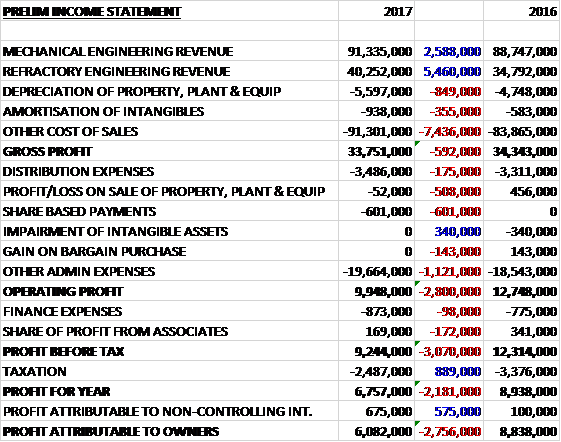
Revenues increased when compared to last year due to a £5.5M growth in refractory engineering revenue and a £2.6M increase in mechanical engineering revenue. Depreciation was up £849K, amortisation increased by £355K and other cost of sales grew by £7.4M to give a gross profit £592K below last year. Distribution expenses grew by £175K, there was a £508K swing to losses from asset sales, share based payments increased by £601K and other admin expenses were up £1.1M which meant that the operating profit declined by £2.8M. The share of profits from associated declined by £172K but tax charges decreased by £889K to give a profit for the year of £6.1M, a decrease of £2.8M year on year.
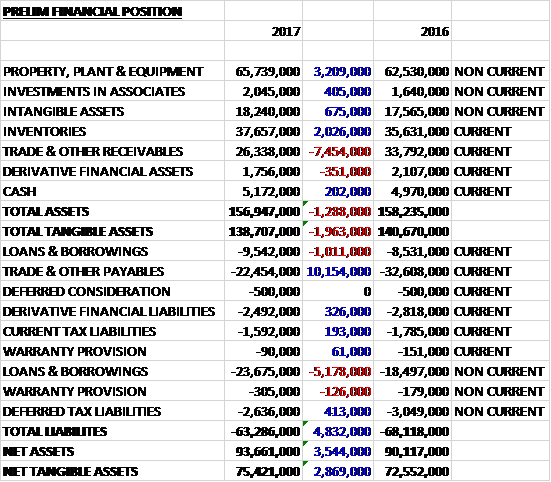
When compared to the end point of last year, total assets declined by £1.3M driven by a £7.5M decrease in receivables, partially offset by a £3.2M growth in property, plant and equipment, a £2M increase in inventories and a £675K growth in intangible assets. Total liabilities also decreased during the year as a £6.2M growth in borrowings was more than offset by a £10.2M decrease in payables. The end result was a net tangible asset level of £75.4M, a growth of £2.9M year on year.
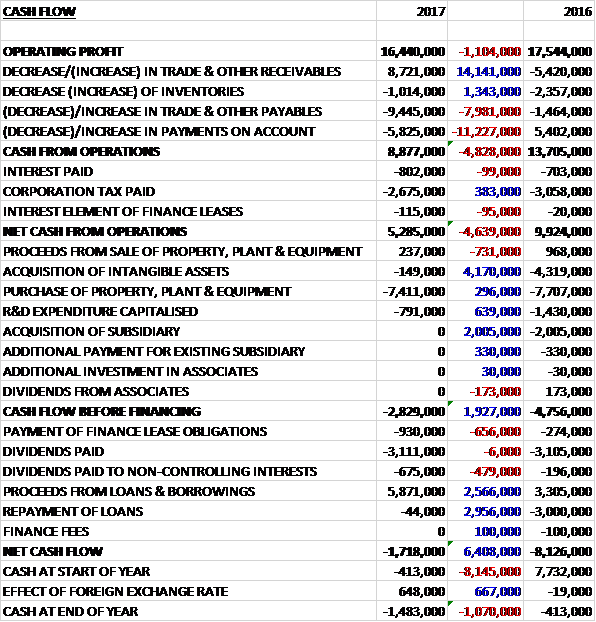
Before movements in working capital, cash profits decreased by £1.1M to £16.4M. There was a cash outflow from working capital an even after tax payments declined by £383K, the net cash from operations came in at £5.3M, a decline of £4.6M year on year. This did not cover the £7.4M spent on property, plant and equipment and the £791K spent on R&D relating to a new valve range at Goodwin International and a new fire extinguisher project at Dupre Minerals, so there was a cash outflow of £2.8M before financing. The group also paid out £3.7M in dividends so had to take out new loans totalling £5.9M top give a cash outflow of £1.7M and a cash level of -£1.5M at the year-end. The operating profit for the Mechanical Engineering division was £7M, a decline of £4M year on year.
Although revenues increased, profits declined as the gross margin reduced due to the continued tightening in market prices for products they sell to the oil, gas and mining industries where capex has been reduced. The valve business in Germany has had an exceptional year, being close to those markets that have re-started investment but the board expect it to be a further 18 months before other areas in the world realise they will be short of supplies.
India has seen coal production and thermal power generation increase which has helped the Indian pump business increase sales by 58%. Goodwin International has received its first order for its new range of axial piston isolation valves and the board expect it to be well positioned when the activity of the petroleum companies starts to recover. The reported profit this year is after recognition of £900K of costs relating to reduced manpower to match market demand.
The operating profit for the Refractory Engineering division was £5.9M, a growth of £1.7M when compared to last year.
At the current share price the shares are trading on a PE ratio of 18 but I can find no forecast for next year. After the dividend payment was kept the same, the shares are yielding 2.8%.
Overall then this has been a difficult year for the group. Although net assets increased, profits declined and the operating cash flow fell with no free cash being generated, although this is partly due to working capital movements. The refractory engineering division actually performed well but this was offset by a mechanical engineering division that is still struggling with a depressed oil and gas market. In these conditions, and given that there is no forecast or even outlook, I feel that a PE of 18 and dividend yield of 2.6% is too expensive at the moment.
On the 13th September the group announced that profitability was broadly in proportion to the full year figures recently published. Sadly they also said that they were no longer issuing quarterly management statements which is certainly a step back in shareholder engagement!