Begbies Traynor has now released their final results for the year ended 2019.

Revenues increased when compared to last year due to a £5M growth in insolvency and restructuring and a £2.6M increase in property revenue. Direct costs were up £4.1M to give a gross profit £3.5M higher. Share based payments fell by £196K but other underlying admin expenses grew by £2.2M. The Put and call option charge increased by £371K, amortisation of acquired intangibles was up £483K and deemed remuneration increased by £1.1M but there was a £1.7M increase in gains on acquisition to give an operating profit £1.2M higher. Bank interest broadly flat but tax charges grew by £220K which meant that the annual profit came in at £2.4M, a growth of £1M year on year.
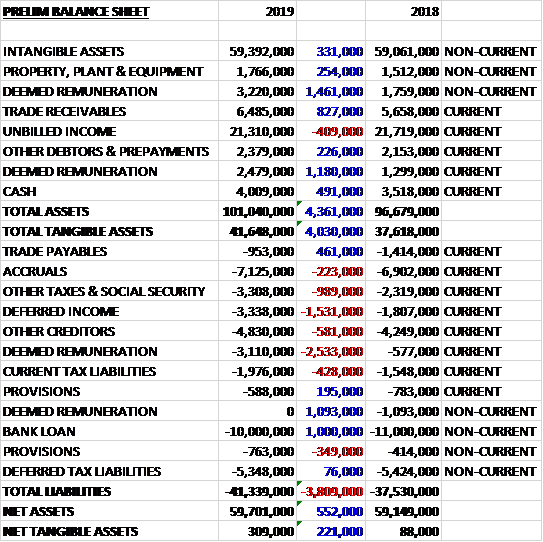
When compared to the end point of last year, total assets increased by £4.4M driven by a £2.7M increase in deemed remuneration and an £827K increase in trade receivables. Total liabilities also increased during the year due as a £1M decrease in bank loans was more than offset by a £1.4M growth in deemed remuneration and a £989K growth in other taxes and social security payables. The end results was a net tangible asset level of £309K, a growth of £221K year on year.

Before movements in working capital, cash profits increased by £1.6M to £8.4M. There was a cash outflow from working capital and after tax payments increased by £382K the net cash from operations was £7.3M, a decline of £200K year on year. The group spent £784K on fixed assets and £216K on intangibles along with £1M on deferred consideration and £1.2M on acquisitions to give a free cash flow of £4.1M. Of this, £2.6M went on dividends and £1M used to repay loans which left a cash flow of £491K and a cash level of £4M at the year-end.
The profit in the business recovery and financial advisory services division was £8.7M, a growth of £1.1M year on year. This reflects the benefit of increasing market activity levels, the continuing development of their advisory services, the prior year acquisition of Springboard and the benefit of organic growth initiatives. Insolvency volumes nationally increased, with the underlying number of corporate insolvencies growing by 10%. In this improving market, they have maintained market share.
They completed the acquisition of two insolvency boutiques in the North East, and in Stoke. Their advisory activities increased in the year, benefiting from the full year impact of the Springboard acquisition.
The profit in the property services business was £3.8M, an increase of £633K when compared to last year. This reflects the benefit of acquisitions, organic growth and the completion of several property insolvencies. During the year they completed several long running property insolvencies, which enhanced margin in the year. They continued to invest in the property valuation team, through the recruitment of experienced surveyors which has improved their geographical coverage.
The asset disposal team performed well. Property auction levels were broadly in line with the prior year and they have introduced an online platform. Machinery and business asset activity levels increased following the prior year acquisition of CJM which has integrated well with the existing team. The building consulting team had a successful year, increasing their instructions from the education sector which has been a key area of development.
In January they completed the acquisition of Croft Transport Planning which provides highways, transport and traffic planning advice on commercial, residential and mixed use schemes to a corporate client base. This expands the consultancy services they can offer to real estate developers and corporate clients. There was an initial consideration of £1.5M with a maximum cash payment of £2.5M subject to financial performance over the next five years.
In April they acquired Barker Storey Matthews, a firm of chartered surveyors with offices in Cambridge, Huntingdon, Peterborough and Bury. The core services offered are commercial property agency, property management, building consultancy, professional services and planning services. This expands their geographic coverage. The initial consideration was £1.6M with a maximum additional cash payment of £1.4M over the next three years.
They also acquired KRE North East in February for an initial consideration of £450K with a maximum additional payout of £150K over the following year. In March they acquired Dunion & Co for an initial consideration of £100K and a maximum cash payment of £100K over the next two years. The value of net assets acquired in the above acquisitions exceeded the accounting value of the consideration so there was a £2.9M gain recognised on the transactions.
Going forward there is uncertainty in the UK economy as a result of Brexit but with a combination of their counter-cyclical activities and breadth of services, the board believe they are well placed to continue to growth in the coming year. They have entered the year with positive momentum and are confident of delivering current market expectations.
At the current share price the shares are trading on a PE ratio of 40.7 which falls to 15.5 on next year’s consensus forecast. After an 8% increase in the dividend the shares are yielding 3.1% which increases to 3.3% on next year’s forecast. At the year-end the group had a net debt position of £6M compared to £7.5M at the end of last year.
On the 26th July the group announced that they were raising £8.3M through the issue of 11M new shares to institutional investors. This is to finance a pipeline of business acquisitions.
On the 19th September the group released a trading update. All areas of the group continued to perform well in Q1. The market for counter-cyclical activities has been favourable with a 9% increase in corporate insolvency appointments in the first half of the year. Revenue and profit growth in Q1 is in line with expectations and reflects both the continuing organic development of the group and the contribution from recent acquisitions. They remain confident of delivering current market expectations this year.
Overall then this has been a good year for the group. Profits and net assets both increased and although the operating cash flow declined, this was due to working capital movements and cash profits increased with a decent amount of free cash generated. Both business sectors did well due to organic growth and acquisitions, in buoyant markets. I am a bit concerned that they felt the need to issue new shares but the forward PE of 15.5 and yield of 3.3% looks OK for a company that is somewhat counter-cyclical. Tempted to buy in here.
On the 24th September the group announced the acquisition of Regeneratus Consulting 1, an Exeter-based advisory practice with expertise in restructuring, turnaround and legal issues. Last year it had pre-tax profits of £200K and it has assets of £600K. The acquisition is for an initial consideration of £500K with contingent consideration of up to £1.1M.
On the 21st October the group announced the acquisition of Ernest Wilsons. The business is a UK business transfer agent, providing agency services for the sale of small businesses across the country. The acquisition enhances the group’s existing transactional support services provided by Eddisons, which include the sale of commercial property together with machinery and business asset disposals. Last year the business reported pre-tax profits of £700K and it had gross assets of £500K.
The acquisition is for an initial consideration of £4M to be satisfied by £3M in cash and through the issue of 1,163,874 new shares. An additional contingent consideration of up to £1.6M could be payable in the three years following completion.
On the 25th October the group announced the acquisition of Alexander Lawson Jacobs, a London-based insolvency and business recovery practice. Last year it reported pre-tax profit of £900K and gross assets of £500K. The acquisition is for an initial consideration of £2.4M to be satisfied by £2.1M in cash and through the issue of 296,195 new shares. There is contingent consideration of up to £4M over a five year period.