Solid State Share Blog – Final Results Year Ended 2016

Solid State has now released its final results for the year ended 2016.

SOLIincome

Revenues increased when compared to last year with a £2.8M growth in distribution revenue relating to the acquisition at the start of the year and a £4.7M increase in manufacturing revenue relating to the initial sales from the MOD contract. Depreciation was up £109K, there was a detrimental movement of £122K in forex differences, R&D increased by £3.9M and other cost of sales grew by £595K to give a gross profit £2.9M above that of 2015. Distribution expenses were up £321K, there was £618K of impairments, stock write-downs increased by £104K and other admin expenses were up £620K which meant that the operating profit grew by £1.2M. After bank loan costs increased by £76K but the tax charge came down £94K due to a deferred tax credit, the profit for the year was £4.2M, a growth of £1.3M year on year.

SOLIassets

When compared to the end point of last year, total assets increased by £3.9M to £26.6M driven by a £5.4M growth in trade receivables and a £254K increase in goodwill, partially offset by an £883K growth in prepayments, a £503K fall in development costs and a £744K decline in cash. Total liabilities also increased as a £1.2M increase in accruals, a £197K growth in the bank overdraft and a £160K increase in corporation tax liabilities was partially offset by a £1.1M decline in trade payables. The end result was a net tangible asset level of £10.5M, a growth of £3.5M year on year.

SOLIcash

Before movements in working capital, cash profits increased by £2.2M to £5.8M. There was a cash outflow from working capital, with a large growth in receivables but this was offset by a £503K swing to a cash receipt and the net cash from operations came in at £1.7M, a decline of £446K year on year. The group spent £900K on property, plant and equipment; £36K on intangible assets and £783K on acquisitions to give a free cash flow of just £45Kl. We then see £991K being spent on dividends which meant there was a cash outflow for the year of £941K and a cash level at the year-end of -£3.4M.

The profit in the distribution division was £955K, a growth of £434K year on year. The year as a whole saw a strengthening of the key metrics of the business with a positive book to bill ratio and increased backlog going into the coming year. The division ended the year with a greatly improved stock turn. The operating margin improvements made in the previous year continued throughout this year, achieving 6.6% with the resulting divisional EBIT ahead of budget.

In April 2015 the group acquired Ginsbury Electronics. A value added distributor of displays and power products. This acquisition enhanced the range of products available to the existing customer base and equally the range of embedded products available to customers. Cross selling initiatives are now being realised with many customers benefiting from the combined expertise of the two businesses. Particular successes have been achieved in the high growth area of electric vehicle charging and in the relatively new area of on-food printing. During the year the stores at Ginsbury were relocated to the Redditch HQ with some small savings as a consequence.

The business continues to increase its own brand offering, to include innovations in LED lighting control and computing. Value added services continue to provide a useful enhancement to gross margin and to the importance of the business to its customer base. This is demonstrated by the £1M contract won with Renishaw where the business was commissioned to pre-programme components to be supplied directly to the production line, this saving them engineering time and additional logistics.

The division was successful in securing additional franchise lines during the year such as the Luminus Devices LED franchise and the Silicon Labs franchise for internet of things applications. The outlook for the business remains strong.

The profit in the manufacturing division was £4M, an increase of £857K when compared to last year. Steatite achieved a 1.4% increase in sales when the MOJ settlement is excluded with the focus being on value added and niche activities, introducing new products in new markets such as green energy and security along with fully integrated computer cabinet systems. Export sales have potential, principally led by the antenna business and the new range of radio communications systems. The group see opportunity for continued growth at home and overseas for this technology and the potential to expend into adjacent markets such as broadcasting.

The combination of new product development and new market penetration has delivered organic growth despite more challenging markets in oil and gas which has impacted the battery business. This growth has been achieved through cross selling initiatives and an increase in sales through the application of processes that save clients time and money. An example of this is the new train ticketing machines which the business was asked to redesign and which are now being deployed in the field.

The £34M MOJ contract for the supply and maintenance of offender tagging technology was terminated in February as the government changed course to pursue a commercial off the shelf solution rather than the bespoke device for which they had contracted Steatite. They were able to agree an exit strategy and compensation package for the work delivered, although this is bound by a non-disclosure agreement so it is not clear how much this would be. Assuming the receipt of the settlement and the payment of all subcontractor liabilities had taken place before the year-end, however, the group would be in a net cash position of £350K (so about £3.8M cash receipt then).

The business has been granted a license to use the IP derived from the development of the technology as part of the contract. The development of tagging devices will continue on a range of devices for applications in the enhanced justice platforms and high end medical sectors which the board expect to lead to opportunities in new markets both in the UK and abroad.

The battery business, prior to the acquisition of Creasefield, had been largely focused on the Oil and Gas industries which have obviously been under investment pressure recently. The acquisition broadens the industrial focus on the business and allows a greater share of engineering and production capability. Additionally, Creasefield brings battery chemistries and vertical markets that will enable the group to build a strong business with significant presence in the UK.

Steatite continues to develop novel power solutions to increase run times and payloads to support marine autonomous systems, unmanned military systems for mine clearance, countermeasures and asset protection. The board are confident that the ubiquity of batteries as a source of power in most technology applications will allow them the opportunity to considerably expand the supply of bespoke battery products to both the existing group and prospective customer base.

Q-Par designs and manufactures antennas and its performance was held back due to the delay of a major programme with a European aerospace customer that will return in the coming year. The business continues to focus on R&D within key market sectors and providing a service to its network of agents throughout the world. Further investment will be made in the year ahead with new purpose built facilities well underway, along with significant investment in test and measurement facilities that will bring benefits to the whole group in the later stages of next year.

During the year more than 10% of the group’s turnover was derived from one customer in the manufacturing division which always makes me a bit nervous.

After the period-end the group appointed Matthew Richards to the board as MD of Steatite. He has been MD at Nasdaq listed APT Technologies and MD for Secure Systems and Technologies. He was also Business Unit Director at Vislink for the defence and security sectors but I suppose I shouldn’t hold that against him! On the 29th June it was announced that Mark Nutter has stepped down from his role as finance director with immediate effect by mutual agreement – this sounds serious and rather concerning.

On the 1st April 2015, the group acquired Ginsbury Electronics for a cash consideration of £2.1M with an initial cash transfer followed by a further £525K payable in three equal six month tranches. The business specialises in the supply of high quality display components, monitors, panels, signage and power components to the commercial, retail, industrial and military markets in the UK and Europe. The acquisition generated goodwill of £254K and generated profit this year of £239K – nearly paying back the investment in goodwill in one year. This seems like a good quality acquisition to me.

In May, after the year-end, the group acquired Creasefield for a cash consideration of £1.5M. The business specialises in the supply of battery packs to the commercial, retail, industrial and military markets throughout the UK and Europe. Consideration paid on completion was £1.4M with a further payment of £140K subject to a net asset adjustment once the completion accounts have been finalised. The group have a pipeline of target acquisitions with the aim to acquire at least one business per year – hopefully this will be done in a sensible manner but there is always risk involved with this strategy.

Going forward, the group entered the 2017 financial year with a strong order book with the order backlog standing at £17.8M, a like for like increase of £3.4M. Most of the markets lack visibility due to global economic influences and the consequences of the recent EU referendum. The board expect the oil and gas market to continue to be slow in the coming year, but there are the first green shoots of recovery in this market.

The outcome of the Brexit referendum is a situation that is obviously being monitored. The group sells predominantly in Sterling to UK based customers. The products are often intended for international use, however the sales channels for the group are principally in this country. As such, the board expect the impact of Brexit to be limited. It has to be said, though, that a weak pound should be useful for the group as a 10% strengthening of other currencies against sterling giving rise to a £138K increase in pre-tax profit.

We are in a bit of an odd situation where these results have been boosted by the MOJ settlement but because of the non-disclosure agreement, we don’t know by how much which makes comparisons with prior or future years rather difficult. From comments made, it would seem that there is probably a positive effect of just over £1M.

At the current share price the shares are trading on a PE ratio of 6.6 (which includes the positive impact of the MOJ settlement) which increases to 9.5 on next year’s consensus forecast – still rather cheap. After the final dividend was kept the same, the shares are yielding 3.7% which increases to 3.9% on next year’s forecast. At the year-end the net debt position stood at £3.4M compared to £2.5M last year although as of the end of June, the balance sheet shows net cash of £1.1M following the receipt of settlement cash from the MOJ.

Overall then this has been a mixed year for the group. The profit was up but this was mainly due to the MOD settlement profit, net assets also increased but the operating cash flow declined due to an increase in receivables which meant that cash profits actually increased. Despite that, there was negligible free cash generated, and certainly not enough to cover the dividend.

The profits in the distribution division grew, mainly due to the Gisbury acquisition at the start of the year, although margins were also up somewhat. The manufacturing division saw profits increase too, but this was due to the MOJ settlement which is the issue really – like for like profits seem to be pretty much flat. There does seem to be a strong order book, however, and with a forward PE of 9.5 and yield of 3.9%, the shares look cheap. I am tempted here although looking further at the finance director’s resignation – he has been in the job for less than a year which doesn’t sit well with me – there was no explanation of why he left.

On the 19th September the group announced that director John Lavery sold 10,000 shares at a value of £42.7K, apparently in order to offset the cost of share options that he recently exercised.

On the 20th October he group released an update covering the first half of the year. They expect results to be ahead of the first half of last year and in line with market expectations. They have an order backlog of £14.8M comprising £2.1M of Creasefield revenue compared to £14.2M at the same period of last year.

The business has focused on deriving the strategic benefits from its recent acquisitions and promoting cross selling amongst group divisions. Both acquisitions made over the past two years are substantially integrated, performing well in their own markets and demonstrating synergy benefits with the other group divisions with Creasefield benefiting from improved resourcing and cost control measures.

Overall this is a fairly decent but the reduction in the like for like order backlog is a little concerning.

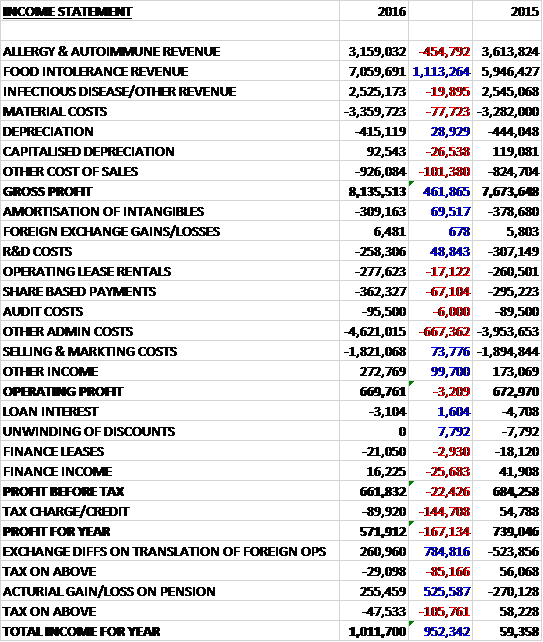
Omega Diagnostics Share Blog – Final Results Year Ended 2016

Omega Diagnostics has now released its final results for the year ended 2016.

ODXincome

Revenues increased when compared to last year as a £455K fall in allergy & autoimmune revenue and a £20K decline in infectious disease & other revenue was more than offset by a £1.1M growth in food intolerance revenue. Material costs were up £78K and other cost of sales increased by £100K which meant that gross profit was £462K higher than last time. Amortisation fell by £70K and R&D costs decreased by £49K but share based payments were up £67K and other admin costs grew by £690K reflecting an expanded board, an increase in staff and rent costs in Pune and an increase in costs relating to auto enrolment in UK pensions. We then see selling & marketing costs down £74K and other income up £100K reflecting a further credit from the UNITAID grant, which gave an operating profit broadly flat on 2015, down by just £3K. Finance income was down £26K, however, and there was a £145K detrimental swing in tax charges relating to a prior year deferred tax adjustment as tax losses were surrendered and tax was underprovided for in previous years which meant that the profit for the year came in at £592K, a decline of £167K year on year.

ODXassets

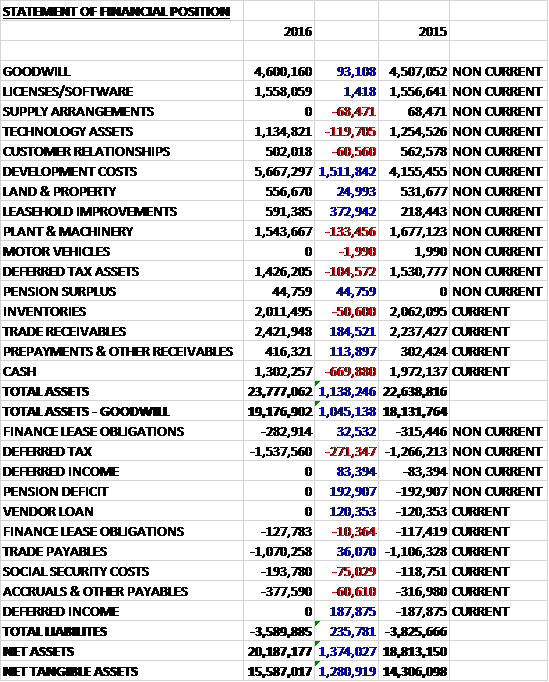
When compared to the end point of last year, total assets increased by £1.1M to £23.8M, driven by a £1.5M growth in development costs, a £373K increase in leasehold improvements and a £185K growth in trade receivables, partially offset by a £670K decline in cash and a £133K fall in the value of plant and machinery. Total liabilities decreased during the year as a £271K growth in deferred tax liabilities was more than offset by a £193K fall in the pension deficit and a £231K decline in deferred income. The end result was a net asset level (excluding goodwill) of £15.6M, a growth of £1.3M year on year.

ODXcash

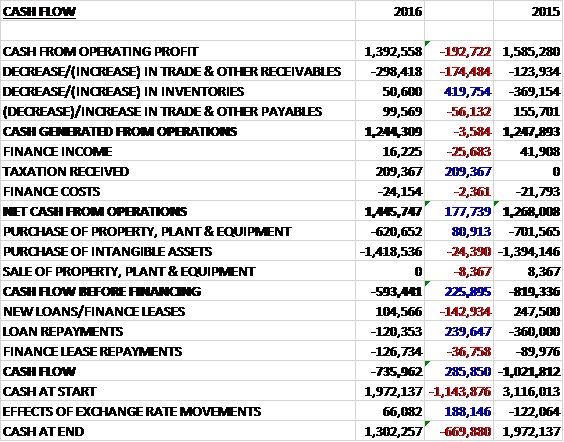
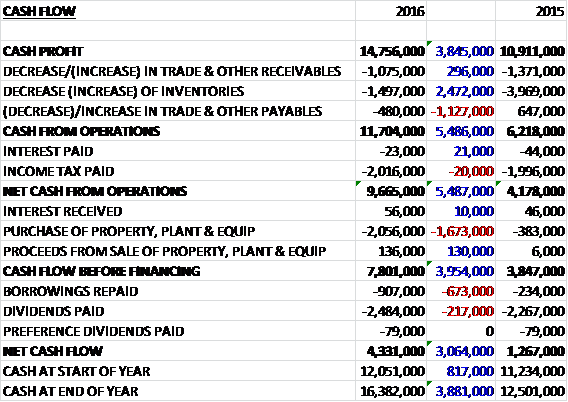
Before movements in working capital, cash profits declined by £193K to £1.4M. There was also a cash outflow from working capital due to a growth in receivables but the effect was less than last year as inventories fell. After finance income was down £26K and the group received a £209K tax payment, the net cash from operations came in at £1.4M, a growth of £178K. This was just about all spent on development costs, mainly reflecting the development of Allersys (£950K) and Visitect (£490K), and the £621K also spent on property, plant & equipment (about half relating to the fit-out of the Pune facility) meant that there was a cash outflow of £593K before financing. This outflow increased after the payment of finance leases and a small repayment of the loan to give a cash outflow of £736K for the year and a cash level of £1.3M at the year-end.

The operating loss in the Allergy & Autoimmune business was £320K, an increase of £82K year on year. Allergy sales fell by £510K to £2.6M, not helped by the weak Euro, and autoimmune sales increased by £60K to £590K. The allergy sales continue to be derived almost entirely from the German business which has experienced a reduction in sales due to continued reimbursement restrictions. The modest growth in autoimmune sales reversed a recent downtrend due to growth n India and China.

The operating profit in the Food Intolerance business was £2.5M, a growth of £415K when compared to last year. Sales of Food Detective grew by 10% to £2.3M with good growth from Europe, Latin America and China. Total volumes achieved were 181,000 units, a growth of 11%. Sales of Foodprint reagents grew by 38% to £3.5M with strong performances in Europe, North America and the Middle East. The group sold a further 18 instruments in the year, taking the number of installations up to 168 instruments.

The CNS lab service showed a decrease of 11% in sales to £580K. Sales were dominated by the markets in the UK and Ireland and they produced 7,008 patient reports in the year with an average price of £82.73 per report, compared to 8,241 reports at £79.33 per report last year. Food intolerance will continue to be a key growth driver for the group. This has been reflected in the increase in staff to provide technical support for the CNS product range. The growth trajectory is expected to continue with this core business supported by increasing the range of products and services in the health and wellbeing market which now extends to 75 countries.

The operating loss in the Infectious Disease business was £244K, an improvement of £24K when compared to 2015. Sales were broadly flat with increases in Bangladesh and Nigeria offsetting a downturn in Brazil due to the economic issues there. These products operate in a very competitive market but the board expect to see increases in sales from the introduction of new products such as CD4 and malaria rapid tests coming through the Global Health programme and the Pune operation.

Significant efforts continued to be made in the year on the allergy development with the optimisation of 41 allergens being achieved in April. All of the Allersys reagents have been validated on the IDS iSYS analyser, demonstrating performance that matches the market leader. Inventory build is underway for the launch, which is expected to be over the next few months. Work is already being carried out to increase the number of allergen tests, both in house and with an external development partner.

With external evaluations having now been completed in Spain, Italy and France, and a fourth evaluation currently being completed in Germany, they will have sufficient data to allow them to apply the CE Mark to all 41 allergens, a prerequisite for marketing any diagnostic test in Europe and beyond. They have identified a plan to increase the number of allergens from 41 to 120 over the next three years. Commercialisation discussions are at an advanced stage with IDS about how best to launch into the market.

In addition to the Allersys programme, the group have taken steps to reinvigorate an allergy dipstick product called Allergodip by expanding the panel of tests available to include country-specific panels. This, alongside the introduction of a mobile app that allows quantification of the test result, will provide them with a much broader product offering and one that will appeal to many of the resource poor countries they operate in. India, with a large number of small labs, is a particular target market for this product.

For the Visitect CD4 device, the group have concentrated their efforts to resolve the ambient temperature effect. The root cause of this was determined and it was anticipated that they would need to work with design companies to provide a one-step solution to the effect because a sample pre-treatment step was required. They continued to also investigate possible alternative designs, however, and subsequently demonstrated that they can manufacture devices which indicate operating performance at temperatures between 20 and 35 degrees (a key design goal parameter) during in-house testing, without the need for a sample pre-treatment step. This is currently undergoing exhaustive testing with patient samples at a local hospital site but the aim is to ensure that they can retain the performance so that the test can be run in the field by community healthcare workers without access to lab facilities.

The group still need to undertake clinical field trials and obtain regulatory approvals once they have a finished test. Other infections disease opportunities presenting themselves include the development of new tests for dengue fever.

During the year the group completed the fit-out of the manufacturing facility in Pune, funded in part with a grant contribution of £540K from UNITAID. In addition to providing capacity for Visitect, the first products to be made there will be a range of malaria rapid tests. The equipment needed to manufacture these tests has now been installed and has undergone operational qualification. Prototype devices have been manufactured on a small scale and, when tested on samples, indicate a level of performance equivalent to a market leading product.

When the manufacturing procedures have been finalised, the equipment will complete its production qualification and will enable larger batches of tests to be manufactured for verification and validation, and they have been able to source a number of malaria-positive and negative samples on a commercial scale which can be stored and used for this purpose when needed.
Colin King joined the board as COO in August and has introduced a number of initiatives to improve processes, communication and plan execution.

Going forward the board expect to see the good food intolerance performance continuing with the marketing initiatives being planned and reaching the launch stage of the Allersys allergy tests should provide good sales progress over the coming year. There is a robust order book which provides a solid foundation for achieving the first half sales targets.

At the current share price the shares are trading on a PE ratio of 34.2 which falls to 22.4 on next year’s consensus forecast. At the year-end the group had a net cash position of £890K compared to £1.4M at the end of the prior year.

Overall then this has been a mixed year for the group. Profit declined, mainly due to a deferred tax charge and lower finance income; net assets increased and operating cash flow increased, but again this was due to a tax receipt and tax profits declined with no free cash being generated. Incidentally I note that the group is capitalising some depreciation charges which seems a bit nonsensical! The infections disease and allergy divisions are still loss making, although the former did see losses narrow. The same cannot be said for the allergy division which saw losses increase due to continued German reimbursement restrictions.

The Food Intolerance division is the big profit generator which saw its performance improve this year due to increased sales of Food Detective and Foodprint reagents. There is much to be excited about going forward, with the Pune factory coming on stream, continued growth in the food intolerance division, the Allersys device nearly being ready and progress being made to rectify the issues with CD4. With a forward PE of 22.4, this is excitement is probably baked into the share price but I continue to hold what I think is an interesting company with great potential.

On the 2nd August the group announced that it had secured a Scottish Enterprise R&D grant of £1.8M. This grant represents a significant contribution towards the total R&D project costs to fund the planned expansion of the Allersys range or reagents from 41 allergens to 120 allergens over the next three years. A portion of the grant will also be used to establish a global health scientific team to screen future product opportunities for resource limited setting.

Ashley House Share Blog – Final Results Year Ended 2016

Ashley House has now released its final results for the year ended 2016.

ASHincome

Revenue increased by £12.4M and with a smaller growth in cost of sales, the gross profit saw a £5M improvement on the loss last year. Admin expenses fell by £122K but the share of joint venture results fell by £102K. Depreciation and impairments declined by £6.1M and this year included a write-down of LIFT investment to a book value of £768K, and there was other operating income of £581K which did not occur last year to give an £11.8M improvement in the operating profit. Interest costs came down £377K and tax costs fell by £22M to give a profit for the year of £247K, an improvement of £12.1M year on year.

ASHassets

When compared to the end point of last year, total assets declined by £1.3M driven by a £1.5M fall in the investment in joint ventures reflecting the LIFT impairment, a £1.5M decrease in work in progress, and an £833K decline in cash partially offset by a £2.6M growth in receivables. Total liabilities also declined during the year due to an £873K decrease in bank loans and an £805K fall in payables. The end result was a net tangible asset level of £3.8M, a growth of £283K year on year.

ASHcash

Before movements in working capital, cash profits increased by £5.5M to £2.4M. There was a cash outflow from working capital, with an increase in receivables and after interest payments declined by £377K, the net cash from operations came in at £75K, an improvement of £429K year on year. The group spent £17K on shares in the joint venture and £66K on property, plant and equipment to give a cash outflow of £8K before financing. We then see a net £873K repayment of the loans to give a cash outflow of £833K and a cash level at the year-end of £23K.

The completion of the first Extra Care scheme in Grimsby together with last September’s signing of the Funding and Partnering agreement with FAH and its property advisor SHA Housing were landmark events for the company. December saw the group enter into its first contracts with FAH for the provision of full funding for the design and construction of two Extra Care developments in Essex where upon completion FAH will become the long term owner. These two schemes will generate revenues of about £21M by the end of 2017, of which only £8.9M has been recognised this year.

The Extra Care pipeline is now providing a positive contribution to the group’s results. Previously it was noted that the chancellor had announced in the autumn statement that Housing Benefit for tenants would be limited to the Local Housing Allowance rate from April 2018 for new or renewed tenancies taken out from April 2016. This announcement depressed expected returns on new social housing developments funded with third party finance resulting in delays to new build projects whilst funders and local authorities seek clarity.

It is now clear that the government believes that the LHA rental cap does not work for sheltered and supported housing and is seeking a resolution to this issue. Extensive industry consultations are in progress and a positive solution is currently expected this autumn. This situation has caused delays in pushing forward some of the extra care pipeline and may impact on the coming half year results. The resolution of the cap, or the agreement of capital based models that the group is currently exploring is expected to unlock the Extra Care pipeline and enable the business to grow significantly.

The two extra care schemes on site are progressing well. The first scheme is Harwich which is on schedule to be completed by the end of 2016 and consists of two buildings. The main building will provide 58 self-contained apartments spread over three floors, and will also feature communal facilities including a residents’ lounge, restaurant and private courtyard garden. All of the apartments will be available for affordable rent. The second building will provide twelve self-contained apartments specifically for adults with learning difficulties.

The second scheme is in Walton on the Naze and is due for completion in spring 2017. This independent living complex will feature sixty self-contained one and two bed apartments which will also be available at affordable rent. Both schemes will enable older people with a care need to continue to live independently with the added security of care and support from One Housing Group’s Season Homes. Both developments were supported by a combined £4.1M of grant funding from Essex County Council through its Independent Living programme. In the year they also completed a first scheme for HSN Care for disabled adults and continue to work with the charity Hft on schemes for people with learning difficulties.

After a number of poor years, the group are now beginning to see some activity return in the Health segment. Medical and health professionals agree that there has been significant underinvestment in primary care in recent years and whilst activity has been low this year, it has been profitable as the group positions itself for an upturn in the market. The group completed one GP surgery and two pathology lab schemes for Integrated Pathology Partnerships. They have also signed contracts and gained planning permission and funding for a major new diagnostic and treatment centre in Durham.

The current economic conditions create uncertainty over the level of new schemes required by the company’s social housing clients; the level of new schemes required by the NHS; the contribution earned to cover the cost base; and the availability of finance within the sector. Clearly the resolution of the LHA cap is a key issue for the group, although they continue to work with local authorities and FAH to find alternative ways of working together irrespective of how the issue is resolved.

The Extra Care pipeline now stands at £162.7M across 18 schemes which has increased in value from £148.5M and 19 at the half year point. The Health pipeline shows ten schemes valued at £20.6M compared with £31.9M across 13 schemes in October last year. The current schemes on site (two in Extra Care and one in Health) have a weighted average life of about six months. Where the group is appointed the time frame to move on site is likely to be between six and 36 months.

The group holds investments in seven LIFT companies, a public private partnership in the health sector. In December they completed the novation of the rights under operational management service agreements with all seven LIFT companies to MAMG, a major provider in this area. The group retains its shareholding in the LIFT joint ventures together with its rights as a development partner. As the LIFT investments have an exclusivity period, which at the year-end stood at 8.5 years, and as there is currently limited work coming from LIFT, the board considered a further impairment was necessary which reduced the carrying value of the investment to £768K.

Other than the general uncertainty and impact on government resources and speed of decision making, the result of the EU referendum is expected to have a limited impact on the group as their activities have minimal exposure to clients or suppliers outside the UK. Health and social care are key issues for the UK and property solutions that the group provides are much needed.

At the current share price the shares are trading on a PE ratio of 19.5 which falls to a very cheap-looking 3.2 on next year’s consensus forecast. No dividend was paid during the year, nor is it expected to be paid next year. The net debt at the year-end was £2M, broadly the same as the end of the prior year.

Overall then this has been a year of considerable progress for the group. The profit improved on the loss incurred last year, net assets increased and the operating cash flow improved despite an increase in receivables – no free cash was generated, however. The completion of the first extra care scheme was an important milestone and there remains two on site. The Health division is now contributing and there is one scheme on site in Durham. Despite the strong pipeline, there remains only three schemes on site with an average life of six months – this will obviously not be enough to sustain the group this year so some urgent action is needed on converting the pipeline.

The LHA rental cap is clearly a big issue for the group but it does sound as though the government is interested in solving it. For now, however, it remains a clear headwind. The EU referendum doesn’t really affect the group much but a change in the political situation might. There are no dividends on offer here but a forward PE of 3.2 looks amazingly cheap – it seems the market as a whole doesn’t quite believe the forecasts. I must admit I am considering a punt on this despite the clear risks.

Cohort Share Blog – Final Results Year Ended 2016

Cohort has now released its final results for the year ended 2016.

CHRTincome

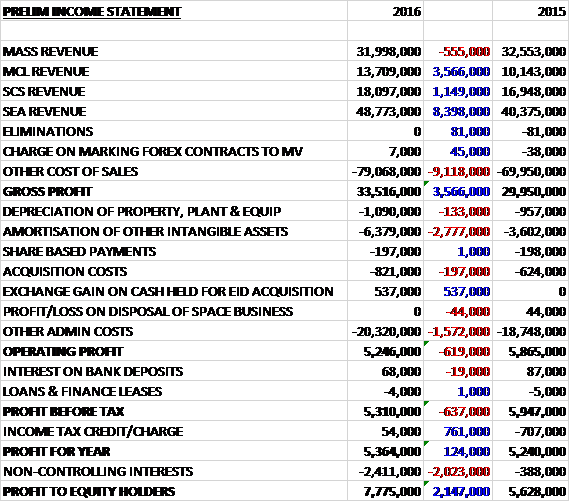
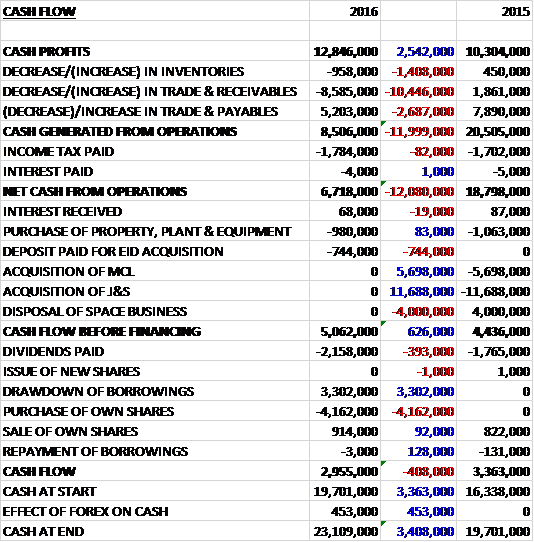
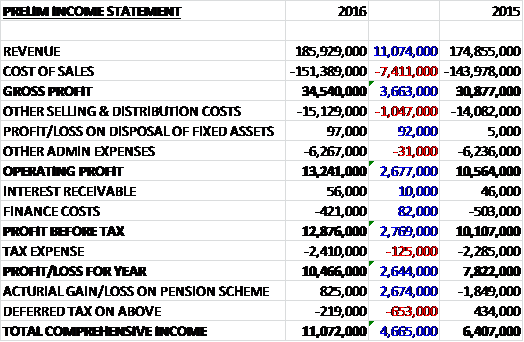
Revenue increased when compared to last year as a £555K decline in MASS revenue was more than offset by an £8.4M growth in SEA revenue reflecting a full year contribution from J&S and increased revenue on submarine projects, a £3.6M increase in MCL revenue reflecting a full year contribution rather than ten months last year and a £1.1M growth in SCS revenue. Cost of sales also increased to give a gross profit £3.6M above that of last year. Amortisation grew by £2.8M and acquisition costs grew by £197K but there was a £537K exchange gain on cash held for the EID acquisition and after a £1.6M increase in other admin costs, the operating profit declined by £619K. There was a £761K positive swing to a tax credit, however, which included a one-off tax credit of £900K, and a £2.4M loss attributed to non-controlling interest which gave a profit for the equity holders of £7.8M, an increase of £2.1M year on year.

CHRTassets

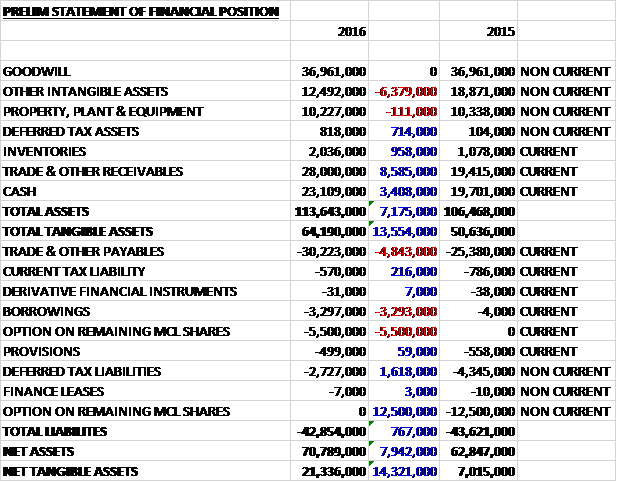
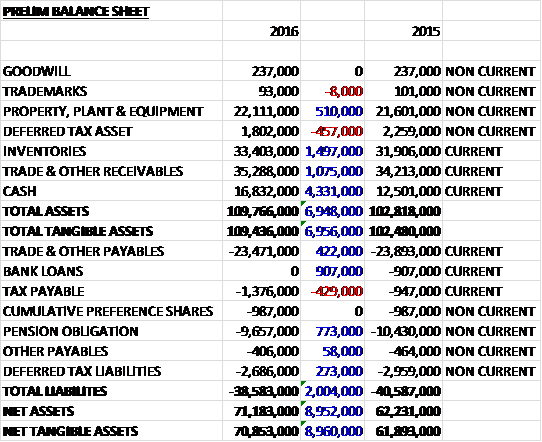
When compared to the end point of last year, total assets increased by £7.2M to £113.6M driven by an £8.6M growth in receivables, a £3.4M increase in cash and a £958K increase in inventories partially offset by a £6.4M decline in other intangible assets. Total liabilities declined during the year as a £7M fall in the option remaining on MCL shares and a £1.6M decline in deferred tax liabilities was partially offset by a £4.8M growth in payables and a £3.3M increase in borrowings. The end result was a net tangible asset level of £21.3M, a growth of £14.3M year on year.

CHRTcash

Before movements in working capital, cash profits increased by £2.5M to £12.8M. There was a cash outflow from working capital, with a large increase in receivables, and after tax and interest remained broadly flat, the net cash from operations came in at £6.7M, a £12.1M decline year on year. The group only spent £980K on capex and £744K as a deposit for the EID acquisition so there was free cash of £5.1M generated. This was used to pay £2.2M of dividends and to purchase £4.2M of their own shares to satisfy share option awards (this seems like a lot!) and after a £3.3M drawdown of borrowings, the cash flow for the year was £3M to give a cash level of £23.1M at the year-end.

The adjusted operating profit for the MASS division was £6M, a growth of £464K year on year despite a fall in revenue reflecting lower levels of activity in education. This was offset by work in Electronic Warfare and Strategic Systems. The support contract for NATO joint EW Core Staff, originally secured in 2014, was extended for a further year. As well as being a valuable work stream, this provides the division with further opportunities to access NATO customers with its EWOS and THURBON offerings.

After a strong operating cash flow last year, this year it was slightly weaker with a build-up of working capital linked to higher activity. As part of its cyber strategy the business is currently investing in facility upgrades to enable it to offer a more comprehensive service. This work will be completed in the summer of 2016 and will enable it to continue to grow its business in this area.

Looking forward the board expect the operating margin to fall back to a slightly lower level as the business grows its cyber offering. Although the cyber opportunities available to the business are substantial and growing, a larger part of this activity has bought in content. The order book reduced during the year as the business delivered on its longer term orders, a number of which are due to be replenished in the coming year. Its closing order book of £41.7M represents an £11.7M decline.

The adjusted operating profit for the MCL division was £1.4M an increase of just £77K when compared to last year despite this being the first full year contribution from the division with a ten month contribution last year with a lower net margin due to a higher proportion of bought in product and less support work in the revenue mix. The growth came from deliveries of hearing protection systems for the British Army. The business benefitted from a strong Q4 from its main customer, the MOD, despite evidence that it was under some budgetary pressure. Its strong order book of £7M, up from £2.8M at the end of last year, and pipeline of prospects give the board confidence of progress in the coming year.

The adjusted operating profit for the SCS division was £1.3M, a decline of £69K when compared to 2015 with an increase in the proportion of lower margin work following the end of several profitable projects. Training activity at the joint warfare centre increased following the end of the UK’s operations in Afghanistan but the withdrawal also resulted in the end of an in-country support contract which has reduced the margin achieved overall.

The business secured a further two years with a potential to go out to March 2020, of its high level training offering to the UK’s Joint Warfare Centre, a service they have provided for over 15 years. This capability forms the core of the business and has enabled it to win further customers in the UK and overseas. In other areas of the business, there was a mixed performance. It was unsuccessful in renewing its framework contract with NATO although it has continued to win revenue from them, albeit at a slower and lower rate. In Air Systems, the business continued to deliver its independent Technical Evaluation services for a number of air platforms.

Although the business enters the coming year with an increased order book of £11.7M its short term prospects are not as strong as elsewhere in the group and the performance of the business is expected to remain flat with an anticipated fall off in Air Domain activity in the coming year.

The adjusted operating profit for the SEA division was £5.4M, an increase of £1.5M year on year which included a full year contribution from J&S compared to seven months last year. The business is now fully integrated into the division and efficiencies realised have increased the net margin from 9.9% to 11.1%. Although the bulk of the increase in revenue was due to the prior year acquisition, the underlying business also increased its revenue by over 11% driven mostly by activity on the Common External Communications System for the UK’s submarine fleet, particularly on the Vanguard class. The project will move into its delivery phase in the coming year so will have lower engineering activity with the delivery of completed ship systems at a steady but lower run rate. With critical design milestones achieved in the year, however, they expect to see an increasing contribution of profit from the naval systems export work.

The research business had a steady year, including completing the Delivering Dismounted Effect programme for DSTL. Looking forward, they don’t expect any growth in the short term but the pipeline for 2018 and beyond looks good. The division’s transport activity was slightly down on last year but within this Roadflow sales grew considerably. Prospects in the UK market for Roadflow, particularly in the Red Light and Motion variants, along with further export opportunities give the board confidence that transport activity will grow in the coming years. The sale of Red Light systems for level crossings has been slower than hoped, mainly due to customer delays and they expect this to pick up going forward.

The Subsea engineering business, which primarily services the North Sea oil and gas market, had a very challenging year due to the poor market. The apparent growth in revenue was mostly due to the recognition of a full year’s trading compared to only seven months in 2015 but the business, which is mainly involved in operational support, remained profitable and any sustained improvement in the oil price should enable it to start growing again.

The division secured over £36M of orders in the year against a very strong 2015 comparator of £50M which included a number of large CECS orders which are being delivered now and into the future. The order book of £55.6M, a decline of £12.4M but underpins over half of the expected revenues for next year. The research and technical support division enters the coming year with lower order cover compared to recent years. It has recently completed its Delivering Dismount effect programme and is waiting for the replacement project, the Dismounted Engine Room, which will start later in the year. The division has a number of long term contracts due for renewal in 2017.

The order intake for the year at £94.8M was, as expected, lower than the strong performance seen last year at £114.3M and accounts for the lower closing order book of £116M compared to £134M at the end of 2015.

The acquisition of MCL included an option for the purchase of the remaining 50% of shares. This is exercisable by December 2016 and is capped at £12.5M which was the value of the option reported at the time of the acquisition. It has now been revalued and is estimated at £5.5M with payment expected before the end of 2017.

In August the group announced that it had signed a sale and purchase agreement to acquire EID for a cash consideration of €19M (£15M at the year-end point). At the time of the announcement the group paid a deposit of £744K. The acquisition is now expected to complete in two stages with the group acquiring 57% In June and a further 23% before the end of October. This will leave the group with 80% of the business with the Portuguese government owning the remaining 20%. On acquiring the 23% from the government, a shareholder agreement will be put in place between them and the group giving some strategic protection to the government whilst enabling Cohort to run the business day to day.

Although the UK defence market remains tight, the group has established itself on some key long term MOD programmes with a good pipeline of new opportunities. Export prospects continue to strengthen, particularly in SEA. Outside the defence market, MASS continues to make progress with its cyber capability and the board expect the order intake for the coming year to be stronger with a number of key long term renewals due.

It is too early to quantify the impact of the recent referendum result. This year, only £1M of revenues came from EU nations. The vast majority of the group’s business in Europe is with NATO and the UK’s exit from the EU is not expected to affect this market. The operation of EID provides the group with a long term operating platform within the EU. Any short term impact is likely to be driven by changes to UK government priorities and possibly spending in the aftermath of the referendum.

At the current share price the shares are trading on a PE ratio of 18.8 but this falls to 13.2 on next year’s consensus forecast. After a 20% increase in the total dividend, the shares are yielding 1.7%, increasing to 2% on next year’s forecast. At the year-end the group had a net cash position of £19.8M, broadly the same as at the end of the prior year but they paid for much of the EID acquisition after the year-end.

On the 28th June the group announced that it had acquired 57% of EID for a consideration of £8.9M from existing shareholders EFACEC Capital and Rohde & Schwarz. The group have agreed in principle to acquire a further stake from two agencies of the Portuguese government on the same terms so that their final holding in EID will be 80% at a total cost of £12.5M. Timing and completion of this further transaction is dependent on the necessary approvals from the government. The business will become a fifth operating division of the group and is a cash generative business with a strong order book so the acquisition is expected to be earnings enhancing in 2017.

Overall then this has been a decent year for the group. Profits increased, net assets were up and although the operating cash flow declined, this was due to adverse working capital movements and cash profits increased with decent free cash being generated, although the share purchases for reward schemes look very high. The MASS business performed well, with a better mix of product and the SEA division also showed good growth with five extra months of contribution from J&S along with an increase in UK submarine communications work, although this is likely to reduce somewhat going forward.

The MCL division performed less well, although the two extra months of contribution meant there was a modest increase in profits whilst SCS saw a decline due to the end of operations in Afghanistan and the loss of a NATO framework contract. The closing order book saw a marked decline, which is a bit of a concern and there will be some chunky cash payments in the coming year due to the EID and MCL acquisitions. The forward PE of 13.2 looks decent enough but the 2% yield is nothing to get excited about. I am not sure about this company, most divisions are performing well but the drop in the order book and likely large cash outflow next year give me cause for concern.

On the 25th July the group announced a contract win. MCL has been awarded the UK MOD Airborne Tactical Communications support contract. This contract is valued at up to £7.7M and is to provide support to certain specialist equipment and includes options covering additional development activities. Its duration will be between two and six years with a minimum value of around £900K depending on the options chosen by the customer. After many years delivering land based tactical communications. This is the first win in the tactical airborne environment.

On the 13th September the group released a Q1 update. The order book stood at £128M as of the end of August and the pipeline of orders beyond this along with the expected revenues, give the board confidence that the overall performance for the year will be in line with expectations, despite SCS’s market in technical consultancy remaining a challenge.

The net cash at the end of August stood at £14.4M with the reduction since the year-end stemming from the partial reversal of working capital inflow during a very strong Q4 last year. A further £9M is expected to be spent in the rest of the year in acquiring a further 23% of EID, taking the holding up to 80%, and the remainder of the shares of MCL, taking the group’s holding up to 100%.

This all seems fairly decent to me.

On the 11th October the group announced a reorganisation of SCS following increased challenges in its markets. The intention is to integrate the business’ Air Systems and Capability Development divisions into the SEA business, and its Training Support and Information along with the Communications Systems division into MASS. As a result, it is expected that SCS will no longer operate as a standalone subsidiary. An exceptional cost of £2 is expected to be incurred in the current with a predicted annual cost saving of around £1.6M.

On the 17th October the group announced that MASS has been awarded a nine year extension to its managed IT service contract for the Sentry Whole Life Support Programme at RAF Waddington. Valued at around £12M, the scope of the support contract now includes replacement of the maintenance, repair and overhaul software and adds an Enterprise Performance Management solution.

On the 7th November the group announced that SEA had been awarded contracts by TFL to further develop and provide ongoing support of its Digital Traffic Enforcement System and to develop and support a Parking Enforcement Solution mobile app. The combined orders are valued at around £7M and include ten years of support for both systems. SEA originally developed the DTES system on behalf of TFL which entered into service in 2009 and they have provided support over that entire period.

Begbies Traynor Share Blog – Final Results Year Ended 2016

Begbies Traynor has now released their final results for the year ended 2016.

BEGincome

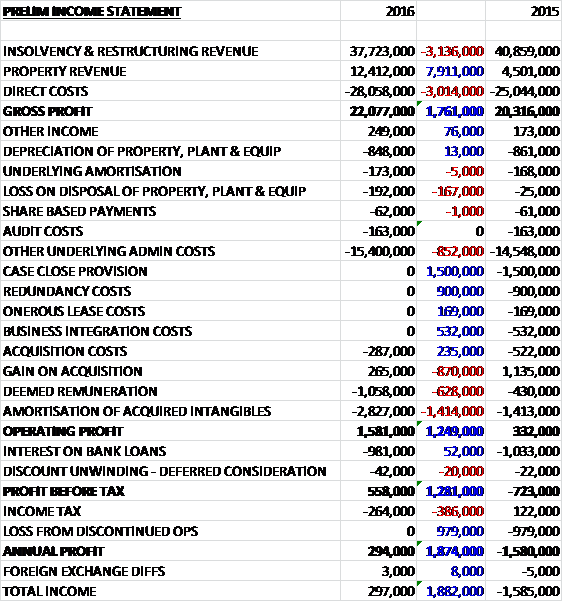
Revenues increased when compared to last year as a £3.1M decline in insolvency revenue was more than offset by a £7.9M growth in property revenue reflecting the full year benefit of the Edisons and Taylors acquisitions, and after direct costs grew by £3M the gross profit increased by £1.8M. Other income was up £76K but there was a £167K increase in losses on disposal of property, plant and equipment and other underlying costs were up £852K. There was a £3.1M decline in one-off costs and acquisition costs fell by £235K but the gain on acquisition was £870K lower, deemed remuneration was up £628K and the amortisation of acquired intangibles increased by £1.4M to give an operating profit £1.2M above that of last time. Bank interest came down slightly and there was no loss from discontinued operations which accounted for nearly £1M last year, although tax was up £386K. The end result was a profit of £294K, a positive movement of £1.9M year on year.

BEGassets

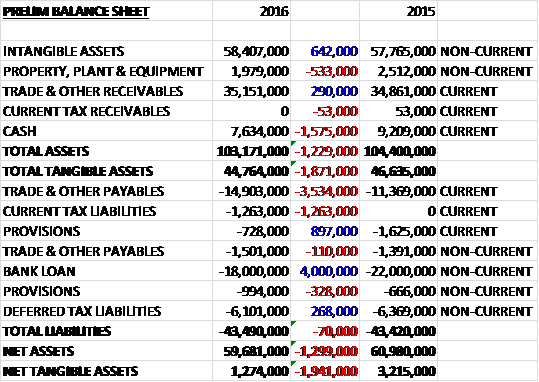
When compared to the end point of last year, total assets declined by £1.2M driven by a £1.6M fall in cash and a £533K decrease in the value of property, plant and equipment, partially offset by a £642K growth in intangible assets and a £290K increase in receivables. Total liabilities were broadly flat during the year as a £3.6M growth in payables reflecting increases in both accruals and other payables, and a £1.3M increase in current tax liabilities were offset by a £4M decline in the bank loan and a £569K fall in provisions. The end result is a net tangible asset level of £1.3M, a decline of £1.9M year on year.

BEGcash

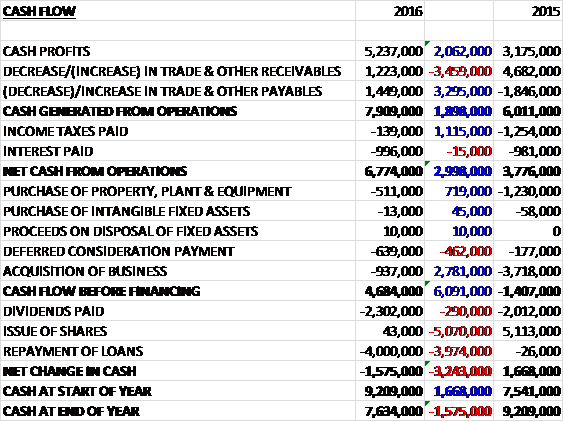
Before movements in working capital, cash profits increased by £2.1M to £5.2M. There was a cash inflow from working capital, although this was slightly lower than last year but after tax payments declined by £1.1M to give a net cash from operations of £6.8M, a growth of £3M year on year. The group then spent £511K on property, plant & equipment; £639K on deferred consideration and £937K on acquisitions which gave a free cash flow of £4.7M. They spent £2.3M of this on dividends and £4M on loan repayments which meant that the cash outflow for the year was £1.6M and the cash level at the year-end was £7.6M.

Overall, results were in line with expectations. The number of corporate insolvencies totalled 14,370, representing a 9% year on year reduction. This is the lowest level since 2004, although the numbers appear to have stabilised at this level over the last twelve months. The number of insolvencies in Q1 have increased by 8% on Q4 but have fallen 7% when compared to Q1 2015.

The profit in the insolvency and restructuring business was £7.5M, a decline of £1M year on year as a results of the reduction in revenue. The insolvency market remains very challenging with the further reduction in UK corporate insolvency appointments over the last year, compounding the impact of reductions over recent years. The group have maintained their market leading position, however, as the largest corporate appointment taker by volume.

The lower level of market activity impacted revenue levels which have only been partially mitigated through continued cost control with operating margins down from 20.8% to 19.8% with £1.5M additional costs in relation to acquired businesses being more than offset by cost savings of £3.6M. The number of people employed in the division reduced by 15 during the year due to a continued alignment of the cost base with current market conditions.

The profit in the property business was £2.4M, a growth of £1.7M when compared to last year representing the first full year of contribution from the division after 2015 only saw five months-worth. The pro-forma results saw a 26% rise in profit with operating margins increasing from 15.3% to 19.4%. Taylors, acquired in November 2015, contributed £100K of the profit in the period.

During the year the business exited a number of non-profitable and low margin engagement which contributed to the overall improvement in operating margins, whilst reducing revenue by £400K. In addition, revenue generated insolvency appointments, principally fixed charge property receiverships, reduced in the year by £800K, reflecting the overall marketplace. The profit impact of these reductions has been offset by additional income from one-off consultancy projects of £500K together with cost reductions of £1.1M. The group have delivered £1M of annualised savings since the Eddisons acquisition, exceeding the initial target of £500K.

The Eddisons team are now being appointed on the majority of the group’s insolvency cases where agents are required which has offset the reduced appointments from the overall market place. The number of people employed in the division has fallen by 28 during the year.

In November 2015 the group acquired the Taylors valuation practice for an initial consideration of £1.1M, satisfied in cash of £500K and through the issue of 1,389,661 new shares with additional contingent consideration of up to £750K payable over the next five years, to be issued in shares. The business specialises in providing commercial business and property valuations for secured lending purposes on a nationwide basis on behalf of a wide range of financial institutions, including all of the major high street banks. The business has been integrated into the existing valuations team, strengthening the combined offering to lenders and it has performed in line with expectations in the period following the acquisition.

In June, after the year-end, the group acquired Pugh & Co. The business is the largest firm of commercial property auctioneers operating outside of London. They hold regular auctions in Leeds and Manchester which complement the Eddisons auctions business which will become the third largest firm of commercial property auctioneers nationally.

In September 2015 the group acquired the assets of Sheffield based P&A insolvency practice out of administration for a cash consideration of £700K, of which £400K was paid on completion and the balance of £300K in the year following the acquisition along with a further contingent consideration of £200K.

Although the board remain cautious about activity levels in their counter-cyclical activities in both business recovery and property services in the near term, the recent acquisition of the Pugh auction business together with the Taylors valuation business gives the opportunity for growth in earnings over the coming year.

At the current share price the shares are trading on a massive PE ratio of 172 as I have included the acquisition costs and amortisation, I can’t find a current forecast. After the final dividend was kept the same, the shares are yielding 4.6%. At the year-end, the net debt position was £10.4M compared to £12.8M at the end of the prior year.

Overall then this has been a mixed year for the group. They are now profitable but whether this is an improvement on last year depends on your treatment of what are underlying costs. The improvement is due to the fact that last year’s redundancy costs and case close provisions were not repeated this year, although costs associated with acquisitions increased this year. If we include the amortisation of acquired intangibles (as I feel we should) then the performance deteriorated year on year. Net tangible assets also fell and are looking rather precarious but the operating cash flow improved and the group generated a decent amount of free cash flow.

The insolvency division saw profits decline due to the continued low levels of corporate insolvencies but the property business saw profits increase due to prior acquisitions, cost cutting and a large one-off consultancy project. The dividend yield of 4.6% looks promising but I am a little concerned over some of the other issues here and this, combined with the high levels of debt mean that I am not going to cover this company again until the situation improves.

On the 20th January the group announced that regional managing partner Julie Palmer sold 22,210 shares at a value of £11K. Not a huge amount but unwelcome nonetheless.

On the 7th March the group released a trading update covering Q3. The expectations for the year as a whole remain unchanged. They have seen an improvement in activity levels in the insolvency business in the quarter which leaves them well placed for a strong final quarter albeit the work in progress in both the insolvency and property services business includes a number of engagements with fees contingent on completion before the year-end. This sounds a bit nervous to me and I wonder whether some of those revenues might slip into next year.

On the 10th April the group announced that two regional managing partners sold 39,878 shares between them at a value of £19,141.

On the 25th April the group announced that Head of Business Recovery and Advisory Mark Fry sold 16,444 shares at a value of £11K.

Wynnstay Share Blog – Interim Results Year Ended 2016

Wynnstay has now released its interim results for the year ending 2016.

WYNincome

Revenues decreased when compared to last year as a £4.8M growth in retail revenue reflecting the £6M received from the Agricentre acquisition, was more than offset by a £12.2M decline in agriculture revenue reflecting commodity price depreciation and lower volumes of manufactured feed products. Depreciation increased by £133K but other cost of sales fell by £7.8M to give a gross profit £310K above that of last time. Manufacturing and selling costs increased by £787K and admin expenses were up £413K, although share based payments fell by £114K which meant that operating profit fell by £774K. After a £30K decline in finance expenses and a £212K fall in tax costs the profit for the half year period came in at £3.3M, a decline of £535K year on year.

WYNassets

When compared to the end point of last year, total assets increased by £4M driven by an £8.9M growth in receivables and a £2.3M increase in inventories, partially offset by a £7M fall in cash. Total liabilities also increased during the period as a £2.8M growth in payables was partially offset by a £950K decline in borrowings. The end result was a net tangible asset level of £66.8M, a growth of £2.2M over the past six months.

WYNcash

Before movements in working capital, cash profits declined by £692K to £5.6M. There was a large cash outflow from working capital with a particularly big increase in receivables (although this was much less than last time due to commodity price deflation) which meant that after both interest and tax payments reduced slightly there was a net operating cash outflow of £3.7M, an improvement of £4.4M year on year. The group spent £603K on property, plant and equipment and before financing there was a cash outflow of £4.1M. The group also spent £320K on finance leases, £1.4M on loan repayments and £1.4M on dividends to give a cash outflow for the period of £7M and a cash level of £2.7M at the period-end.

The climate of poor output prices for farmers, which relates to an imbalance in world markets is now in its second year and remains an issue for the whole industry.

The profit from the agriculture business was £1.8M, a decline of £408K year on year driven by lower demand for dairy related feed products. Output prices remain below the realistic cost of production, which is particularly evident in the dairy sector and resulted in the UK-wide reduction in demand for feed products. Grain prices also remain low although 2015 yields were good, and have led to increased trading volumes in the season. The combination of subdued market sentiment and a delayed spring tempered demand for arable inputs in Q1 but demand gained momentum in Q2 and the resultant spot trade was encouraging. First half sales for arable inputs were therefore ahead of the same period last year but the shift in buying patterns added to distribution costs.

The challenges faced by customers supplying the dairy market resulted in a reduction in demand for compound and blended feeds, although this was partly offset by an increase in demand for sheep feeds. Reflecting the national trend, overall feed volumes were lower than last year but outperformed the 2014 season. Pressure on margins during the period was partly offset by efficiency gains and a reduction in third party manufacture. The group continues to invest in its feed mills and plans are underway for a new packaging facility which will support distribution for the expanding network of retail stores.

Sales of fertilizer gained momentum in Q2 and the volume of both traded raw materials for feed and of specialist products has been buoyant. As expected, however, overall margin pressure has reduced the contribution from the Glasson business compared to last year’s strong performance.

After a relatively slow start, demand for arable products was buoyant in the spring and the resultant spot market was very active. Strong cereal and herbage seed sales helped drive total arable product volumes and sales above last year’s level but the late spring delayed demand for agrochemicals. Direct to farm fertilizer sales were also very strong in Q2, resulting in higher volumes in the first half as a whole. The large grain harvest from the 2015 season contributed to an increase in the volume of cereals marketed through the Grainlink and Woodheads businesses. There is still a reasonable volume of grain on farms which, along with the anticipated 2016 harvest, creates an opportunity for trading into the next financial year.

The profit from the specialist retail business was £2.4M, a fall of £445K when compared to the first half of last year, affected by the adverse impact on farm incomes as well as the initial higher costs relating to the Agricentre acquisition and the new Just for Pets stores with the acquisition expected to make a positive contribution in 2017.

The network of Wynnstay stores now totals 51 outlets. The integration of the recently acquired Agricentre business is underway and the stores have now been rebranded. The acquisition takes the business into a major new geographic region, which encompasses the South and South West, and part of the integration initiative will be to increase the range of products available throughout the trading area. Overall sales increased by 10.7%, reflecting the acquisition but there was a small reduction in like for like sales reflecting a reduced level of spending in the livestock sector, including a reduction in collected fertilizer and some hardware products.

During the period, the number of Just for Pets outlets increased to 23 stores with a new store opened at Nottingham following two new stores at Cambourne and Reading in H2 of last year. Like for like sales reduced slightly in the period and the operating profit contribution from the business was affected by costs associated with the newer stores. In May, the group established a new concept store at a rural destination centre, which has taken store numbers to 24. This has been branded Bessie and Boo and is a pet boutique store catering for the leisure shopper. Early signs are encouraging and the group are considering opportunities to replicate the model.
They also plan to open further new stores which follow the traditional format in the second half of the year.

The group does seem to have a fairly substantial capital expenditure in the second half with contracts placed for £2M compared to just £262K at this point of last year.

The agricultural environment remains difficult for the group’s customers and there are only limited signs of improvement in near term trading conditions. The outcome of the recent EU referendum now brings to the fore the question of the ongoing level of economic support for agricultural and rural communities. While this brings uncertainty, the industry expects some degree of financial support to continue given the sector’s strategic importance. As the exit agreement and new trade deals are negotiated, the UK will remain an efficient producer of agricultural products to the domestic and world markets. There is no doubt, however, that the requirement for further efficiency within all parts of the industry will be an important aspect for all businesses. Overall the group is positioned to achieve its targets for the full year.

At the current share price the shares trade on a historic PE ratio of 11.5 but this rises to 13.5 on the full year consensus forecast. After an 8.1% increase in the interim dividend, the shares are yielding 2.9% which increases to 3% on the full year forecast. At the period-end the group had a net debt position of £3.9M compared to £8.1M at the same point of last year.

Overall then this has been a tricky half year period for the group. Profits were down and although net assets grew and the operating cash outflow improved, this was due to a smaller increase in receivables and cash profits fell. The agric division suffered due to lower demand for dairy feed and the retail side of the business saw profits decline as a result of lower farm incomes and the increased costs from the new stores.

Going forward, the new pet store concept sounds interesting and the newly acquired stores should be contributing but the agricultural environment remains difficult and the EU Brexit vote doesn’t help farming sentiment either. With a forward PE of 13.5 and yield of 3% these shares probably reflect these issues and a recovery in the dairy market may mean these shares are pretty good value. One to watch closely I think.

International Greetings Share Blog – Final Results Year Ended 2016

International Greetings have now released their final results for the year ended 2016.

IGRincome

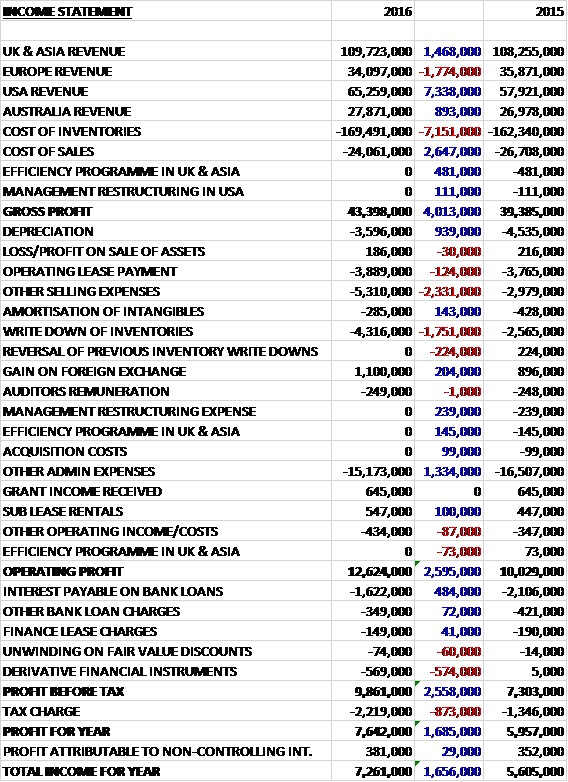
Revenue increased when compared to 2015 as a £1.8M decline in European revenue reflecting euro weakness was more than offset by a £7.3M growth in US revenue, a £1.5M increase in UK & Asian revenue and an £893K growth in Australia revenue. Cost of inventories grew by £7.2M but other cost of sales were down £2.6M and after the £592K of one-off charges weren’t repeated this year, gross profit increased by £4M. Depreciation was down £939K but other selling expenses increased by £2.3M. We then see a £1.8M increase in the write-down of inventories, the lack of a few other non-underlying costs and a £1.3M fall in other admin expenses to give an operating profit £2.6M above that of last year. The interest payable on bank loans fell by £484K but this was offset by a £574K negative swing on hedging instruments that did not qualify to be hedge accounted, mainly in Australia, and after the tax charge increased by £873K the profit for the year came in at £7.3M, a growth of £1.7M year on year.

IGRassets

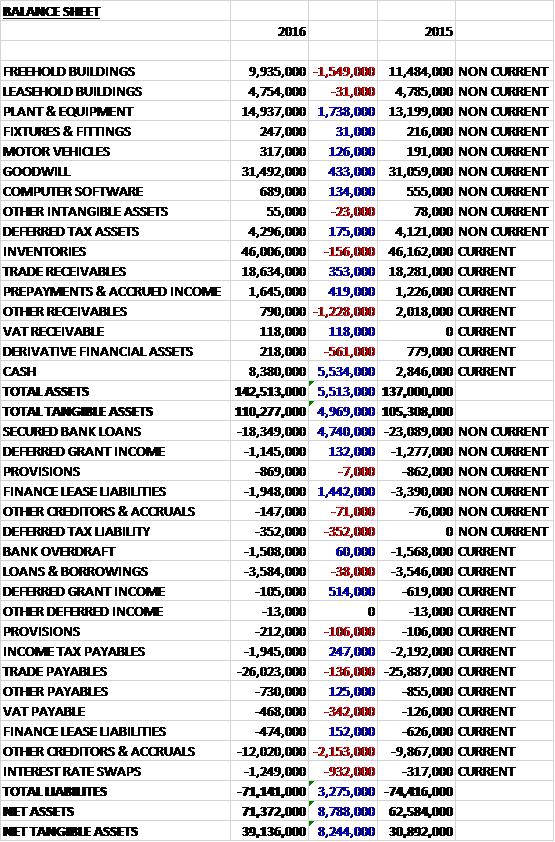
When compared to the end point of last year, total assets increased by £5.5M driven by a £5.5M growth in cash and a £1.7M increase in plant and equipment, partially offset by a £1.2M decline in other receivables and a £1.5M fall in the value of freehold buildings. Total liabilities declined during the year as a £4.7M fall in secured bank loans and a £1.5M decrease in finance lease liabilities was partially offset by a £2.2M growth in other payables and accruals. The end result is a net tangible asset level of £39.1M, an increase of £8.2M year on year.

IGRcash

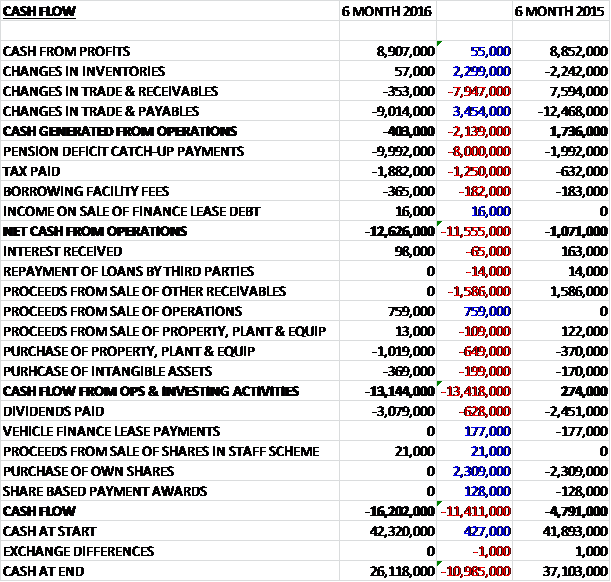
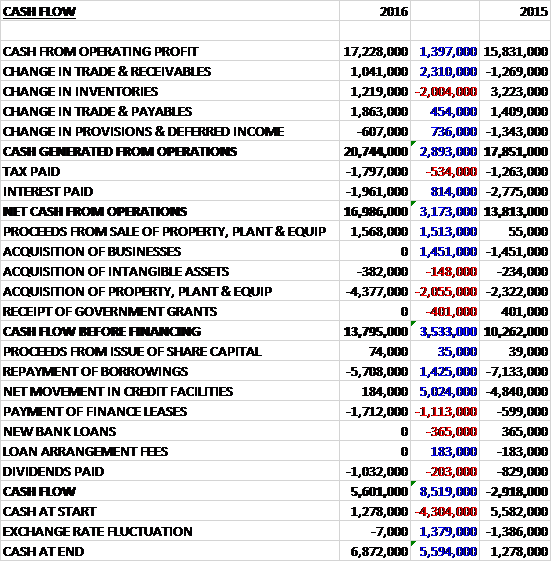
Before movements in working capital, cash profits increased by £1.4M to £17.2M. There was a cash inflow from working capital and after a higher tax payment was more than offset by a lower interest payment, the net cash from operations came in at £17M, a growth of £3.2M year on year. The group spent £4.4M on tangible fixed assets and £382K on intangibles but received £1.6M from the sale of property in Wales to give a free cash flow of £13.8M. Of this, £5.7M was used to repay borrowings, £1.7M was used in the payment of finance leases and £1M was spent on dividends which meant that the cash flow for the year was £5.6M and the cash level at the year-end was £6.9M.

The profit in the UK and Asia business was £5.7M, a growth of £1.2M year on year with the Star Wars range of gift packaging and stationary products proving highly successful. Additionally they achieved record sales of the Tom Smith branded range of gift packaging and greetings products. The group have exceeded efficiency levels targeted as a result of their major programme of investment in gift wrap manufacturing and now will enhance their capability even further with new added features to their facilities, ensuring that they remain market leading in all aspects of their operation.

The year ended with the completion of the sale of a property in Wales which they vacated having installed their new printing presses at a different plant in Ystrad Mynach. Whilst the group’s share of the UK market for gift packaging remains substantial, there is still scope for profitable growth, across this and other categories – both online and through bricks and mortar retailers such as garden centres, and card shops, as well as through a broad network of independent stores.

An enlarged customer base includes a broader presence in the discount sector and the Chinese factory saw record levels of cracker manufacturing with over 72M crackers produced on time in full. In all, Celebrations activity grew strongly but Stationary and Creative Play sales fell back.

The profit in the Europe business was £2.9M, a decline of £290K when compared to last year reflecting the headwinds of imports from China into Europe as a result of adverse forex rates during the year. The group did see sales into Poland and Slovakia grow in double digits as their Western European retail customers expanded into Eastern Europe.

The profit in the US business was £3.5M, an increase of £1.4M when compared to 2015 reflecting the completion of the new installed wrap converting facilities and an outperformance against each and every metric that was set with sales growth achieved across all channels following the appointment of a new leadership team. The business has established some significant new customers and product launches as well as activity in new territories across the broader Americas, reflected in the launch of Spanish language greeting cards to satisfy the demands of Spanish speaking citizens in the US. The business also launched “Kids Create” branded products in the region.

The profit in the Australia business was £1.5M, a growth of £402K year on year despite the slowdown of the Australian economy, reflecting a very effective outcome to the operational initiatives put in place last year. Despite an overall flat market, they achieved 17% sales growth in local currency and all product categories saw an increase in market share. Partyware sales were especially buoyant and top line growth was supported by an excellent performance in order fulfilment, the outcome being that the business returned to growth in profits after a challenging few years.

Recent years of significant investment in wrap manufacturing together with semi-automated cracker manufacturing have underpinned the group’s position as the world’s largest producers of both products. Crackers have traditionally been a Christmas focused category but everyday and special occasion crackers are now sold to over twenty countries with their strategy being for crackers to become an all year round table decoration.

In gifting, recent highlights have included the Rosie’s Pantry collection and sales of designed themed related collections have also included photo related gifts such as over 9M gift themed photo frames being sold in Europe.

Licensed products feature strongly within the Stationary and Creative Play category with stickers being hugely popular with 750 million being sold in the year. Longstanding licensor relationships include those with Disney, Marvel, Universal and Entertainment One spanning products such as Star Wars, Spiderman, Minions and Peppa Pig.

The group has been successful in maintaining or increasing margins. In Europe, the 10% operating margin was sustained; margins in the US were up 1.3% to 6.3%; Australia increased by 1.6% to 5.4% and the full year effect of the investment in Wales lifted margins in the UK by 0.6% to 6.7%. The group aims to further improve margins by increasing the balance of own brand products and non-Christmas business but efficiencies in sourcing and manufacturing are also continuing to contribute materially.

Another important dynamic to margin continues to be the level of FOB business delivered directly to major customers at ports in China. This type of business continues to grow in all territories especially in the US with the major value chains. This typically attracts lower gross margins but it is a means of retaining or winning large volumes of business in a manner that avoids other costs and risks associated with domestic delivery so winning this business can enhance net margins and return on capital even as gross margins are diluted.

Overheads have increased slightly reflecting mainly investment in the US business and other capability to allow the group to grow but costs remained largely steady as a percentage of sales.
The greatest opportunity for further investment is in the US where the group have now invested in a Casepacker and a high efficiency gift converting line. The business case for the final phase to update the printing capability in the country is now under way. Other modest but still seven figure organic capital investment opportunities are now arising, offering the opportunity to expand into new product categories and customer channels.

At the end of the year, the group completed the sale of the Aberbargoed site for £1.4M, just over book value. They are now in the fourth year of a five year period by which a company has the option to purchase part of another under-utilised site (with a net book value of £800K) for £2.4M. The building is also generating an income of £100K per annum, recognised under other operating income.

The group does seem somewhat susceptible to forex movement. The relative strength of the US dollar against other currencies can materially impact purchase prices out of China. This is most noticeable in the weakness of the euro and Australian dollar and the businesses in these regions are finding their margins are being squeezed through forex headwinds on products bought in from the Far East. Balanced against this, the renminbi weakened against the US dollar so it has been possible to negotiate lower prices to mitigate the effect in part.

Whilst it is too early to know the full long term impacts of the UK’s exit from the EU, the board feels that their diversified global portfolio mean they are well positioned to manage the effects and the outcome in itself results in no material change in outlook for the group’s near term financial results – if it happens to trigger a global recession of course things would be different. The main impact would be from forex movements. Weaker sterling against the dollar would make goods imported from China more expensive but the group are well hedged going into next year. On the other hand, earnings from the US business would be translated at more favourable rates.

At the year-end the group had a net debt position of £17.5M, a big improvement on the £29.4M at the end of last year and year-end leverage reduced to 1x this year (of course leverage is greater during the course of the year with average leverage in 2016 being 3.2x compared to a target of 2.5x). At the current share price the shares trade on a PE ratio of 13.3 which falls to 11.2 on next year’s consensus forecast. After a 150% increase in the dividend, the shares are yielding 1.6% which increases to 2.1% on next year’s forecast.

Overall then this has been a good year for the group. Profits increased when compared to last year, net assets were up, and the operating cash flow grew, generating a decent amount of free cash. The UK business saw profits grow, reflecting a strong celebrations product market; the US business performed very well following new market and investment in the machinery, and the Australian business also returned to growth despite a flat market. The only downside was the European business which suffered due to cheap Chinese imports following forex movements.

The group is a market leader in many products and is doubtless an efficient outfit with growing margins but it is hard to see where much growth will come from. I am not convinced that crackers will become ubiquitous all year round for example. The dollar strength following the Brexit vote is not good for the company but a forward PE ratio of 11.2 seems to price this in. The yield of 2.1% is decent enough and growing and I remain a holder for now.

On the 11th July the group announced the acquisition of Lang Companies Inc, a supplier of branded consumer indoor and outdoor home décor and lifestyle products bases in the US. The acquisition was satisfied by a net cash consideration of $3.6M but the business incurred a pre-tax loss of $2M last year and had net liabilities of $14.9M. The group will not acquire the historical debt structure and the business will be delivered at closing with net working capital of $8.3M. This seems unnecessarily complicated to me – why is no goodwill figure given? What will be the net asset/liability level when acquired? How much net debt is actually being acquired? I can help but think that this is purposefully opaque.

Lang’s products include giftware and calendars with licenses such as NBA and NFL. It has live trading relationships with many US-based national chains and in excess of 3,000 gift stores. Additionally it has established a direct to consumer sales channel through its own website and catalogues with over 150,000 direct customers.

On the 25th July the group announced that it had raised £5.25M by way of placing of 3M shares at a price of £1.75 per share. The proceeds will be used to satisfy working capital requirements for the recent acquisition and support a capital investment project to build the group’s capabilities in the UK to manufacture retail bags not for resale. The group’s outlook remains unchanged but the dilution from the placing offset the expected profit from the Lang acquisition so the EPS outlook remains unchanged.

The placing represented a discount of nearly 5% and the new shares represent just over 5% of the total voting rights.

The group have approved a capital project in the UK to manufacture retail bags not for resale. The project is backed by a commercial agreement with an existing partner already operating in the retail collateral domain. I must admit I am a little confused about this!

On the 28th July it was announced that non-executive director Elaine Bond purchased 15,816 shares at a value of £30K. This represents her first share purchase.

On the 30th August the group released a trading update covering Q1 when trading was in line with management expectations with growth across all regions. In the Americas, sales volumes continue to grow, through their broadening product offering ant to their extended customer base. New business includes sales to regional grocery and drug stores in the US. Exports to Mexico are on track to double and exceed $2M during the year.

Operational and commercial integration of the recently acquired Lang Companies is proceeding well with the business performing in line with management expectations. Synergy opportunities have already been identified and should be largely realised ruing 2018. The phased programme of investment in its US-based gift wrap production facilities is already benefiting the group with enhanced levels of production efficiency being achieved.

In Australia, overall the business is trading in line with expectations with growth especially strong in the party ware category. The group has won a major new contract for the supply of everyday greetings cards, with an estimated annual volume of over 10M cards. This contract is over three years and will roll out towards the end of 2016. Following its expansion into party ware, the group has been awarded new licensed categories across all Disney, Marvel and Star Wars franchises. The installation of new order picking facilities in the Melbourne distribution centre has been implemented on budget and enables the business to manage larger volumes within the Australian market.

In the UK growth has been augmented by increased volumes of party ware products, which further enhances the group’s offering. Sales of licensed stationary for the Back to School period include new licenses, such as the highly popular Paw Patrol, Secret Life of Pets and Finding Dory franchises. The continued evolution of the product mix sold to the UK market has been supported by investment in automation in China, enabling the group to further enhance its share in the gift bag and greetings card market.

In the rest of Europe, the group has achieved record sales and production levels of its core gift packaging product categories, across its existing customer base and to new customers. Through its standardisation of its gift wrap manufacturing processes and materials usage, the group is driving efficiencies and synergies through economies of scale and shared best practice. Overall, the order book is at record levels and this update looks pretty good to me. I continue to hold.