Photo Me Share Blog – Final Results Year Ended 2016

Photo-Me has now released their final results for the year ended 2016.
PHTMincome

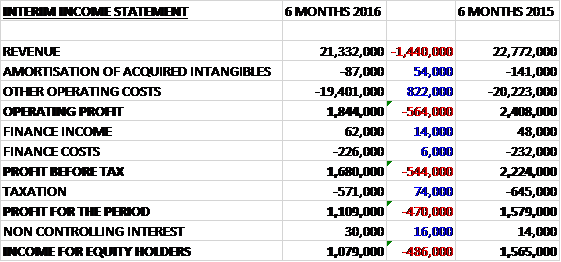
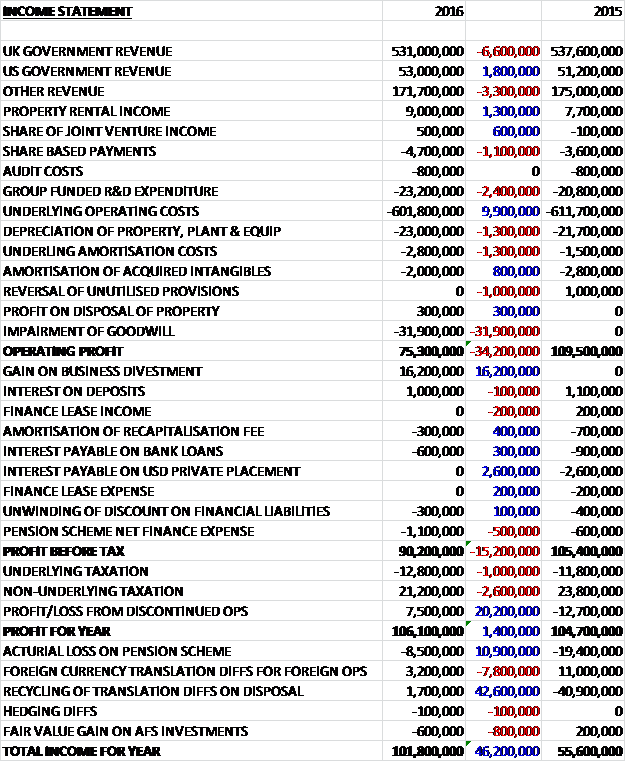
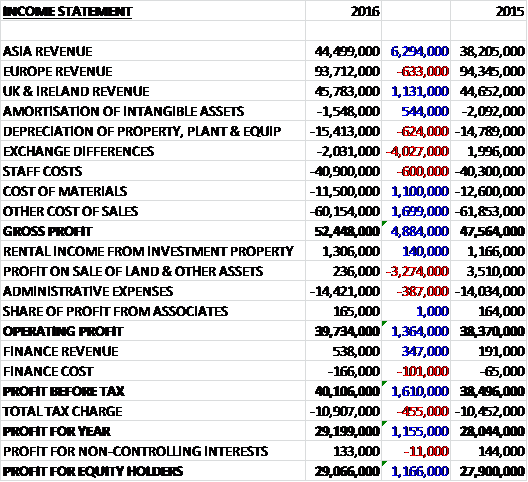
Revenues increased when compared to last year as a £633K decline in European revenue due to euro weakness was more than offset by a £6.3M growth in Asian revenue and a £1.3M increase in UK and Irish revenue. Depreciation was up £624K, staff costs increased by £600K and there was a £4M detrimental movement in exchange differences but amortisation fell by £544K, cost of materials declined by £1.1M due to the winding down of the minilab division and enhanced efficiencies in the supply chain, and other cost of sales fell by £1.7M to give a gross profit £4.9M above that of 2015. There was a £3.3M reduction in the sale of land and other assets and admin expenses were up £387K which meant that the operating profit increased by £1.4M. An increase in finance revenue was more than offset by a £455K increase in tax charges to give a profit for the year of £29.1M, a growth of £1.2M year on year.
PHTMassets

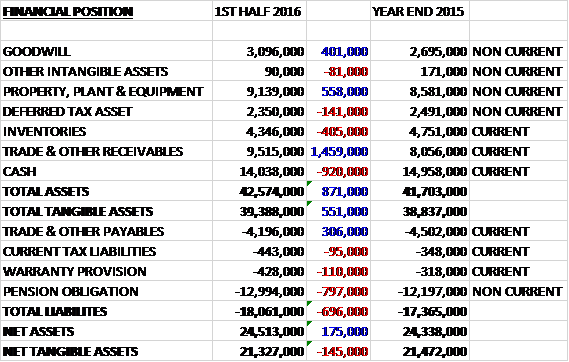
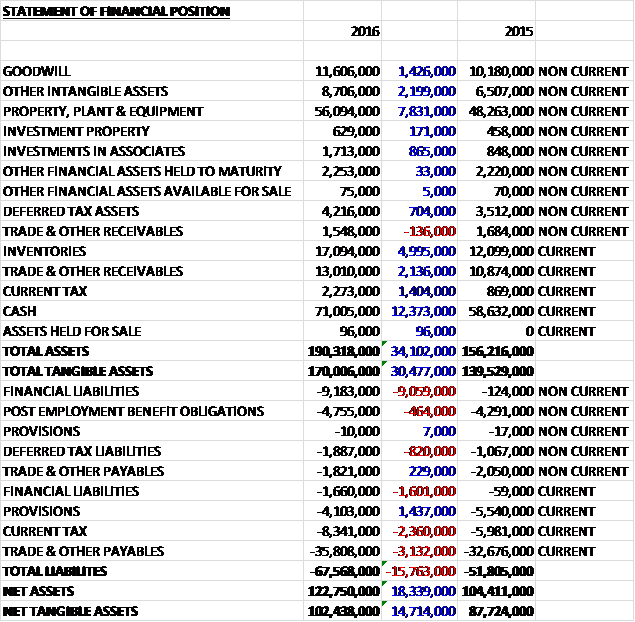
Total assets increased by £34.1M when compared to last year due to a £12.4M increase in cash, a £7.8M growth in property, plant & equipment, a £5M increase in inventories, a £2.2M growth in other intangible assets relating to development costs, a £2.1M increase in trade receivables, a £1.4M growth in current tax assets and a £1.4M increase in goodwill due to the Fowler acquisition. Total liabilities also increased during the year as a £10.7M growth in financial liabilities, a £3.1M increase in payables and a £2.4M growth in current tax liabilities was partially offset by a £1.4M decline in provisions. The end result is a net tangible asset level of £102.4M, an increase of £14.7M year on year.
PHTMcash

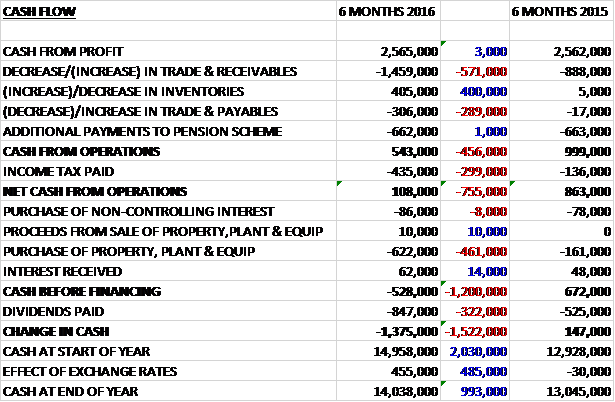
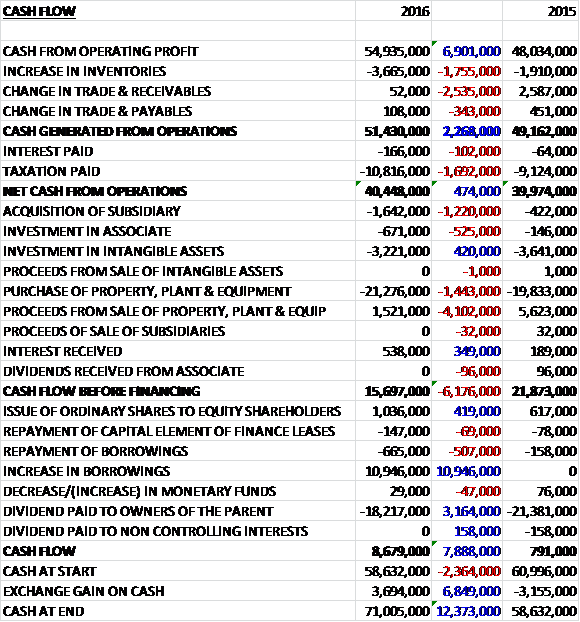
Before movements in working capital, cash profits increased by £6.9M to £54.9M. There was a modest cash outflow from working capital with a growth in inventories and after tax payments increased by £1.7M the net cash from operations came in at £40.4M, a growth of £474K year on year. The group spent £21.3M on property, plant and equipment, £3.2M on intangible assets, £1.6M on acquisitions and £671K on associates to give a free cash flow of £15.7M. We then see £18.2M spent on dividends and a bizarre £11M increase in borrowings, strange when there is so much cash here. The end result is a cash flow of £8.7M and a cash level of £71M at the year-end.

The profit from the Asian business was £10.7M, a growth of £3.7M year on year. The growth in photobooth units was 4.6%, mainly deploying machines in Japan in order to respond to the increased demand created by the roll out of a new photo ID. Performance in Japan has benefited from this ID card regulation which came into force in 2016. Under this system, all Japanese citizens may apply to be issued with their own personal 12 digit number which will in due course require an accompanying photo ID card. The system is not currently compulsory but brings a significant number of admin benefits to both the private user and the public sector and widespread adoption is expected.

Owing to technical and admin problems at local government level the implementation of this plan to date has not gone as smoothly as planned, after a strong start, but the Japanese government is committed to the programme and is increasing financial resource to ensure swifter issuance. Based on the official roadmap issued by the administration, it is expected that by March 2019, 87M cards will be issued while the scope and functionality of the card will be expanded and ultimately it will become the Japanese photo ID card. The speed of issuance will be reliant upon promotion of the scheme by the government but it is likely to lead to a substantial increase in photobooth volumes over the period. Due to the uncertainty over timing, however, the board have not included any profits relating to the card in the forecast for the current year.

In China, gradual progress continues to be made where turnover rose by 24% with a good increase in profitability.

The profit from the Continental European business was £24.2M, an increase of £2.1M when compared to 2015 although revenue was 0.6% lower due to euro weakness (on a constant currency basis it increased by 3.8%). The increase in profit was due to a reduction in siting costs and a focus on operating cost reduction. The European photobooth estate increased by 0.5% with the main areas of growth being France, Germany and Switzerland. The group continues its rollout of higher margin Starck booths and there are now 3,780 deployed across the region. They are assessing price increases and are now running trials in Switzerland and the Netherlands.

The rollout of the Revolution laundry product continues to progress well. The results from the units in operation in France, Ireland and Portugal remain encouraging with takings during the period averaging €1,282 per unit per month. For the full year the turnover of the entire laundry business was £11.8M which has more than trebled since 2014.

The group now has laundry units in twelve countries globally with the most significant coverage being in France, Belgium, Portugal and Ireland. The product has continued to perform well in Portugal and Ireland where an agreement with Tesco Ireland means that the number of operated units in that country should increase to 120 over the next year. The profit in these two countries has climbed rapidly since the units were first introduced and is expected to approach €1M in the coming year. The group continues to target 6,000 laundry units by 2020 as the business grows.

The group has been trialling a number of launderettes in towns across France and Belgium over the past three years. The majority of these have achieved the desired return on capital and the board now considers it appropriate to roll out the concept more aggressively, targeting towns where there is no large supermarket nearby and where competition is limited. The stores are expected to cost around €32K to fully equip and the group’s ambition is to develop this business rapidly.

The group have also announced the development of Revolution 2 which would only have a footprint of 5sqm compared to the 10sqm of existing units. One principal advantage of these smaller units is that they avoid planning restrictions and in addition may be attractive in markets where space is more limited. Production of these units is expected to commence fully in September.

The group continues to operate over 5,000 digital printing kiosks, primarily in France and Switzerland and is currently upgrading the estate to the latest technology to accept all models of memory cards and other media. The new range of Starck designed kiosks are gradually being introduced and good progress is being seen with the Speedlab Cube in particular. The group considers the potential worldwide to be very promising over the medium term.

The group has already introduced biometric standards into a number of its booths in Germany, Switzerland and China and the addition of 3D photo capture would represent a step forward in security. Photobooths are therefore progressively being enabled digitally and in February they announced that they had obtained the first agreement with ANTS in France to allow the delivery of a digitized e-photo and signature for the purposes of driving license application with the document being sent from the photobooths via a secure server. They have some 7,800 units in France and the entire estate will be enabled rapidly. Similarly in September the group signed a five year agreement with Moneygram under which money transfer services would be made available in its booths worldwide, starting in France.

The profit from the UK and Irish business was £8M, a decline of £490K when compared to last year despite a 2.9% growth in photobooth numbers. The market background remained difficult but turnover increased by 2.5% due to the resilience of the photographic business in the UK and the expansion of the laundry business in Ireland. The decline in profits reflected the increase in depreciation and some site costs.

In all, there was a 611 increase in the total number of photobooths and a 1,064 growth in the number of laundry units. The group is looking to enter new markets and positive progress has been made in South Korea where some 100 photobooths have been sited. Small operations have also been launched in Poland.

Over the last few years the group has generally chosen not to raise prices but going forward the increasing introduction of contactless payment across the estate should allow more price flexibility and they are trialling in two countries currently with a planned rollout of price increases over the next two years.

The addition of both smaller Revolutions and the introduction of laundrettes will add to the momentum in that business. Volumes in the photobooth estate have been boosted by the gradual rollout of the new Japanese ID card and new agreements were signed with Moneygram and ANTS which should further enhance returns in the medium term. The development and addition of 3D capability within the booths is promising feature for the medium term. While uncertainties remain, in particular in relation to currency, the board anticipates another year of good growth.

As can be seen the group raised over £10M of long term debt aimed at financing the acquisition of town centre launderettes. Even though the interest rate is low, I really don’t see the logic of having huge cash reserves on the balance sheet and paying out special dividends to shareholders whilst at the same time taking on debt – it seems like madness to me!

At the current share price the shares are trading on a PE ratio of 18.7 which falls to 17.9 on next year’s consensus forecast. Including the special dividend, the shares are yielding 6% which falls to 4.8% on next year’s forecast, which presumably doesn’t include any potential special dividends (the board have indicated that they will increase the dividend by 20% over the next two years). At the end of the year the group had a net cash position of £62.4M compared to £60.7M at the end of last year.

Overall then, this has been another good year of progress for the group. Profits were up, net assets increased and the operating cash flow grew with some decent levels of free cash being generated, although it was not enough to cover the dividends being paid. Asia performed well due to the increase in demand in Japan following the new ID card announcement, although this was lower than expected due to operational issues from the government there. In fact things are so bad, the group is now forecasting no extra profit at all from the venture in 2017.

Europe performed fairly well due to cost reductions but the performance in the UK and Ireland was below that of last year due to site cost increases. Going forward, there seems plenty to stoke growth. The laundry business continues to grow and the deal with Tesco Ireland is a positive. Additionally, the 3D printing and Biometric additions look promising as shown by the deal in France to provide driving licenses. There is very little about the car was venture this time and it seems as though perhaps the trial is not being successful.

The debt drawdown is odd given that surplus cash is being given away to shareholders but with a forward PE of 17.9 and dividend yield of 4.8%, this is looking cheaper than it has done for quite a while and although I no longer view this as the dead cert I once did, I continue to hold.

On the 23rd August the group announced that it had agreed to buy Asda’s Photo Division which is operated in Asda stores in the UK with completion of the acquisition expected to occur at the end of October. The division consists of 191 photo centres, as well as 172 self-service kiosk sites located in Asda stores. These businesses will be managed by the group under a ten year concession with the employees of the business transferring across to the group. Besides the in-store locations, they will also operate the Asda-branded online photo processing offering for a minimum of two and a half years.

The consideration for the acquisition is £3.4M and the group have agreed to buy the inventory available at each photo centre at the date of the acquisition, estimated at £2M with the total consideration being capped at £6M. Under the arrangements, the group will also pay Asda periodic commission payments based on turnover as well as business rates and costs of utilities.

Last year the business made a loss of £3.4M but the board consider that the turnover can be materially raised by having them running the business and they expect that a combination of reconfiguration of layouts, upgrading of equipment and the introduction of innovative designs into sites will add to the appeal for customers and expand the profit performance going forward.

The board expect the acquisition to be slightly dilutive to the earnings of the UK division in the current year but expect it to be earnings enhancing in the medium-term (I would hope so!). They believe that the impact of the dilution in the current year will be offset by favourable currency movements elsewhere in the group and therefore overall expectations remain unchanged.

On the 20th October the group released a trading update covering the first four months of the year. Turnover improved by 18% and pre-tax profits were 14% higher compared to the same period last year, reflecting the investment programme and favourable currency movements. Overall the photo booth and laundry businesses are performing well.

The laundry business saw turnover increase by 192% due to both the increased number of machines and revenue per machine. The group is now accelerating its expansion in the town centres through the roll-out of its new laundry shops concept, in particular France, Belgium and Spain. They also expect the acquisition of the Asda units to be completed around the end of the month.

Cash generation remains strong, trending ahead of last year’s performance and the board remains confident in the business performance for the year.

Overall this all looks very positive and I continue to hold.

Over the past few days CEO Serge Crasnianski purchased 4,827,251 shares at a value of £7.6M! This is a huge purchase and makes me think that something interesting is afoot. He now owns 84,610,701 shares, equivalent to about 22.5% of the total. I am surprised the share price has not moved by more than it has.

Bonmarche Share Blog – Final Results Year Ended 2016

Bonmarche has now released its final results for the year ended 2016.

BONincome

Revenue increased by £9.4M when compared to last year but cost of inventories were up £4.2M, operating lease payments increased by £693K and staff costs grew by £3.3M to give a gross profit £1.7M above that of 2015. Legal & professional fees of £1M were incurred, relating to the move to the main list, other admin cots were £2.2M higher and distribution costs increased by £937K which meant the operating profit fell by £2.9M. Finance costs were moderately down buy tax costs fell by £721K to give a profit for the year of £7.8M, a decline of £2.1M year on year.

BONassets

Total assets increased by £4.1M when compared to last year, driven by a £1.9M growth in cash, a £1.7M increase in plant and equipment and an £817K growth in the value of the cash flow hedge, partially offset by a £499K decline in inventories. Total liabilities declined during the year as a £941K fall in rent-free deferred income, a £658K decline in current tax liabilities and a £528K fall in trade payables was partially offset by a £755K growth in accruals and deferred income. The end result was a net tangible asset level of £29M, a growth of £4.7M year on year.

BONcash

Before movements in working capital, cash profits declined by £2.4M to £13.4M. There was a small cash outflow through working capital due to a fall in payables and after tax payments increased by £579K, the net cash from operations came in at £10.5M, a decline of £579K year in year. The group spent £4.3M on fixed tangible assets and £647K on software to give a free cash flow of £5.6M, although some capex valued at £4M has shifted into 2017 with the total capex of £14M expected in 2017. Of the free cash flow generated, £3.4M was spent on dividends and the cash flow for the year came in at £1.9M and the cash level at the year-end was £13M.

The external trading environment was tough; the shopping habits of the group’s customers are significantly influenced by the weather and for much of the year this had an effect on performance. In October the group moved from the AIM market to the official list of the LSE.

Like for like sales grew by 0.7% and online sales grew by 3.6%. The group’s market share ended the year at 3.4%, which was a 0.1% fall on the previous year. During the first half of the year, sales increased by 6.5% with like for like store sales up 2% and online sales up by 4.2%. The cooler extended summer suppressed demand in traditional categories such as dresses, T-shirts and swimwear and as a result of this, customers continued to stay away from the high street.

This meant that in the second half of the year, total sales growth slowed to 4.1%. Store like for like sales declined by 0.6% and online sales grew by 3.1%. The recurring theme of a lacklustre summer remained a drag into the autumn and record mild temperatures were recorded into December. In the early part of the autumn, the group’s strategy to “de-weather” their coats and knitwear departments worked well but they had planned for these ranged to reach more normalised volumes by November and due to continued unseasonal conditions this did not materialise. Affected by the same conditions, the competition started implementing heavy discounts from the Black Friday period onwards which made it harder to achieve sales at normal prices.

After Christmas, Q4 started well and like for like grew 12.1% during January due to a strong demand for sale items. Due to a long period of cold wet weather this spring this growth was short lived. To ensure that stock levels were well controlled despite the disappointing sales performance, the group made more discounts which were higher than in the prior year. The negative impact on margin was mitigated by a higher buying-in margin due to improved sourcing and more favourable exchange rates. As a result, the terminal stock level was lower than last year.

In order to improve the appeal of the Bonus Club, the group have introduced new member benefits including welcome packs and birthday vouchers. In Scotland they are testing a top tier scheme called Diamond Club which has an annual fee of £10 with customers receiving benefits such as free delivery and advance notification of new collections. To support this initiative, a regional TV test was conducted and whilst financially there was little measurable upside in the short term, it created an increase in brand awareness. The plan is to repeat this on a national scale from September this year. The campaign will be supported by the new brand ambassador, Mark Heyes, a TV fashion presenter who will be offering style advice to customers.

The group has been focusing on trying to “de-weather” their coats and knitwear ranges in the traditional autumn season. The offer at this time comprised fewer options but with a broader selection of lightweight layering. This proved successful between August and October but as the mild conditions continued into November, the early success could not counteract the poor performance of these categories as the weights of clothing increased in the anticipation of normal winter weather.

Whilst the group has had good progress in their core categories, there was less success with more seasonal departments where they repeated best sellers for too long and did not introduce enough new products. Blouses, dresses and skirts were key areas where there was insufficient progress and customers have said they basically want more on-trend items and more modern cuts. A review of the supplier base has led to the conclusion that they need to bring in new suppliers in Turkey and India that will give them more focus on new styles and the flexibility to repeat best sellers through shorter lead times.

The existing three year contract with David Emanuel expired at the end of March at which point they decided to terminate the agreement after a nine year association with the timing of the change coinciding with the introduction of Mark Heyes as brand ambassador.

The strategy of opening five new Solus stores and about 15 concessions and other locations each year will continue. During the year, 140 stores have seen their fascias replaced with a further 40 to be replaced this year to complete the programme. Other visual improvements have also been undertaken.

During the year the group launched an improved stock delivery service to all stores in Q1. This was to improve style choice and size availability on the sales floor by shortening the interval between identifying the need for an item to be replenished and the item being available for sale. The initiative also introduced out of hours deliveries so that stock replenishment can take place without inconveniencing customers during trading hours. Test stores indicated that there was a sales gain as a result of this operation which more than funded the incremental cost. The benefits of this are likely to be realised to a greater extent over the next two to three years as other system and process improvements further enhance stock availability. With the impending increase in costs following the introduction of the living wage, the group continue to look for more productive ways of working.

At the end of the year, online sales represented 7.3% of total sales which is disappointing. This has been a challenging year for the online operation, which only managed to achieve a £500K increase on the prior year. The weakest months were either side of the responsive site implementation in July, and in December when the group experienced weak trading following Black Friday.

Improvements in the forthcoming year include a website re-platform to “Demandware” which with the new EPOS store till system will facilitate an online gift card functionality and more aligned store and online price initiatives such as 2 for 1. An improved fulfilment service will enable a later next day delivery cut off and the ability to track parcels. Looking ahead to this year, the group are currently finalising a plan to replace a twenty year old legacy ERP system which sounds expensive…

During the year it was announced that CEO Beth Butterwick was leaving the company. She is being replaced by Helen Connolly who joins from Asda where she was senior buying director for the George clothing business. Mark McLennon also joined as a non-executive director and he is currently Global VP for IT at Unilever so should have some good experience for when the group upgrades its systems. Also, Sun’s nominee director, Sergei Spiridonov, replaced Michael Kalb as a non-executive director buy Michael will continue with company as a board observer, whatever that means.

The beginning of the coming year has continued to be tough due to poor weather but the board’s full year expectation is unchanged provided trading conditions normalise, which sounds a bit ominous. Looking ahead there will continue to be external factors that affect consumer confidence and the cost of doing business such as the Brexit vote, rising costs driven by the living wage, forex rates and business rates.

At the current share price the shares trade on a PE ratio of 6.8 which falls to a cheap-looking 6.1 on next year’s consensus forecast. After a 5% increase in the total dividend, the shares are yielding 5.9% which increases to 6% on next year’s forecast. At the year-end the group had a net cash position of £12.4M compared to £10.2M at the end of last year.

Overall then, this has been a difficult year for the group. Profits are down and although net assets did improve, the operating cash flow also declined. They did manage to produce a decent amount of cash flow but capex is expected to increase three-fold next year which would wipe this out. Like for like sales barely grew and were negative in the second half of the year as the group suffered from a cool summer, a mild autumn and a cold and wet spring. Of more concern, however, is the fall in market share and the lacklustre online sales growth – perhaps the new website will help this?

Going forward, the new ERP system could potentially have teething problems and there are also risks surrounding the new CEO. This year has started slowly and the weather since then has hardly been very summery so I think there is a real prospect of another profit warning here. It is true that the shares are now very cheap with a forward PE ratio of 6.1 and dividend yield of 6% but I am starting to wonder if even this low price covers the risk here and I am thinking of selling up on what has been a disappointing investment.

On the 28th July the group released a Q1 trading update. Sales for the quarter decreased by 3.6% and store like for like sales fell by 8.1% with online sales down 2.7%. Trading during the quarter was difficult due to continued poor weather but despite this board expectations for the full year remain unchanged as long as trading conditions normalise through the autumn season. This seems a bit ask to me and I am not sure if management really have much of a grasp of the problem –one to avoid for now I think.

On the 21st September the group released a trading update. Notwithstanding difficult trading conditions in July and August, overall performance was in line with management expectations for the half year but trading in September has been extremely poor, with the weather again being blamed. Store like for like sales for Q2 will be about 8% down with a similar result in the half year.

The hot September has prevented the group from gaining a representative measure of the strength of the autumn ranges but their perception is that the clothing market generally has become more challenging so the board are lowering the profit expectation for H2 with the view now that full year profit is likely to fall between £5M and £7M.

The financial position remains strong with a net cash balance of £9M. This is all very poor, and it is becoming increasingly clear that the group has real issues. Still, the new CEO is only recently in the post so she may yet turn things round.

Red24 Share Blog – Final Results Year Ended 2016

Red24 has now released its final results for the year ended 2016.

REDTincome

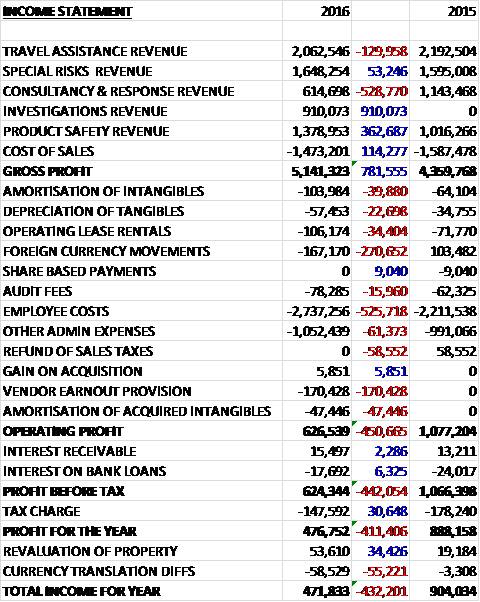
Revenue increased when compared to last year as a £529K decline in consultancy and response revenue and a £130K decrease in travel assistance revenue was more than offset by a £363K increase in product safety revenue and a maiden £910K revenue contribution from investigations. Cost of sales was down £114K to give a gross profit £782K above that of 2015. Amortisation, depreciation and operating lease rentals all saw modest increases and foreign currency movements saw a £271K detrimental movement due to the depreciation of the Rand. Employee costs increased by £526K and other admin expenses were up £61K. We also see the lack of a £59K refund of sales tax that occurred last year, plus a £170K vendor earn-out provision and a £47K amortisation of acquired intangibles which meant that the operating profit fell by £451K. We then see tax charges down £31K and most declines in interest costs to give a profit for the year of £477K, a decline of £411K year on year.

REDTassets

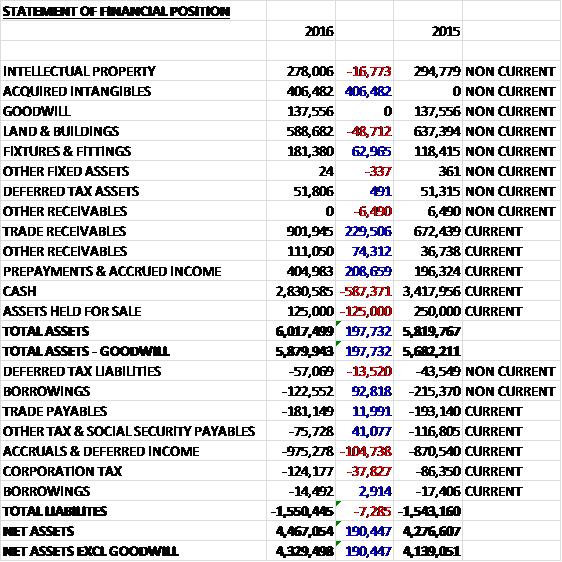
Total assets increased by £198K when compared to the end point of last year driven by a £406K growth in acquired intangibles, a £230K increase in trade receivables and a £209K growth in prepayments and accrued income, partially offset by a £587K reduction in cash and a £125K decline in the value of assets held for sale. Total liabilities were broadly flat as a £96K decline in borrowings was offset by a £105K growth in accruals and deferred income. The end result was a net asset level (excluding goodwill) of £4.3M, a growth of £190K year on year.

REDTcash

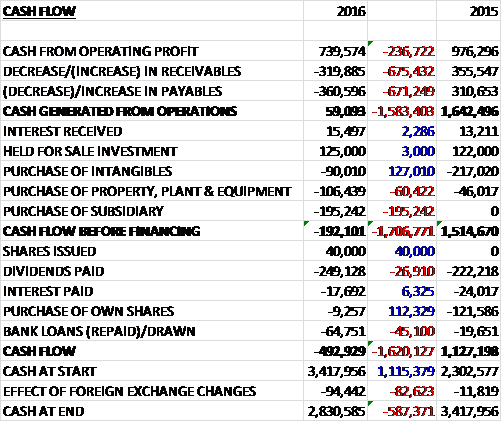
Before movements in working capital, cash profits declined by £237K to £740K. There was a cash outflow from working capital with an increase in receivables and a fall in payables so the net cash from operations came in at just £59K, a decline of £1.6M year on year. The group received £125K from the sale of the latest part of Linx but spent £90K on intangibles, £106K on property, plant & equipment and £195K on acquisitions to give a cash outflow of £192K before financing. The group repaid £65K of bank loans and spent £249K on dividends to give a cash outflow of £493K for the year and a cash level of £2.8M at the year-end.

The gross profit in the Travel Assistance business was £2M, a reduction of £115K year on year due to the loss of the HSBC Premier and Advance books in the UK. This fall has been kept in check by recruiting direct sales staff to focus efforts on building a broader customer base that is less vulnerable to such shocks. Over the last two years the group have made a significant investment in the services to enhance the technical platform, making it both easier to interface with new clients and with new travel data bases. The service now offers travel tracking, e-learning and mobile apps.

The gross profit in the Special Risks business was £1.1M, a fall of £93K when compared to last year as the number of incidents dropped during the year, with the main one being a significant extortion case in the Middle East which ran for three months. The business is now more dependent on incident related revenue than in the past as there has been a reduction in retainer income reflecting the number of insurers underwriting. The Munich office has made a significant contribution to gaining European business and there have been significant client wins for those insurers.

The gross profit in the Consultancy & Response business was £297K, a decrease of £66K when compared to 2015. The year lacked the large evacuation job in Libya which contributed 50% of this division’s revenue. In the current year the largest incident related to the Nepalese earthquake which contributed 24% of revenue and outside these two major incidents, revenue increased by 3%.

The gross profit in the Investigations business was £713K, which represents a maiden contribution from the division and represents nine months of revenue. The RISQ business specialises in employment screening and business investigations – primarily for European businesses with Asian investments. In the first nine months, the division was 11% ahead of budget and the board believe the contribution will grow as the services offered expand the range that can be put to the HR or security purchase holder. Some cross selling has already occurred and this will develop in the coming year.

The gross profit in the Product Safety business was £1M, a growth of £342K year on year. This increase is largely attributable to adding a major provider of insurance in the US and to the start of a business to business product safety service there. Business to business growth is behind board expectations but they are hopeful that the original goals set will be achieved by the end of the year. They have aligned their training in this field with academic institutions so that it becomes possible to achieve a Masters degree and the group have entered into a revenue sharing deal with a university which should benefit 2017, once the course is launched.

This year no customers accounted for more than 10% of revenues compared to two last year but the opening of the office in Germany has played a key part in winning business with Allianz. The group acts as their responder on special risk and product safety and have partnered with their Worldwide Care team to offer clients a combined comprehensive medical and travel risk package which has exciting prospects.

In July 2015 the group acquired RISQ Worldwide, an investigations business based in Singapore. The initial consideration was £259K with a further contingent consideration of up to £826K payable depending on profitability for the three years to 2018.

The group is rather exposed to currency changes. If the Rand appreciated by 10% against Sterling, the cost of operations in South Africa would increase by £150K, but this would be mitigated to some extent by a £100K rise in the value of the office building. As far as RISQ is concerned, if the Singapore dollar were to appreciate by 10% against the US dollar, the cost of operations there would rise by £107K. The group’s exposure to the Euro arises from sales to and purchases from Eurozone countries and is the euro were to depreciate 10% against sterling, profit would be reduced by £65K. Finally, if the US dollar were to depreciate by 10% against sterling, gross profit would reduce by £178K, mitigated somewhat by a £50K reduction in operating costs.

Although there are risks and the market for the group’s services is becoming ever more competitive, the board are encouraged by the way they have continued to progress over the year and are excited about the growth prospects offered by their European partners, Allianz, the US product safety business, cross selling RISQ services and potential further acquisitions.

At the current share price the shares are trading on a PE ratio of 16.5 which falls to 7.1 on next year’s consensus forecast. After an 11% increase in the final dividend the shares are yielding 3.4% which increases to 3.7% on next year’s forecast.

Overall then this has been a bit of a mixed year for the group. Profits declined but this can be attributed to adverse forex movements and the effect of acquisitions and it could be argued that underlying profits were up slightly. Net assets increased but the operating cash flow was down and rather disappointing with no free cash being generated, not helped by an adverse movement in working capital.

The travel assistance business saw profits fall due to the loss of the HSBC contract, although the decline wasn’t that bad considering. The special risk and consultancy & response business both also saw falls in profits due to a lower number of incidents with the latter not seeing a repeat of the Libyan evacuation that occurred last year. The product safety business saw profits increase due to the new insurance client in the US and the Investigations business contributed a useful maiden profit showing the acquisition to be a rather good one.

Things are a little uncertain here and the susceptibility to forex movements is a bit of a worry but a forward PE ratio of 7.1 and dividend yield of 3.7% look to have priced these concerns in – I continue to hold.

On the 1st August the group announced that it was in discussions with iJet which could lead to an offer being made for the Red24. These are at a preliminary stage so far and iJet has until the 29th August to make a firm offer. IJet later confirmed that the price being discussed is 24p per share. This obviously caused a jump in the share price but I still think it undervalues the group.

On the 26th August the group announced that discussions with iJET have moved ahead constructively and continue to do so. Following negotiation, they increased the indicative price of the possible offer from 24p per share to 26p. The deadline has now been extended so we have until the 26th September to see a bit emerges. I am holding on here given the price is below this level.

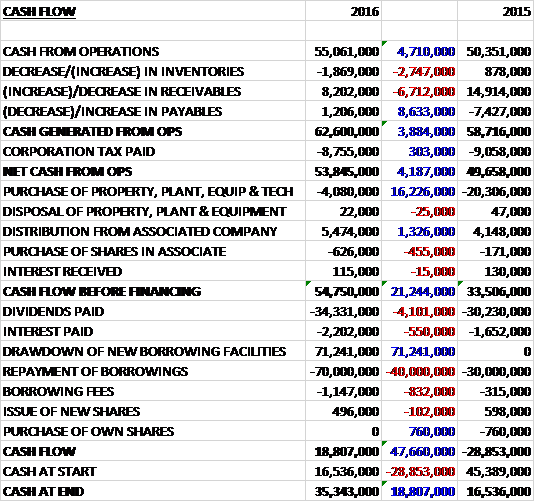
Telecom Plus Share Blog – Final Results Year Ended 2016

Telecom Plus has now released its final results for the year ended 2016.

TEPincome

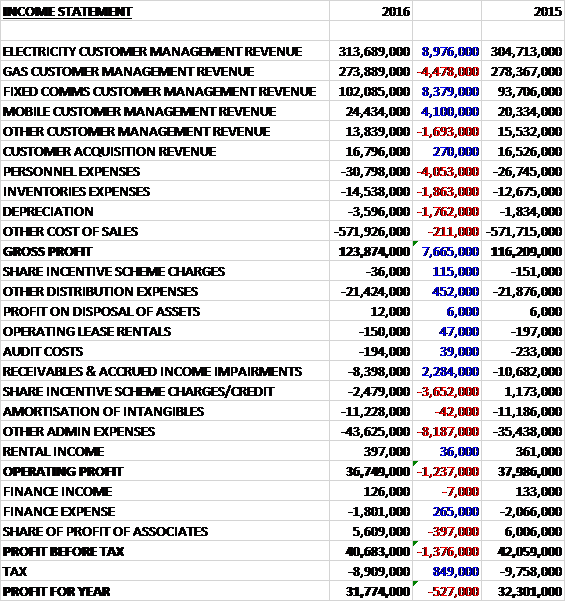
Revenues increased when compared to last year as a £4.5M decline in gas revenue and a £1.7M fall in other customer management revenue was more than offset by a £9M growth in electricity revenue, an £8.4M increase in fixed communications revenue and a £4.1M growth in mobile revenue. Personnel expenses were up £4.1M following the move into larger offices, inventory expenses increased by £1.9M and depreciation grew by £1.8M to give a gross profit £7.7M above that of 2015. Distribution expenses fell by £567K reflecting lower promotional costs associated with gathering new members and accrued income impairments were down £2.3M but there was a £3.7M negative swing on the share incentive scheme charge due to the increase in the share price, and other admin expenses were up some £8.2M, again mainly due to the move to the larger office, to give an operating profit £1.2M below that of last year. There was a small reduction in finance expenses and an £849K decline in tax costs but the share of profit from the associate was £397K lower which meant that the profit for the year came in at £31.8M, a decline of £527K year on year.

TEPassets

When compared to the end point of last year, total assets increased by £2.5M driven by an £11.5M growth in freehold land and buildings, a £9.2M increase in investment properties relating to the old HQ, an £18.8M increase in cash, a £1.9M growth in inventories and a £1.6M increase in fixtures & fittings, partially offset by a £22.7M decline in assets under construction as the new head office was completed, an £11.2M decrease in the energy agreement intangible asset and a £7.5M fall in accrued income. Total liabilities also grew during the year due to a £1.1M increase in borrowings and a £1.7M growth in other taxes and social security payables (although note the £21.5M of deferred consideration became current). The end result was a net tangible asset level of -£3.8M, a positive movement of £13.2M year on year.

TEPcash

Before movements in working capital, cash profits increased by £4.7M to £55.1M. There was a cash inflow from working capital due to a fall in receivables, but this was less than last year and after tax payments fell by £303K, the net cash from operations came in at £53.8M, a growth of £4.2M year on year. The group spent £4.1M on property, plant and equipment but this was covered by the £5.5M in dividends received from the associate to give a free cash flow of £54.8M. Of this, £2.2M was spent on interest payments and £34.3M went on dividends to give a cash flow for the year of £18.8M and a cash level of £35.3M at the year-end.

During the year he group has seen a slowdown in the growth rate in service numbers that they have achieved historically. The principal factors behind this are the material fall in wholesale energy commodity prices over the last 30 months which has created a significant gap between the standard variable tariffs paid by most customers and the short-term fixed price deals offered by the group’s competitors to customers who switch, and the decision they took in March 2015 to stop offering introductory deals to new members in favour of an everyday low pricing approach.

Against this background, there has still been an increase in the number of services the group have provided, increasing by 88,000 to 2,181,704. Within this total the number of residential members now taking all five core services have increased from 58,753 to 76,765. This have been driven by the decision to re-invest the money the group were spending on introductory offers into making the “Double Gold” bundle even more attractive which the board expect to lead to lower churn and higher customer satisfaction.

Revenue growth was adversely affected by a fall in average energy consumption within the domestic membership base compared with the prior year, reflecting the impact of the energy efficiency measures that have been delivered by the industry over the last few years which was exacerbated by lower average energy prices during the year following the price reductions the group implemented in early 2015.

The group’s customer churn has risen as a result of the attractive introductory deals being offered by other suppliers, although it remains below the industry average. All core services provided saw growth with the highlight being a 17% rise in the number of mobile services which means that penetration of mobile within the services offered has now reached nearly 30%, a level of growth that should continue given the fact that management released new price plans in January of this year.

Last Autumn the group announced the nationwide rollout of Project Daffodil, their free LED light bulb replacement service which is only available to members who have switched all their utilities to Telecom Plus. This scheme is expected to reduce their electricity bills by about 11% and goes a long way towards narrowing the gap between their energy prices and the introductory tariffs available elsewhere for potential new members and has resulted in a significant improvement in the quality of new members joining as well as an increase in the number of existing members who are adding additional services in order to take advantage of the benefit. The installations started in January this year and as the cost of installation is expenses at the time it takes place, these expenses are expected to increase in the coming year.

As far as mobile is concerned, the group apparently retain a good working relationship with EE following their recent acquisition by BT, and they have recently extended their MVNO agreement with them on improved commercial terms which includes then giving the group access to their 4G network later in the year.

Earlier in the year the government announced that they are committed to deregulating the domestic water supply market before the end of the current parliament. This potentially creates a new opportunity for the group to add the supply of water to their existing range of utilities offered. The board also believe that there is an opportunity to offer a range of insurance products where the cost of the policies can be paid to them monthly alongside the other services they offer. They intend to start with home insurance later in the year with a view to expanding the range in due course to include motor, pet and travel cover.

The group have trialled a number of direct marketing campaigns to existing members to encourage them to take additional services, using the opportunity of receiving free LED bulbs to induce them to do so. They are planning to roll this out to a wider cross section of their existing membership base over the coming months, as well as targeting former members as part of a win-back campaign. They are also looking to invest in their IT system which will incur meaningful costs but in the longer term should improve efficiency.

The group’s share of profits from Opus Energy fell by £400K to £5.6M. This performance, during a year in which it achieved further significant growth in customer numbers and gained market share, was broadly in line with expectations and reflects the impact of the removal last summer of the exemption from the Climate Change Levy for business customers supplied with European power.

The group still has a good reputation with customers and was ranked second in the UK customer satisfaction index with none of the other utility and telecoms providers making it into the top 30.

The board are concerned about the high and increasing costs imposed on the industry in order to comply with government policy, much of which seems to be imposed with inadequate thought given to delivering initiatives in a way that will minimise costs, which ultimately get passed on to customers. Examples include the current faster switching initiative, the establishment of Smart Energy GB, the structure of the smart meter roll out programme, the over engineering of the specification for the DCC and the unrealistic time frames which are adopted for any industry change.

The group have appointed Beatrice Holland as a new independent non-executive director. She is a member of the board of Brown Advisory, a non-executive director of M&G and chairman at Millbank Investment Managers. Michael Paiva will be retiring at the forthcoming AGM having completed nine years as an independent non-executive director.

So far this year, the board are seeing a significant improvement in the quality of new members and are running slightly ahead of the level achieved in the previous quarter in relation to quantity. The proportion of new customers being signed up who take the Double Gold bundle is now running at around 55% compared to 34% immediately before Project Daffodil was announced.

The current adverse market conditions will not persist indefinitely and the board are confident that when the recent downward trend in wholesale commodity prices reverses, their growth rate will start returning towards the higher levels they have historically achieved. In the meantime they expect to continue to deliver further modest growth for the current year with the adjusted pre-tax profits being between £55M and £59M.

At the year-end the group had a net debt position of £56.3M compared to £74M last year and includes the £21.5M payable to N Power in December. At the current share price the shares trade on a PE ratio of 25.2 which falls to 16.5 on next year’s consensus forecast. After a 15% increase in the full year dividend the shares are trading on a yield of 4.6% which increases to 5% on next year’s forecast.

Overall then this has been a bit of a sluggish year for the group but one of progress nonetheless. Profits were down, although this was due to the higher share price giving rise to higher costs associated with the share incentive scheme and ignoring this, profits were modestly up. The net tangible asset base also improved, although it did remain negative and the operating cash flow increased with plenty of free cash being generated.

There was a slowdown in the growth rates of services provided and energy consumption declined but the introduction of the free LED scheme led to a significant increase in the number of members taking all services. The Opus associate ran into difficulty after the removal of exemption from the climate change levy for its customers but it is still profitable and growing market shares. The introduction of insurance looks interesting and the board are expecting modest growth this year.

Despite the decent 5% forward yield, the forward PE ratio of 16.5 looks as though it prices quite a bit of growth in already, however, and I am not rushing to own the shares quite yet.

Paypoint Share Blog – Final Results Year Ended 2016

Paypoint has now released its final results for the year ended 2016.

PAYincome

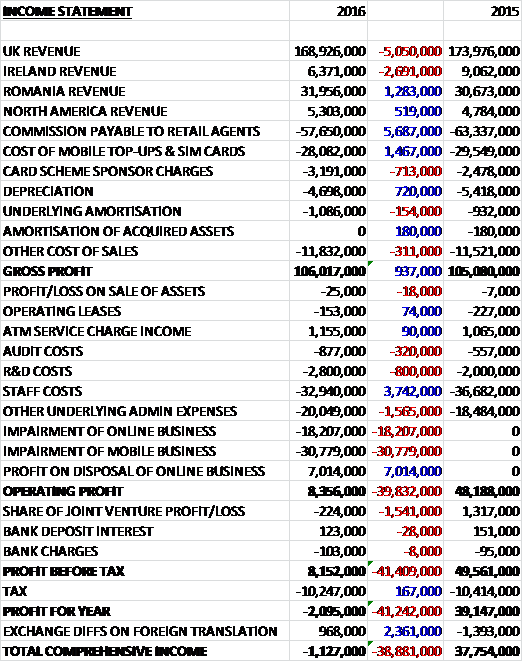
Revenues declined when compared to last year as a £1.3M increase in Romania revenue and a £519K growth in North American revenue was more than offset by a £5.1M decrease in UK revenue and a £2.7M fall in Irish revenue. The commission payable to retail agents fell by £5.7M, the cost of mobile top ups and sim cards was down £1.5M and depreciation fell by £720K as the estimated useful life of the automatic teller machines was increased, but card scheme sponsor charges were up £713K and other cost of sales increased by £311K which meant that the gross profit was £937K higher than last year. Staff costs decreased by £3.7M but R&D costs increased by £800K and other underlying admin costs increased by £1.6M but there were some large one-off costs this year. There was a £30.8M impairment of the mobile business and an £18.2 impairment of the online business offset by a £7M profit on the disposal of the online business to give an operating profit £40M below that of last time. The joint venture sunk to a loss, a £1.5M detrimental movement and after tax costs were down modestly, the loss for the year came in at £2.1M, a detrimental movement of £41.2M year on year.

PAYassets

When compared to the end point of last year, total assets declined by £71.1M, driven by a £58.5M reduction in items in the course of collection, a £52.8M decrease in intangible assets held for sale and a £1.5M reduction in other assets held for sale, partially offset by a £19.2M increase in cash, a £17.8M growth in cash collected on behalf of clients, a £3M increase in trade receivables and a £1.9M growth in development costs. Total liabilities also declined during the year as a £56.7M decline in settlements payable and a £1.9M fall in trade payables was partially offset by a £17.8M increase in the amount owed in respect of client cash. This all meant that net tangible assets were £71.8M, a growth of £23.3M year on year.

PAYcash

Before movements in working capital, cash profits increased by £762K to £57.1M. There was a large cash inflow from working capital due to a large increase in payables and after tax payments increased by £1.3M the net cash from operations came in at £59M, a growth of £14.1M year on year. The group spent £8.2M on property, plant and equipment but received £12M from the disposal of a subsidiary to give a free cash flow of £62.9M. Of this, £576K was spent on share based payments and £27.4M was spent on dividends to give a cash flow of £34.9M and a cash level of £83.2M at the year-end.

Overall net revenue increased by just 0.4% with a 1.9% increase in the retail networks but a fall of 10.7% in mobile and online. The increase in retail networks reflects a fall in commission payable to retail agents as the group adjusted the share of commission in response to competitor rates.

The Bill and general net revenue increased by 0.9% to £59.M, benefiting from changes to retail terms in response to competitor rates. Transactions were lower with UK and Irish transactions down 4.1% due to lower energy transactions. An apparent decrease in consumption, together with the effect of higher average transaction values on prepaid energy transactions and lower energy prices exceeded the impact of meter growth. Although not yet material, the multi-channel payment solution, Multipay, continues to grow strongly and sales to further clients have been agreed, including the first big six energy client. The business is also attracting interest from other sectors. Romanian bill payment transactions grew by 12.7% as a result of increasing market share, new clients and road tax payments.

The Top-up net revenue declined by 9.8% to £20.9M. Transactions decreased as a result of the continued decline in mobile top-up volumes in the UK and Ireland of 12.9%, partly offset by an increase in other top up transactions and Romanian mobile top ups. There was a reduction in transaction value as the average value of mobile top ups.

Retail services net revenue increased by 14.3% to £30.3M driven by the increases in parcels, ATM transactions, payment card and money transfer. Transaction volume increased across all products. ATM transactions increased by 22%, payment card transactions by 17%, money transfer transactions by 26% and parcels by 10% over the year. Higher average ATM transaction and money transfer values have driven an increase in total transaction value in excess of the increase in transaction volume.

The Collect+ business produced a loss of £448K compared to a profit of £2.6M last year. Within the consumer send market, there continues to be substantial price competition and consequently the Collect+ management team has focussed on developing Click and Collect and returns. Following Yodel’s proposed increase in charges to Collect+ the board have continued to discuss the future of the joint venture. A temporary increase in Yodel’s charges during these negotiations has resulted in the loss being reported.

The net revenue in the Mobile and Online business was £13M, a decline of nearly 11% year on year. The last year included mobile payments for the full duration and the online business up to January. Transactions increased by 3.6% with parking transactions up 29.8% and online processing transactions down 6.2%.

The business has continued to add parking contracts with councils and parking authorities as they provide them with a more convenient and cost effective method for collecting parking charges. They have fully rolled out the parking payment services in Paris during the year and a contract has been signed to service a number of London underground car parks as part of a TfL initiative, whilst local authorities such as Brighton and Manchester have significantly reduced the use of pay and display machines.

Online revenues decreased by 33.5% including the impact of its inclusion for only part of the year but revenue in Mobile increased by 23.6% with net revenue up by 21.4% with French transactions increasing considerably where parking transactions were up 155%.

Terminal sites overall have increased by 4.5% to 39,228. In the UK and Ireland, site numbers have expanded by 780, an increase of 2.8%. During the year they continued to roll out their PPoS integrated solution to retailers which combines a virtual terminal with a plug in reader, to provide the service at lower cost across all till lanes. As well as enhancing their service to retailers, this allows them to redeploy terminals for use in Romania. In Romania the group increased the number of terminal sites by 907, a growth of 9.8%. They increased the number of sites offering the Collect+ parcels in the year by 105, bringing the total to 5,936 sites, although this growth has been constrained during the discussion of the future of Collect+ with Yodel.

The mobile payments business continues to be held for sale. The group continues to pursue the sale of the business but it has proved challenging. In light of this, they have re-evaluated its fair value which has given rise to an impairment charge of £30.8M. In addition, the group also recorded an impairment of all goodwill in the online payments business of £18.2M before it was sold in January for £12.3M of cash, generating a profit on disposal of £7M. The impact of the online payments business on the group’s results was a net loss of £200K.

After twelve years of success with their current terminal, their next generation point of sale terminal named PayPoint One, which will provide everything needed to run in store technology within one compact device, is currently in commercial trials. The new terminal is based on cloud-enabled Android tablet technology, which transforms the flexibility and ease of use of the device. It has a full range of connectivity options including WiFi, Bluetooth and beacon. It will also introduce EPoS which will enable retailers to use the terminal for product and price scanning, replacing their tills, and later to run their full back office stock control and replenishment.

MultiPay has been in development and introduced with encouraging early success. The service combines payments in store with web, app, IVR and SMS payments. The pilot client, Ultima, is growing very strongly and is proving their strategic intent to serve customers with a balance of retail and digital payments, currently in a 70:30 ratio. Ultima’s growth has been based on a particular prepay specialism which is taking share from the big six.

The group have also signed several smaller energy companies and a framework agreement with Procurement for Housing, which should also serve smaller clients. They have now secured their first Big Six energy client for MultiPay, in Scottish and Southern Energy, the UK’s number two by size, which will go live in the next few months. They are also pursuing further Big 6 clients and already have an agreement with N Power to support smart meter code generation.

It is notable that cash usage is in slow but long term decline. To address online and cashless payment growth, the group have developed solutions for multi-channel payment systems for non-retail and card and contactless payments in store as sources for future growth. They will continue to extend in store card payments functionality. They will also use MultiPay to establish a strong position in digital payments for smart meters and other payments to complement their strength in cash.

The board are looking to further extend their geographic footprint, potentially into new countries, although international prospecting will be of lower priority in the immediate future. This is in addition to growing their existing retail services portfolio that has performed well over many years such as ATMs, card payments, Western Union, Parcels and SIM card sales.

During the year Eric Anstee and Stephen Rowley stepped down from the board having been with the company since 2008. They have been replaced as non-executive directors by Gill Barr and Giles Kerr. Gill brings experience in marketing and Giles is a seasoned finance director. In the coming year, David Morrison will retire.

The group are planning a cautious return of capital and plan to release the surplus over a period of five years at £25M per annum and they do not intend to borrow more than one times EBITDA. If there is a potential acquisition which offers better returns, however, they may defer the special dividend. In addition they will distribute the sale proceeds from the sale of the online payments business together with the final dividend from the current year. They also intend to distribute sale proceeds from the mobile payments business once it is completed.

The bill and general payments service has continued to be resilient as consumers’ discretion in expenditure is limited for essential services and their service continues to be popular.
Utility providers continue to install new prepay gas and electricity meters which should have a beneficial impact on transaction volumes. There has been an adverse impact on mobile top-ups as mobile operators continue to offer more airtime at lower cost and to promote prepay less than contract.

For the current year, trading is line with board expectations but the continuing losses of Mobile will lower earnings until sold. The retail networks in the UK and Romania should continue to deliver profitable growth from the breadth of services offered and extensive client base. The group will continue to invest in network expansion, the roll out of PayPoint One and new services to improve network quality further.

At the current share price the shares are trading on a PE ratio of 16.3 which falls to 14.8 on next year’s consensus forecast. After a 10.1% increase in the total dividend, the shares are yielding 4.4% which increases to 6.8% on next year’s forecast reflecting the increased special dividend expected in 2017.

Overall then this has been a mixed year for the group. Profits were down but this was due to impairments and underlying profits were modestly higher. Net tangible assets increased, as did the operating cash flow, aided by a large increase in payables, to give plenty of free cash. Bill and General payments were broadly flat as lower energy transactions in the UK and Ireland were offset by other payments and strong growth in Romania. Retail Services performed well due to a rise in ATM transactions and a positive performance from payments cards and money transfer.

Top-ups performed less well due to a continued reduction in mobile top-ups in the UK as customers move to contracts, and the Collect+ joint venture is now loss making after Yodel put their charges up. The Mobile Payments business continues to cause a drag on results and is looking hard to shift but the group does seem to have a number of initiatives for growth in the rest of the business going forward. The forward PE of 14.8 does not look that good value given the sluggish market, but I suspect the share price is being held up by the forward dividend yield of 6.8%. I have taken profit.

On the 5th July the group announced that Finance Director George Earle will retire from his role in 2017 having been in the post since 2004. He will be replaced by Rachel Kentleton who is currently group director Strategy and Implementation at Easy Jet.

On the 28th July the group released a Q1 trading update. Transactions increased by 1% and revenue increased by 3% with net revenue up 8% to £29M. In the UK and Ireland, retail services transactions were up 11.7% but bill and general transactions were 5% lower than last year due to reduced levels of energy consumption. Top-ups decreased 17.3% from last year as a result of the decline in top-ups other than e-money. UK and Irish retail sites declined by 191 over the quarter due to the decision to pause the roll out of sites pending the introduction of the new Paypoint One terminal. Sites are expected to increase in the rest of the year.

In Romania, profitable growth continued. The business processed 16M bill payments, up 10% on last year and the terminal estate increased by 197 sites over the quarter with new clients and services being added. Collect+ volumes increased by 5.8% but there was a small decrease in the number of sites. The discussions with Yodel are apparently progressing. In the mobile payments business, transactions increased by 35%, mainly as a result of additional volumes from existing clients and the sale of the business is ongoing. Net cash at the period-end was £74M compared to £81M at the start of the quarter.

Overall trading remains in line with management expectations and the commercial trial of PayPoint One is encouraging. Together with multipay, which is also progressing well, the board are confident they have the platforms for extending and enhancing their proposition. Overall this update seems fairly decent and I am tempted to get back in here.

On the 28th September the group announced the launch of PayPoint One, a new retailer terminal. The platform is designed to help retailers run their whole store from one device and will, over time, replace the existing second generation terminal after twelve years of use. The new terminal combines EPoS, card payments and PayPoint services in a single platform and features include quick payments with integrated contactless, Apple Pay and Android Pay. In addition, they have stated that trading is in line with their expectations.

Cranswick Share Blog – Final Results Year Ended 2016

Cranswick has now released its final results for the year ended 2016.

CWKincome

Revenues increased when compared to 2015 as a £1.7M fall in European revenue was more than offset by a £64.7M growth in UK revenue and a £3.4M increase in ROW revenue. Depreciation was up £2.9M, cost of inventories increased by £26.1M and other cost of sales grew by £17.5M. Biological asset movements were £3.3M less negative than last year and the gross profit increased by £22.6M. Selling & Distribution costs increased by £4.4M, R&D expenses increased by £791K and other admin expenses grew by £6.1M. We then see a £4.6M goodwill impairment and the amortisation of acquired intangibles were up £725K to give an operating profit some £5.5M above that of 2015. Loan interest costs fell by £473K but some other finance costs increased modestly. After tax expenses increased by £1.7M the profit for the year came in at £45.4M, a growth of £4.1M year on year.

CWKassets

Total assets increased by £16.5M when compared to last year driven by a £13.9M growth in cash, an £8.4M increase in the value of plant & equipment, a £2.6M growth in the value of freehold land and buildings, a £1.7M growth in trade receivables and a £1.5M increase in assets under construction, partially offset by a £4.6M decrease in goodwill, a £3M fall in inventories, a £1.4M decline in the value of customer relationships, and a £1.4M fall in prepayments and accrued income. Total liabilities declined during the year as a £4.5M growth in other payables and a £1.5M increase in provisions was more than offset by a £21.3M fall in revolving credit facility loans, a £1.7M decline in deferred tax liabilities and a £1.2M fall in the pension deficit. The end result was a net tangible asset level of £228.3M, a growth of £41.7M year on year.

CWKcash

Before movements in working capital, cash profits increased by £11.5M to £89.8M. There was a large cash inflow from working capital and after tax payments came in at £83.4M, a growth of £29.9M year on year. The group spent £34.3M on property, plant and equipment and after small payments relating to government grants and the sale of assets, the free cash flow was £49.9M. Of this, £14.6M went on dividends and £22M was used to repay borrowings to give a cash flow of £13.9M and a cash level of £17.8M at the year-end – great stuff!

The improved performance reflected additional volumes and a full year contribution from Benson Park compared to the five months contribution last year, along with operational efficiencies generated by previous investments and a good performance from the pasty business. Underlying revenue grew by 4.7% with underlying sales volumes ahead by 10%.

Volumes in most of the categories that the group operate are either growing slowly or in modest decline, although premium segments of these categories continue to materially outperform. Examples of this trend are premium bacon and sausage which are showing strong volume growth whereas the overall categories are slightly down.

Pig prices remained relatively stable in the first half of the year compared to the volatility experienced in the previous three years, but then fell sharply in the second half and in particular, in Q4. The UK pig price fell 15% during the year and was on average 17% lower than last year. Improvements in productivity and prolificacy together with lower feed costs helped to partly offset the impact of these lower prices.

Total export volumes grew by 23% compared to last year. There was volume growth of 32% in Far Eastern markets, 7% in the US and 8% in the rest of the world. Further opportunities are being explored and the range or products being exported is continually being developed.

Fresh pork sales grew by 9% driven, in part, by the recovery of business with one of the group’s principal retail customers in the second half of last year. UK retail fresh pork sales as a whole fell 9% year on year due to a fall in pig prices during the year. The recent pulled pork advertising campaign resulted in a 19% increase in shoulder joint sales during the campaign. The next phase of redevelopment of the Norfolk facility is now underway. This £6M investment to replace the existing abattoir will increase capacity, improve efficiencies and facilitate the site’s push for USDA accreditation.

Cooked meat sales fell 4% reflecting overall category deflation and lower volumes to one retail customer. Volumes for the category returned to growth in Q4, however. Further substantial capital investment at the Sutton Fields facility will upgrade staff amenities and refurbish both high and low risk production areas to enable expansion into new categories with existing customers and develop further capability to supply “slow-cook” and food to go ranges to manufacturing and food service customers. A major three year capital investment programme at the Valley Park facility will refurbish the fabric of the site and upgrade chilling and storage facilities to support future growth. New slicing capacity is also being added to the Milton Keynes operation to accommodate a substantial additional volume which will come on stream in H2 of the new year.

Sausage sales were 1% higher supported by strong volume growth of 5%. The premium sector of the market is the main driver of growth as consumers are prepared to pay a modest premium for a step change in quality. Premium beef burger volumes were up 18% and further capital investment to upgrade mixing and filling equipment is underway at the Lazenby facility in Hull to support substantial additional business which will come on stream in the first half of the coming year. In addition, they are investing £2M to reinstate sausage production capabilities at the Norfolk facility to accommodate new butcher’s choice sausage business from one of the main retail customers.

Bacon and gammon sales were 12% ahead as continued development of the hand-cured air-dried bacon was supported by strong premium gammon sales. This growth was underpinned by gaining sole supply status for premium bacon and gammon with one of the main retail customers shortly before the end of H1. Several new products were launched with both existing and new customers in the run up to the peak Christmas trading period. The redevelopment and conversion of the former Kingston Foods site in Milton Keynes into a gammon facility was completed during the year and it is now targeting a new sector of the bacon and gammon market.

Sales of premium poultry from Benson Park grew by 24% when compared to the equivalent post acquisition period in both years. New business wins during the year, both with existing and new customers, leave the business well placed moving into the new year. The capital investment programme which was underway when the business was acquired is now complete. The enlarged factory footprint and new inline, flat bed cooking and spiral cooking equipment was commissioned ahead of the peak Christmas trading period. The £9M investment programme has substantially increased capacity and has improved operational efficiencies as well as enabling the business to offer a broader product range.

Pastry sales were 31% ahead of the prior year, continuing the positive development since the category was introduced. Operational performance at the site continued the marked improvement seen in the second half of the previous year and the category made a positive contribution to the overall group result. New product lines were launched which, couple with a strong Christmas programme, helped drive top-line growth. New spring product launches with the principal customer leave the business well placed to deliver further growth going forward.

Sales of continental products increased by 11% reflecting the UK consumer’s strong appetite for speciality continental products. Category growth was supported by new product launches and new retail contracts together with a continued focus on sourcing new artisan products from across Europe. The extension of the Guinness Circle facility to produce British cured meat products was completed during the year and will deliver a range of premium cured meats both under the Woodall’s rand and retail customer own label.

Sandwich sales grew 3%, supported by new contract wins brought on stream part way through the first half of the last year. Top line growth was supported by an improved operational performance as the business continued to strip out underperforming accounts and rationalise the product range. Part way through the year, however, the business received confirmation that a key account would not be extended beyond its current term which ended before the year-end.
Whilst the loss of the contract adversely affected the final four weeks of trading and is having a similar effect in the early part of the new year, a new substantial contract has been secured which is expected to come on stream during the early summer, leaving the outlook for the sandwich business far more secure.

During the year the group invested £34M in its asset base. This provided for additional capacity, the upgrading of equipment, improved operational efficiencies and increased resource in product innovation. Principal areas of investment were in fresh pork and cooked meats, including Benson Park. In addition there are a number of projects either underway or planned in the near term as the board seeks to increase capacity and enhance the quality and efficiency of their production facilities. The group have also contracted for future capex totalling a substantial £16.4M.

In April 2016, after the year-end, the group acquired CCL Holdings along with its subsidiary Crown Chicken, for a cash consideration of £39.3M. Crown Chicken breeds, rears and processes fresh chicken and also mills grain for the production of animal feed. The acquisition provides the group with a fully integrated supply chain for its poultry business. The total cash consideration was £43.2M and the acquisition generated £15.9M. There are no figures given for the profitability of the acquired business.

Following a change in the customer base of the Sandwiches business, an impairment review resulted in the recognition of a goodwill impairment of £4.6M. The board have stated that they have considered responses to varying EU referendum outcomes to ensure that it is well prepared but it is unclear as to how the group will be affected.

At the current share price the shares trade on a PE ratio of 20.7 which falls to 18 on next year’s consensus forecast. After a 10.3% increase in the dividend, the shares are yielding 1.8% which increases to 1.9% on next year’s forecast. At the year-end, the group had a net cash position of £17.8M compared to a net debt position of £17.3M at the end of last year.

Overall then this has been a strong year for the group. Profits were up, net assets increased and operational cash flow grew, with plenty of free cash being generated. Much of this growth has come from the previous acquisition of Benson Park but there was also growth in exports, fresh pork due to the recovery in business from a large customer, bacon & gammon and the pastry business which is now profitable. The only area where growth is not apparent is cold meats and sandwiches where the group lost a major contract.

A lot of investment is being made in the business and the above excellent performance is despite sluggish markets in general. This good news does seem to be baked into the share price, however, as the forward PE ratio of 18 and dividend yield of 1.9% is nothing to write home about. This is an excellent company but I feel the current uncertainty in the market is not really reflected in the share price and I have taken profits.

On the 25th July the group released a trading update covering Q1. Revenue in the three months was 11% ahead of the same period last year driven by strong volume growth. Underlying revenue was 5% higher with volumes up 12% as the benefit of lower input prices continued to be passed on to customers. Export volumes to Far Eastern markets were 60% ahead of the same period last year, reflecting both ongoing robust demand from the region and increased output from the two primary processing facilities.

The integration of Crown Chicken is progressing to plan with the business making a positive contribution in line with board expectations. During the period the group also continued to invest heavily across the asset base to increase capacity, add new capability and drive further operating efficiencies. Net debt stood at £22M at the period end compared to net cash of £18M at the year-end.

The group has also announced the sale of the sandwich business to Greencore for a cash consideration of £15M. Overall the board are confident in the group prospects for the current year.

On the 16th November the group announced that it acquired Dunbia Ballymena for cash. The business is a Northern Irish pork processing business which processes around 7,800 pigs each week. The transaction will be funded from the group’s existing debt facilities and is expected to be earnings neutral in the current year and earnings enhancing in 2018.

Berkeley Group Share Blog – Final Results Year Ended 2016

Berkeley Homes has now released its prelim results for the year ended 2016.

BKGincome

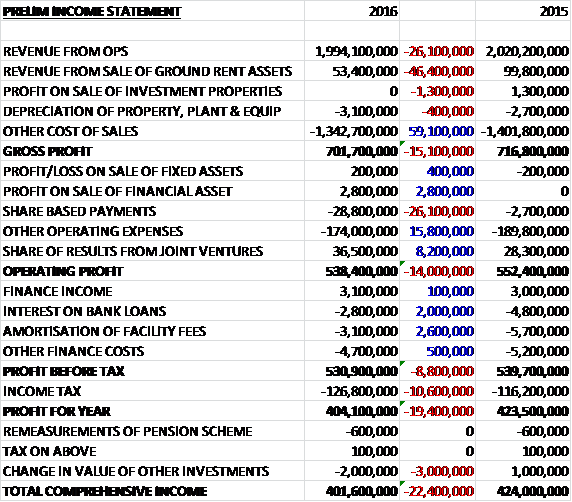
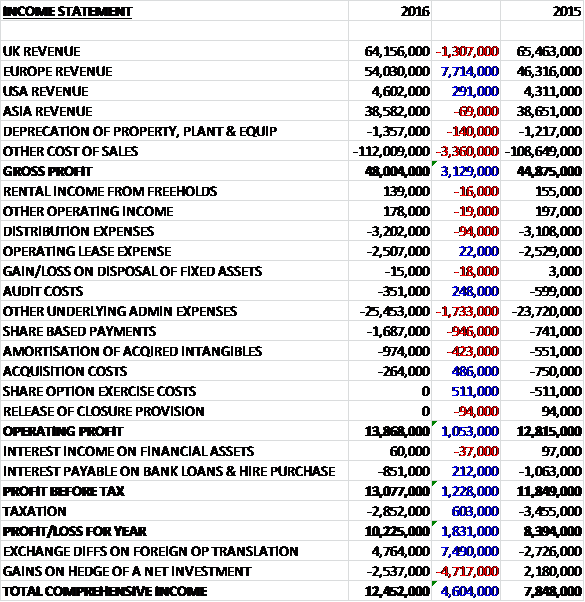
Revenues declined when compared to last year with a £26.1M fall in revenues from operations and a £46.4M decline in revenue from the sale of ground rents. Cost of sales also fell during the year to give a gross profit £15.1M below that of last year. The group also made a £2.8M profit from the sale of fixed assets and £8.2M more than last year from the joint ventures but share based payments increased by £26.1M to an astonishing £28.8M relating to the acceleration of the accounting charge for the modification of various LTIPs following changes to the dividend programme during the year. After other operating expenses increased by £15.8M, the operating profit fell by £14M. There was a £2M fall in bank loan interest and a £2.6M decrease in facility fee amortisation but income tax charges increased by £10.6M to give a profit for the year of £404.1M, a decline of £19.4M year on year.

BKGassets

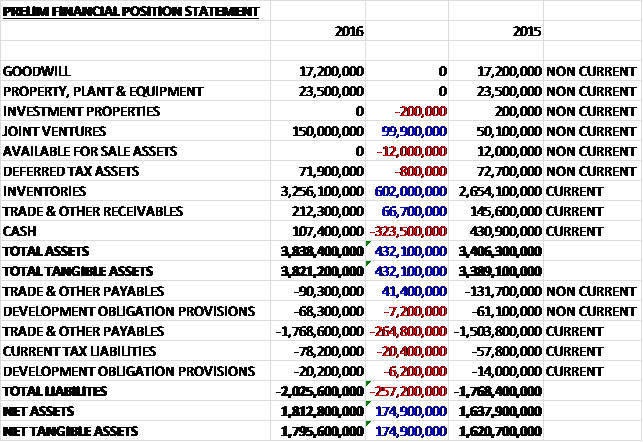
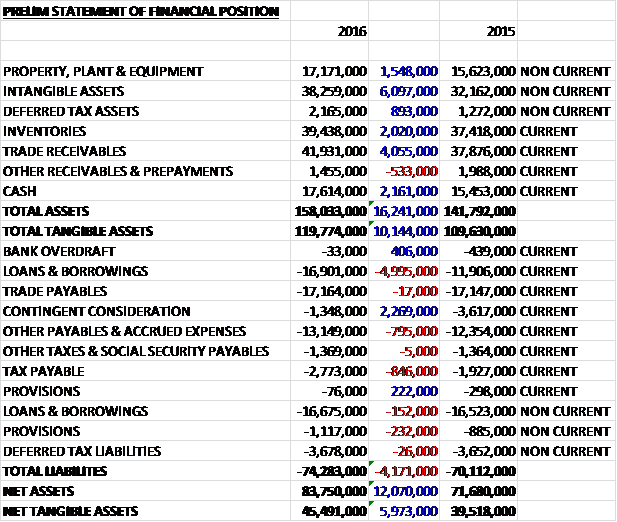
When compared to the end point of last year, total assets increased by £432.1M driven by a £602M growth in inventories, a £99.9M increase in investments in joint ventures reflecting funding into the St. William joint venture and profits generated in St. Edward but not distributed, and a £66.7M growth in receivables, partially offset by a £323.5M decline in cash and a £12M decrease in available for sale assets. Total liabilities also increased during the year due to a £223.4M increase in payables due to a growth in on account receipts from customers, a £20.4M growth in current tax liabilities and a £13.4M increase in development obligation provisions. The end result is a net tangible asset level of £1.797BN, a growth of £174.9M year on year.

BKGcash

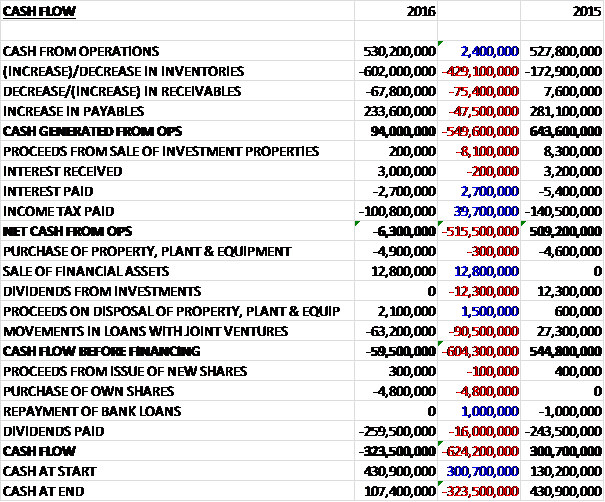
Before movements in working capital, cash profits increased by £2.4M to £530.2M. There was a large cash outflow from working capital, however, with a £602M cash outflow on inventories. There was an £8.1M decline in proceeds from the sale of investment properties and after tax payments fell by £39.7M, there was a net cash outflow from operations of £6.3M, a detrimental movement of £515.5M year on year. The group sold £12.8M of financial assets but invested £63.2M in loans to joint ventures which meant that before financing, there was a cash outflow of £59.5M. The group also spent £259.5M on dividends to give a cash outflow for the year of £323.5M and a cash level of £107.4M at the year-end.

During the year the group sold 3,776 homes at an average selling price of £515K which corresponds to 3,355 sold at £575K last year, reflecting the mix of properties sold with the group completing two student developments in the year. They made gross profit of £650.7M from operations, an increase of £19M year on year and £51M profit on the sale of ground rent assets, a decline of £34.1M. Revenue of £26.6M from commercial activities was down £45.1M on last year and included the sale of 119,000 square feet of office, retail and leisure space across a number of developments with last year benefiting from an 89,000 square foot hotel at Goldman’s Fields.

The group acquired 12 new sites, encompassing 8,600 plots, secured nine new planning consents and 21 revised planning consents. This has meant the land holdings have risen to 42,858 plots with an estimated future gross margin of £6.1BN, this is up from the 37,473 plots at £5.3BN a year ago. The new sites include a range from outside London in locations such as Ascot, Wokingham and Southwater, and in London at Cockfosters, Black Heath and Paddington, along with the large, complex and long-term regeneration sites of Stephenson Street, the Oval Gasworks, and within St. William, the former gasworks at Fulham, Hornsey, Watford and Borehamwood. Five of the sites have been acquired unconditionally and seven are contracted on a subject to planning or vacant possession basis.

The new planning consents include White City for over 1,450 homes to be delivered over the next fifteen years, St. William’s scheme in Battersea, West End Green in Paddington and on other developments in Southwater, Taplow, Winchester, Latchmere, Kingston and Cranleigh, some of which remain subject to finalisation of section 106 agreements.

The revised consents include the securing of an improved masterplan at Southall along with a resolution to grant detailed planning for the first phase of this long-term regeneration scheme. This phase will comprise some 620 units over nine blocks with 1.4 acres of public parkland. The affordable housing will be delivered ahead of the private units. The group’s long term regeneration schemes now comprise Royal Arsenal, Kidbrooke Village, Woodberry Down, Beaufort Park, Southall and Stephenson Street which was acquired in the year. This latter site comprises some 27 acres adjacent to West Ham station.

The group’s land holdings at the year-end are across 77 sites, of which 56 have an implementable planning consent and are in construction, a further 7 have at least a resolution to grant planning and 14 remain in the planning process, eleven of which are subject to conditional contracts.

During Q4 the group launched a new design concept called the Urban House. This enables twice as many homes to be built on a site compared to traditional terraced housing. The houses are three storeys and the back garden is replaced with a private roof garden. The first 22 homes of this prototype have been built on two streets at Kidbrooke Village and others are under construction at Green Park Village in Reading. The group believes that these houses will offer local authorities a new way of providing high density family homes and the increase in density will make smaller sites viable for residential development.

As part of the estate regeneration programme at Woodberry Down, the group have worked with the London Wildlife Trust to restore an eleven hectare wetland and at One Tower Bridge they are building a 900 seat theatre. In Bath, they recently completed 307 student rooms for Bath Spa University which won a Royal Town Planning Institute Award for Planning Excellence.

St. Edward has four schemes currently in development at Stanmore Place, Kensington High Street, The Strand and, launched in H1, a new site at Green Park in Reading. 240 homes were sold in the year at an average selling price of £1,329,000. Some 1,868 plots in the group’s land holdings relate to St. Edward schemes and the business is continuing to identify opportunities in which to add value to the joint venture, controlling a commercial site in Westminster which has a detailed planning consent but will not move into development until the premises are vacated by the current tenant. 3,599 plots in the land bank relate to St. William schemes and the group is working closely with National Grid to identify sites from across its portfolio to bring into its land holdings. Of the 12 new sites acquired by the group during the year, four were through this joint venture.

Over the course of the year the housing market has remained stable with forward sales increasing by 10% to £3.25BN, reflecting a greater value of new properties exchanged in the period compared to those taken to profit in the year. The forward sales have now peaked as the group enters a period of enhanced delivery over the next two years, over which time the forward sales and customer deposits are likely to reduce with customers buying later in the development cycle as market conditions normalise.

During last year the group dismissed finance director, Nicholas Simpkin, who issued legal proceedings in the employment tribunal against the company. They are being defended by the company with the assistance of external professional advisors.

The upcoming EU referendum is clearly a major headwind here with an out vote likely to severely affect the market. On the other hand, the group are encouraged by the noises coming out of the new mayoral administration in London which has apparently shown some welcome signs of adopting an approach to delivery which is “ambitious and pragmatic”.

There is a robust underlying demand but uncertainty is impacting current transaction levels with reservations over five months to May down 20% on reduced new launches in the run up to the EU Referendum. This had a more distinct impact on the higher end of the market which has also been affected by increased transaction taxes and the policy shift against buy-to-let investors. The group continue to achieve sales prices ahead of their business plan with price inflation remaining for properties of less than £1.25M where demand is more robust. They are able to absorb the increased cost of transaction taxes above this level in their pricing, however. New sales activity is now focused on the period beyond 2017/2018 with a number of new launches planned for later in the year.

It is of some concern that after such strong market conditions in the industry, transaction levels in both the second hand and new homes market have not increased to the levels hoped for at this stage in the cycle.

There is cash due over the next three years on forward sales of £3.25BN, however, and the board are maintaining their earnings guidance for the three years to 2018 despite the fact that the scale of the key regeneration schemes from which they expect to generate these earnings makes the delivery of profit in specific annual periods sensitive to timing.

At the current share price the shares trade on a PE ratio of 12.7 which falls to 8.7 on next year’s consensus forecast. At the end of the year the group had a net cash position of £107.4M compared to £430.9M at the end of last year. After an interim dividend of £1 per share was declared, the shares are yielding 6.2% which expected to remain the same next year.

So, this is an interesting one. It has been a bit of a mixed year for the group. Profits fell but it seems as though this can be attributed to a reduction in ground rent asset sales rather than the underlying trading as a fall in the value of homes sold was offset by an increase in numbers of sales. Net assets increased but there was an operating cash outflow due to a huge investment in inventories so no free cash was generated, although cash profits were up.

The shares look very cheap with a forward PE of just 8.7 and an impressive yield of 6.2% but now that the UK has voted to leave the EU, there will be a lot of uncertainty around the market so I don’t feel as though now is the time to invest here – perhaps when share prices have stabilised this could be a bargain though?

Following the share price crash after the Brexit vote, there has been a spate of director purchases. Non-executive Glyn Barker has purchased 5,000 shares at a value of £119K; chairman Tony Pidgley has purchased 35,061 shares at a value of £796K; and veronica Wadley and Andy Myers, both non-execs, purchased 1,000 shares each at a value of about £23.5K. The directors now own 15,042; 6,948,916; 7.500; and 3,000 shares respectively.

On the 6th September the group released an update covering the period from May to August. The group entered the year with forward sales of £3.25BN and future estimated land bank gross margin of £6.15BN. The board re-iterates its guidance for the delivery of £2BN of pre-tax profit over the three years ending 2018 and they expect to remain ungeared at the half year point.

Reservations in the first five months of the year were 20% lower than in the same period of 2016 as customers adjusted to higher property taxes and uncertainty surrounding the Brexit vote with the group deferring the release of new product onto the market. After a hiatus in June and July, August returned to these levels, some 20% below that of last year, reflecting the lower levels of available product, as well as the broader market conditions. Throughout the year, site visitor numbers and enquiries have been at a similar level to last year, however, demonstrating the strength of underlying demand, although customers are taking longer to commit. Pricing has remained resilient and above business plan levels with reservation cancellation rates at normal levels, following a temporary and expected increase after the Brexit vote.

The group has been selective in the land market, acquiring just two sites in the period, both unconditionally, with planning advanced on a number of existing sites. It is clear that government policy has had a negative effect on the capital. Transaction taxes are now restricting the pace of supply of new homes in London and the very high rates of the Community Infrastructure Levy adopted by local authorities now pose a significant threat to development viability.

Overall though, the group is well positioned to deliver its earnings and dividend guidance and optimise shareholder returns in the current market conditions. It is apparent from this update that the group has suffered a couple of months of lower trade around the Brexit vote but the real issue at the moment seems to be the slow-down in the London market related to taxation issues. Given how the group is skewed towards London, this is a bit of an issue and I am not sure this is a sensible investment at the moment.

On the 16th September the group announced that non-executive director Adrian Li purchased 10,000 shares at a value of £257K.

Trifast Share Blog – Final Results Year Ended 2016

Trifast has now released its final results for the year ended 2016.

TRIincome

Revenues increased when compared to last year as a £1.3M fall in UK revenue and a small decrease in Asian revenue was more than offset by a £7.7M growth in Europe revenue and a £291K increase in USA revenue. Depreciation was up £140K and other cost of sales increased by £3.4M to give a gross profit £3.1M above that of 2015. Distribution expenses were up £94K and audit costs were down £248K with other admin costs increasing by £1.7M. Share based payments increased by £946K and the amortisation of acquired intangibles grew by £423K but acquisition costs fell by £486K and share option exercise costs were down £511K to give an operating profit £1.1M above last year. Interest costs were down £212K and tax expenses fell by £603K as a deferred tax asset in the US is now considered recoverable which meant that the profit for the year was £10.2M, a growth of £1.8M year on year.

TRIassets

When compared to the end point of last year, total assets increased by £16.2M driven by a £6.1M growth in intangible assets, a £4.1M increase in trade receivables, a £2.2M growth in cash and a £2M increase in inventories. Total liabilities also increased during the year as a £2.3M decline in contingent consideration was more than offset by a £5.2M growth in loans and borrowings. The end result was a net tangible asset level of £45.5M, an increase of £6M year on year.

TRIcash

Before movements in working capital, cash profits increased by £2.2M to £17.7M. There was a cash outflow from working capital, but this was much less than last year with a much smaller increase in receivables. After tax payments fell by £1.6M, the net cash from operations came in at £11.9M, a growth of £10.8M year on year. The group spent £2.3M on property, plant and equipment, mainly related to increasing capacity in Malaysia, Taiwan and Italy, along with £7.7M on acquisitions to give a free cash flow of £2M which did not quite cover the £2.4M of dividend payments. A net £2.5M increase in loans meant that the cash flow for the year was £2.2M and the cash level at the year-end was £17.6M.

The underlying profit in the UK business was £5.9M, a growth of £370K year on year with revenues down modestly reflecting a slight softening of demand. The growth in margins are due to forex translation gains and ongoing operational efficiencies. The underlying profit in the Europe business was £6.8M, an increase of £437K when compared to last year. Gross margins declined from 28.2% to 26.5% in the region, however, due to unfavourable forex movements.

The underlying profit in the US business was £399K, an increase of £73K when compared to 2015 on operating margins that increased from 7.6% to 8.7%. The underlying profit in the Asia business was £6.7M, a growth of £1M year on year. In Singapore, revenue growth has been very strong at 9.4%, reflecting a significant growth in the domestic appliances sector. In contrast, the Malaysian operations have struggled against a backdrop of falling customer demand and domestic market weakness with revenues decreasing by 8.3%. There was a strong margin improvement in the region due to capacity increases, particularly out of Singapore.

The biggest driver of organic growth has come from multinational OEMs, contributing 3% to organic revenue growth. On the non-organic side, growth reflects the first full year of trading from VIC, acquired in May 2014, and the first six months of trading from Kuhlmann, acquired in October 2015. Both acquisitions are preforming welk. VIC has achieved over 13% revenue growth year on year and Kuhlmann is slightly ahead of expectations in its first six months, with revenue up over 12%.

The year saw significant investment across the Asian manufacturing sites with capacity increases of 15% in Taiwan and the introduction of a new £1M parts former in Malaysia. The site in Hungary has also increased storage capacity by acquiring the warehouse adjacent to their current building. Looking ahead, plans are in place to enhance manufacturing capability in Italy via the introduction of a new heat treatment line. This will allow the group to produce more product in house and better manage lead times. Further digital investment to improve access to business and management information is also planned over the next two years. In addition, a two year project to rebuild and enhance the trading website was completed in February.

In October the group acquired Kuhlmann for a total consideration of £6.2M. The initial amount of £4.9M was paid on completion in cash and consideration of £1.3M is deferred for a year and is to serve as a retention against which any potential warranty and indemnity claims will be offset. The business is a distributor of industrial fastenings within the domestic German market. It has a long standing customer base in machinery and plant engineering, sheet metal processing and industrial markets. The management team and previous owners will continue to run the business and last year it generated a pre-tax profit of £1.4M. The acquisition generated goodwill of £1.2M and in the six months since acquisition, it contributed £500K of operating profit, which would have been £600K had the business been acquired at the start of the year – this looks like a good value acquisition to me.

In the UK, after a good start to the year, there was a slight softening in customer demand. There was a marginal improvement in Q4 with higher sales starting to come back through at the Scotland and Uckfield sites and Belfast continued its rapid growth phase for the second year. The transactional and EU distributor sales teams have also enjoyed growth this year, although some margins were impacted through foreign exchange.

The recent efficiency consolidation of sites in Uckfield, Pool and the Midlands along with the roll-out of Lean-lift technology has continued to improve profitability which, couple with a forex gain, has led to a 70 basis point increase in the underlying operating margin year on year. A roll out programme is planned for installing further Lean lifts into the hubs. Through “Dead space” utilisation and a reduction in travel and picking time, this should allow them to grow the business without the need for extra premises or people.

In Europe, sales growth has been strong across a number of locations, most specifically in Holland and Sweden where revenues increased more than 10%. In both cases, this growth has been largely driven out of additional sales to multinational OEMs in the automotive sector and is a good example of how the core organic strategy of focusing on their multinational OEM customers is producing results.

VIC has continued to outperform management expectations in terms of organic revenues with an increase of 13% on the previous year. With virtually all of this additional revenue coming through from the domestic appliances sector, this ongoing trend is helping the group to maintain a balanced sector split. Non-organic growth has driven 14% of the revenue increase. This is made up of additional sales of £4M arising in VIC in April and May 2015 and the first six months of trading in Kuhlmann generating revenues of £2.5M.

The fall in underling operating margins from 14% to 12.7% has been largely the result of gross margin reductions in the Euro/USD exchange rate. Across the rest of the region, margins have remained broadly in line. Looking ahead, Europe continues to provide a key opportunity for growth, both in terms of ongoing development of the existing businesses and from potential future acquisitions with hotspots already identified in Spain and Eastern Europe.

The group are starting to see the impact of more positive movements in the Euro/US dollar exchange rate. If this situation continues then this should benefit gross margin improvements in Europe in the coming months.

In the US the group has seen growth in the automotive sector with the team in Houston making good inroads into building local relationships with top Tier 1 automotive customers based in the US. A second driver to future growth will be Mexico.

In Asia, the group witnessed a series of changes to trading conditions in the region with oil price reductions, concerns over the Chinese economy and a sharp downturn in the strength of the Asian currencies towards the end of the first half. Despite these unsettled external conditions, however, the region has experienced strong growth, particularly in the domestic appliances sector.

TR Formac in Singapore has seen the largest revenue growth at 9.4% coupled with a gross margin increase. This result has been mainly driven out of additional sales to their multinational OEM customers and increased capacity. The micro-screw, self-clinch fastener and complex part products have earned awards. PSEP in Malaysia, in contrast, had a slower year due to weak domestic demand and a highly competitive domestic automotive market. Revenues have fallen by 8.4%, although underlying operating profits have remained broadly stable reflecting a strong level of cost control.

SFE in Taiwan continued to grow with support from Europe and the US. Trading levels have increased by 4.1% and underlying operating margins also improved. Across the rest of the region, amongst the distribution businesses in Shanghai, India and Thailand, there has been some reduction in trading levels. This is predominantly due to a slower than expected production start at one of the key multinational OEMs in the automotive sector. Excluding this, there has not been any significant impacts coming out of the reported weakness in the wider Chinese economy.

The opportunities for growth across the region remain positive. The investment in to additional capacity at the Taiwanese factory is already delivering results with the growth they have seen in 2016. The £1M investment in a parts former at PSEP is complete, so they are expecting to see further capacity utilisation starting to flow through in the coming year. Looking beyond organic growth, Asia is a region of interest for potential acquisitions. As a result, at both a group and local level, they continue to actively identify and review acquisition opportunities as they arise.

CEO Jim Barker retired at the end of September and he was replaced by CFO Mark Belton. Clare Foster took over as CFO having joined the company in January 2015 as group financial controller having previously been at KPMG for over 16 years. The group are in the process of agreeing new banking facilities which will increase available funds by £5M and an accordion facility of £20M is being written into the agreement for further acquisitions – debt reduction is certainly not a priority here then.

Going forward, the enquiry pipeline is strong, whist the strategy of focusing on multinational OEMs looks set to continue to deliver growth. 2017 will be the first full year of trading from Kuhlmann and the board are already starting to see opportunities coming through as a result of the acquisition. There are some macroeconomic factors outside their control, such as the ongoing volatility in forex and raw material markets but they are optimistic for the year ahead.

Investments being made to increase capacity and the focus on making better use of existing capacity, specifically in the Malaysian sites, should start to impact positively on results in the next year. The investment in the UK business, in to both senior sales staff and driving operational efficiencies, is expected to continue to build on profitability in that region.

At the year-end, net debt stood at £16M compared to £13.4M at the end of last year. At the current share price the shares are trading on a PE ratio of 16.5 which falls to 13.4 on next year’s consensus forecast. After a 33% increase in the total dividend, the shares are now yielding 2% which increases to 2.1% on next year’s forecast.

Overall then this has been a strong year for the group. Profits increased, net assets were up and the operating cash flow improved, generating a decent amount of free cash, albeit not enough to cover the dividend. All business regions seem to have performed well although the improvement in the UK was due to cost savings rather than demand increased and the local market in Malaysia has been poor. The acquisition seems to be a really good fit to me, and at a decent price.

The debt levels are a little concerning but a forward PE of 13.4 looks decent value for such a quality company. The dividend yield of 2.1% is not too bad either and I am tempted to buy some shares once the Brexit vote is known.

On the 26th July it was announced that European MD Geoffrey Budd sold 75,000 shares at a value of just under £100K. He still retains 232,264 shares but this is not a great vote of confidence!

On the 27th July the group released a trading update at the AGM. Current trading across all regions remained in line with management expectations and they remain on track with their organic growth performance and capital investment objectives for the current year, although current forex conditions present an operational challenge. Not much to go on then, but this seems like an OK update.

On the 4th October the group released a trading update where they stated that the business remains solidly on track in terms of its organic growth performance and capex objectives despite widespread general economic concerns arising from Brexit. Three months since the Brexit vote, the positive trend dynamics for TR have been reassuringly sustained resulting in their business units across the group experiencing continued good organic growth on a constant currency basis. At the end of the period, they have settled the deferred consideration payment of €1.7M due to the owners of Kuhlmann.

Over half of the group’s revenue is derived from outside the UK, therefore their reported financial results are impacted by the effects of forex movements and during the period, they have benefited from a tailwind from the weakness in Sterling.
This month they have expanded their European presence, opening a greenfield distribution and technical centre in Barcelona with its operational focus on the Tier 1 automotive sector.

This all sounds rather reassuring and I am happy to continue holding.

Dewhurst Share Blog – Interim Results Year Ending 2016

Dewhurst has now released its interim results for the year ending 2016.

DWHTincome

Revenue declined by £1.4M but operating costs also fell, down by £876K to give an operating profit £564K below the first half of last year. Finance costs saw a modest decline by tax was down £74K to give a profit for the period of £1.1M, a decline of £486K year on year.

DWHTassets

When compared to the end point of last year, total assets increased by £871K driven by a £1.5M growth in receivables, a £558K increase in property, plant & equipment and a £401K growth in goodwill, partially offset by a £920K decrease in cash and a £405K decline in inventories. Total liabilities also increased during the year as a £797K growth in the pension obligation and a £110K increase in the warranty provision was partially offset by a £306K fall in payables. The end result was a net tangible asset level of £21.3M, a decline of £145K over the past six months.

DWHTcash

Before movements in working capital, cash profits were flat at £2.6M. There was an outflow of cash from working capital, in particular an increase in receivables, and after tax payments grew by £299K the net cash from operations was £108K, a decline of £755K year on year. This didn’t cover the net £612K spent on capex and after £86K was also spent on non-controlling interests, before financing there was a cash outflow of £528K. After dividends were paid out, the cash outflow for the period was £1.4M and the cash level at the period-end was £14M.

Market conditions were challenging during the period with the Q1 performance being particularly weak. Sales did recover in Q2 but confidence remains somewhat fragile. In the lift businesses, the UK and Australia were generally weaker while in North America sales were up. Keypad sales were well down, however, and there was a change in the mix of customer products. Transport products bounced back from last year’s low levels to record an improvement. Currency movements reduced revenue by about £400K with weakness in the Australian and Canadian dollar.

Going forward, demand overall seems to be continuing at the level of Q2 but there is a great deal of uncertainty in the political and economic situation. Public sector spending restraints are unlikely to easy any time soon and customers’ concerns about pricing are unlikely to diminish. The group are therefore focused on controlling expenditure whilst continuing to push ahead with appropriate investments to improve the business in the longer term.

After the interim dividend was kept the same, the shares are yielding 2.2% which doesn’t seem to compensate for the increased uncertainty for the business so I remain out.

On the 30th August the group released a trading update for the year ending 2016. The recovery reported at the interim stage has continued through Q3 and into the fourth quarter to date. Seasonal effects mean that H2 is traditionally stronger than the first half but the effect is expected to be greater than usual this year. If currencies remain broadly at today’s level through to the end of September, it will benefit the reported sales and profits for the year.

The Brexit vote has not yet affected the group’s underlying level of business. There have been reports in the media of cancellations and deferrals in commercial property transaction but it is too early to say what impact this will have. The combined effects of these factors mean that the board now expect full year profits to be significantly higher than current market expectations.

Despite the slightly concerning comments around Brexit, this is a good update and I have purchased some shares here.

On the 14th November the group released a trading update covering the year ended 2016. The recovery reported in August continued through Q4 and whilst seasonal effects mean the second half is traditionally stronger than the first, the effect this year has been greater than usual. A significant proportion of the group’s sales and earnings are generated in foreign currencies and the depreciation of Sterling has continued to benefit reported sales and profits. Accordingly, the board currently expects revenues to exceed £47M this year with a positive impact on profits compared to current market expectations.

This all seems good here, I continue to hold.

QinetiQ Share Blog – Final Results Year Ended 2016

Qinetiq has now released its final results for the year ended 2016.

QQincome

Revenues declined when compared to last year as a £1.8M increase in US Government revenue and a £1.3M growth in property rental income was more than offset by a £6.6M fall in UK Government revenue and a £3.3M decrease in other revenue. Share based payments increased by £1.1M, R&D expenditure was up £2.4M, depreciation increased by £1.3M and underlying amortisation was up £1.3M, although other underlying operating costs fell by £9.9M. We then see a £31.9M impairment of goodwill which meant that the operating profit declined by £34.2M when compared to 2015. Counteracting this we see a £16.2M gain on the sale of a subsidiary, relating to the sale of the Cyveillance business for $34.1M, and interest payments came down considerably to give a pre-tax profit down £15.2M. Tax costs were up £3.6M due to a large one-off tax rebate following the change in rules surrounding R&D tax credit reporting, but a £7.5M profit from discontinued operations relating to the release of provisions gave a profit of £106.1M, a growth of £1.4M year on year.

QQassets

When compared to the end point of last year, total assets increased by £28.7M, driven by a £79.2M growth in cash, a £10.5M increase in “other” receivables relating to the potential insurance payment due to the potential US tax liability, a £7M growth in property, plant and equipment, a £6M increase in computer and office equipment and a £2.4M growth in amounts receivables under contracts, partially offset by a £34.1M fall in goodwill due to impairments and disposals, a £17.2M decline in trade receivables, an £8.8M decrease in deferred tax assets as tax losses were utilised, a £5.3M fall in customer relationships due to divestments and a £4.9M decline in assets under construction. Total liabilities were broadly flat as a £24.6M increase in current tax liabilities due to the court decision in the US was offset by a £10.7M fall in deferred income, a £6.7M decrease in accrued expenses and a £6.4M decline in warranty provisions. The end result was a net tangible asset level of £243.4M, a growth of £67.8M year on year.

QQcash

Before movements in working capital, cash profits declined by £4.7M to £126.7M. There was a cash inflow from working capital due to a fall in receivables, but this was less pronounced than last year to give an operating cash flow down some £4.7M. There was a one-off tax rebate of £27.9M and interest costs fell by £35.8M to give a net cash from operations of £161.6M, a growth of £49.1M year on year. The group spent £28.6M on property, plant and equipment along with £1.6M on intangible assets but a receipt of £28M from the sale of a subsidiary meant that there was a hefty free cash flow of £159.2M although the group have pointed out that capex will increase next year due to investments in the LTPA and other long term contracts. Of this, £48.6M was spent on share buy-backs and £32.3M was spent on dividends to give a cash flow of £78.4M for the year and a cash level of £263.5M at the year-end.

In the UK the MOD has declared plans to address important capability gaps such as maritime surveillance and combat air numbers. These plans will require immediate savings to be made elsewhere to fund them, with the government looking to achieve a 30% reduction in MOD civilian staff and in built estate, and to deliver £11BN of savings from defence and security budgets over the next four years. The savings programme could provide further opportunities for outsourcing, along with the increased MOD presence on the group’s sites. There is likely to be increasing competition but the group is well positioned due to its strong record in delivering improved services combined with significant savings for customers.

The SSRO has confirmed the baseline profit rate for new single source defence contracts is 8.95% compared to the 10.6% over the past year. About 70% of the EMEA Services revenue is derived from single source contracts, including the non-tasking element of the LTPA. It is thought that the majority of single source revenue will fall under the regulations within three years.

In the US the defence downturn is reaching the bottom of the cycle with the president requesting continued increases to the defence budget and the budget for overseas contingency operations. A renewed commitment by US military customers to unmanned systems products is reflected in plans to award new competitive programmes of record over the next two years to enhance and sustain the US unmanned systems capability in the DoD budget. The president has also requested an increased R&D budget for defence.

The Australian government is responding to the need to modernise its defence equipment and now plans to replace the majority of their platforms over the next 15 years, supported by an increase in defence expenditure to 2% of GDP. The Canadian government pursues similar defence transformation programmes to the UK and they value the advice, test and evaluation that the group can provide in support of better procurement.

In Sweden the defence budget is similar, with budget pressures evident against a backdrop of heightened security threats. In Turkey and the Middle East, budgets remain more robust, offering increased export opportunities for defence products and services, albeit these and other nations are determined to develop indigenous capacity for both economic and sovereignty motives.

The operating profit in the EMEA Services division was £93.8M, a growth of £800K year on year, assisted by a credit of £3M due to the resolution of a historical overseas exposure. Each of the core Air and Space, Maritime, Land and Weapons and Cyber, information and training businesses delivered a solid performance despite the uncertainty resulting from the UK Strategic Defence and Security Review published in November, along with budgetary pressures. Orders grew 7% to £495.4M driven by the timing of multi-year contract awards, including the £153M five year UK MOD renewal for aircraft engineering services, with some continued de-scoping and delay in other orders in a challenging market environment.

The Air and Space businesses were combined in April 2016 to increase collaboration in the engineering capabilities to de-risk complex aerospace programmes. The business is working in partnership with the MOD and the supply chain to implement a new model to transform the provision of aircraft test and evolution. During the year, it was awarded two single source contract renewals under this new model, worth a combined £153M over five years, to deliver technical services to fast jets and heavy lift aircraft.

This represents a new way of working under which they are measured and paid on results and outputs, not inputs, improving long-term planning, providing better visibility and delivering considerable savings to the MOD. The award complements a £13M contract to assist the MOD in bringing the Delta Test variant of the A400M Atlas into UK service, and a £5M contract to evaluate flight control system upgrades to Boeing’s Chinook helicopter.

In international markets, the business was awarded a five year extension to the contract under which it manages and assists in the delivery of training at the Swedish Flight Physiological Centre. It is also developing the gridded ion engine electric propulsion systems for the flight module to be used on the ESA’s BepiColombo mission to Mercury. Significant resources are being deployed by all parties to ensure the mission meets the planned launch date in 2018. The business delivers turnkey services for customers using Remotely Piloted Air Systems to meet growing demand, particularly from international organisations such as the UN. Following the opening of the Snowdonia Aerospace Centre in Wales, it demonstrated the use of RPAS in tackling environmental issues in a project for the Welsh Government.

The Maritime, Land and Weapons business was created in April 2016. During the year, in the weapons domain, the business was awarded a new research framework contract for trials, testing and analysis in cyber and electronics warfare, a five year contract to provide advice to the MOD on military batteries and a four year contract to provide advice to NATO.

In October the business led a team from across the group to deliver an international at sea demonstration at the Hebrides range, the largest in Europe. The exercise attracted nine ships from eight nations, culminating in the first ever launch of a ballistic rocket into space from the UK and its subsequent engagement by an SM3 missile launched by a US guided missile destroyer. As a result, the business is now pursuing opportunities for further combat scenario training and inter-operability testing involving customers from many nations. It also undertook testing of the latest helicopter-borne IR threat warning system in live rocket and gunfire scenarios.

The Maritime Land & Weapons business was awarded a new contract to deliver acceptance trials for the new MARS class tankers. The business also resolved urgent operational issues to enable ships to deploy and be effective in theatre including improving the hydrodynamic efficiency of Type 23 frigates by optimising the design of the propeller and hull, enabling the Royal Navy to realise potential fuel savings across its fleet. It also delivered a container-based system for close-in defence against Fast Inshore Attack Craft, offering a new solution for the self-protection of support ships.

The business is pursuing selected growth campaigns with a focus on emerging technologies such as autonomous systems. During the year it won a number of autonomy-related contracts, including support to the Royal Navy to deliver the unmanned warrior exercise in October which will demonstrate the use of autonomous systems in a wide range of scenarios. The group’s role also includes the delivery of a containerised command system to control multiple unmanned systems.

In Cyber, Information and Training, although competition is fierce, the SDSR and the focus on counter-terrorism are likely to drive increased in budgets for C4ISR and cyber security. The CIT business is the MOD’s leading supplier of C4ISR research, maintaining its research revenues during the year and winning new work to improve information systems for deployed headquarters. During the year the business was awarded a position with Northrop Grumman on a seven year framework contract to deliver cyber security support to the UK Government. It also won a contract with Motorola Solutions to provide monitoring, assessment and assurance services in support of the delivery of the UK Emergency Services Network.

Outside its traditional markets, CIT is providing advice to regional and local government customers on innovation initiatives to support local business growth, and is delivering training and simulation services to customers in North America, Europe and the Middle East. Finally the business is providing secure receiver processing for the encrypted Public Regulated Service on the Galileo constellation of satellites, the EU version of GPS, which goes live in 2017. During the year it launched a new receiver that will utilise the PRS service for use by governments, the military and emergency services across Europe.

The International business was established in April 2016 and includes QinetiQ Australia as well as Advisory Services. The Australian business agreed with the Australian DoD the renewal for up to 15 years of the Aircraft Structural Integrity services contract for a minimum contract value of A$21M, which supports the airworthiness of military aircraft. Building on its strong record in the UK, the Advisory Services business won a major contract to provide early stage advice and business case support to a Middle Eastern client for a complex engineering project.

The operating profit in the Global Products division was £15.1M, a decline of £3.2M when compared to last year, impacted by a reduction in income from the oil and gas sector along with the completion of certain programmes in the prior year. Orders grew 8% to £164.4M as a result of a new pipeline contract for OptaSense and due to improved order flow in North America. As a result, the division had 64% of its 2017 revenue already under contract at the beginning of the new financial year compared to 61% at the same time last year.

The performance of QinetiQ North America improved during the year as it adapted to a defence funding environment that has shifted markedly from the overseas contingency operations associated with Iraq and Afghanistan. The business is the world’s leading provider of military robots and activity during the year focused on the reset and recapitalisation of robots previously used on operations and the upgrade of systems with new capabilities such as the detection of chemical and biological weapons etc. At the same time the business is preparing for multi-year programmes of record which will be funded out of the Department of Defence’s base budget.

During the year the business announced a contract win valued at $16M from General Atomics in San Diego to deliver control hardware and software for the Electromagnetic Aircraft Launch System and the Advanced Arrested Gear to be installed on the Navy’s next aircraft carrier, the John F. Kennedy. It was also awarded orders for survivability products for both US and international customers, with demand for air and ground armour increasing in the year.

During the year Jamie Pollard was appointed to be OptaSense’s CEO after more than twenty years running large global businesses within Schlumberger. Although growth in the upstream oil and gas market has been constrained by the low oil price, the product development agreement with Shell continues to deliver significant technical progress and a fourth generation OptaSense system was launched in the year. The business also signed a strategic market agreement with Weatherford, and oil and gas service company with a presence in every major oil and gas region of the world. The partnership will deliver enhanced data acquisition and monitoring of seismic activity, well construction, completion and fracture operations, and production flow.

The business continues to make progress in infrastructure security, winning a contract with a partner to deliver the world’s largest distributed fibre sensing project for the Trans-Anatolian Natural Gas Pipeline. The total contract value is more than $30M, of which about half has been contracted with the group and will cover the protection of over 1,850km of pipeline. The business also won a contract to monitor a further 500km of gas pipeline in India. At the end of September, the business completed an 18 month development project with Deutsche Bahn, which concluded that DAS technology has the potential to significantly reduce the cost of sensing in the rail industry. It also won a contract with a Class 1 US railroad operator to deliver a software platform in preparation for a wider rollout of DAS technology.

The Space Products business delivered several projects in the year. In March, the ESA’s ExoMars mission was launched, containing the group’s UHF transceiver which will transmit data from the lander on the planet’s surface back to Earth via a satellite orbiting Mars. The project will pave the way for a second mission, recently rescheduled to 2020, in which a rover will spend six months analysing Mars’ environment for signs of life. The business is currently developing the computer and avionics for ESA’s Proba 3 satellites, to be launched in 2019 to study the Sun.

EMEA Products renewed a five year £10M contract to provide materials research and advice to the UK MOD. They also continued their relationship with EDF Energy for the development of stealth wind turbines. The group became the first company accredited and authorised by the French government to assess proposed wind farm impact on meteorological radars in order to speed up planning applications. Other orders received in the year included a contract with the US DARPA to develop an electric hub-drive that will improve survivability and mobility of future military ground vehicles. The contract, worth $2M with an option for a further $3M, is part of DARPA’s Ground X-Vehicle Technologies programme.

Bolden James, which provides data classification solutions to large military and commercial organisations, had a strong year and should see further opportunities following changes to EU regulations that introduce significant penalties for data classification leaks. Commerce Decisions renewed its agreement with the MOD for the provision of tender assessment and procurement support software. It also won the first contract through its Australian arm and was selected to deliver bid evaluation criteria for the Canadian Surface Combatant programme which will be used to assess warship designers and combat systems integrators.

The increase in the current tax liability is primarily due to a potential tax liability crystallising in the US following a court decision in respect of taxes payable from the group’s acquisition of Dominion Technology Resources in 2008. An insurance policy was taken out by the group at the point of acquisition and if the court’s decision is final then the funds required to settle this dispute will be provided by the insurers. Hence, an offsetting receivable is reported on the balance sheet.

There has been quite a sizeable impairment of goodwill this year. Goodwill previously allocated to the Cyveillance business of £5.2M was written off on disposal of the business. There was also an impairment of £31.9M in the US Global products division due to reducing growth rates.
Steve Wadey joined the group as CEO in April 2015 having previously been MD of MBDA UK and Technical Director for the MBDA Group.

Going forward, the UK government’s strategic defence and security review has brought clarity to key defence programmes but will require further savings to be delivered from ongoing defence transformation. For EMEA Services, in the short term there will continue to be uncertainty with the potential for interruptions to order flow. Although revenue under contract for 2017 is slightly below that of a year ago, the division’s performance as a whole is expected to remain steady this year. The Global Products division has shorter order cycles than EMEA services. At the beginning of the year, 2017 revenue under contract was slightly above that of a year ago, but the division’s performance remains dependent on the timing and shipment key orders. Overall, the board’s expectations for group performance this year remains unchanged.

At the year-end the group had a net cash position of £274.5M compared to £195.5M at the end point of last year. At the current share price the shares are trading on a PE ratio of 14.4 which increases to 14.5 on next year’s consensus forecast. After a 6% increase in the full year dividend, the shares are yielding 2.5% which increases to 2.6% on next year’s consensus forecast.

Overall then, this has been a mixed but robust year for the group. Profits increased but underlying profit was broadly flat. Net assets grew and although operating cash flow increased with plenty of free cash being generated, this was due to bigger tax rebates and lower finance costs. The MOD budget is rather constrained but the group feel this may lead to more outsourcing and opportunities. The baseline profit for single source contracts has fallen, however, which may lead to some lower profits.

In EMEA Services, profits did increase but this was entirely due to a credit received from the resolution of a historic overseas exposure with underlying profits down due to MOD budget constraints and uncertainty surrounding the single source contract changes. In Global Products, profits were down due to the subdued oil and gas market along with programme completions.
Orders did grow in this division, however. Going forward, performance is likely to remain solid but unchanged. With a forward PE of 14.5 and dividend yield of 2.6% the shares are not cheap but despite the lack of growth, this is a cash generative quality company and I hold the shares.

On the 28th June the group announced that over the past few days they had purchased for cancellation 1,144,000 shares at a cost of £2.7M. It was also revealed that CFO David Mellors is leaving to take up the same role at Cobham after spending the last eight years at the group. This is a blow as David really has created a very strong balance sheet and financial position at this company.

On the 20th July the group released a trading update covering Q1 which was in line with expectations.

Revenue under contract in the EMEA services division is similar to the position a year ago and is anticipated at this stage in the financial year, despite some continued de-scoping and delay to orders. During the quarter, the division won three orders for engineering support to the Wildcat, Apache and Tornado aircraft. These projects are to be delivered under the Strategic Enterprise Agreement with the MOD.

The UK’s defence and security review will require further savings to be delivered from ongoing defence transformation and in the short term there will continue to be uncertainty and the potential for interruptions to order flow. Despite this, the division’s performance as a whole is expected to remain steady this year.

In Global Products, 2017 revenue under contract continues to be slightly better than last year but the performance of the division remains dependent on the timing and shipment of key orders.
The next scheduled triennial valuation of the defined benefit pension scheme is due at the end of June 2017 and the recent fall in gilt yields, if sustained, would impact the measurement of scheme liabilities. Of the £50M share repurchase announced in November, £37M is still to be completed with the buyback due to be complete by the end of 2016.

Overall, expectations remain the same but there do seem to be some near-term issues to contend with. Despite this, I continue to hold.

On the 1st August the group announced that non-executive director Lynn Brubaker purchased 12,000 shares at a value of £27K.

On the 27th September the group announced that David Smith has been appointed as CFO. He is currently CFO of Rolls Royce and has previously been CEO of JLR so he seems like a decent appointment.

On the 29th September the group released a trading update where the board maintained its expectations for group performance this year. EMEA Services has continued to perform as set out in the last update. Revenue under contract in the division is similar to the position a year ago and as anticipated at this stage of the year. The global products division has shorter order cycles and more lumpy revenue profile than EMEA services but 2017 revenue under contract remains slightly better than last year, although its performance remains dependent on the timing and shipment of key orders.

The recent fall in gilt yields, if sustained, would impact the measurement of group defined benefit pension scheme liabilities, which is something that should be taken into account. A £50M share repurchase was announced last year and £21M remains to be completed, expected to be done by the end of 2016.

On the 30th September the group announced that it has signed an 11-year £109M contract extension with the MOD to continue to develop and de-risk Royal Navy mission systems and infrastructure through integration and testing at Portsdown Technology Park, Portsmouth. The renewal of the Naval Combat Systems Integration Support Services contract, fist signed in 2012, secures the site’s future. Operating in collaboration with the Royal Navy, DE&S and BAE Systems, the contract will be accompanied by QinetiQ investment to modernise the facilities, equipment and ways of working at the site to improve services to the MOD and attract new customers.

All this sounds fairly OK, although the reliance on key contract timings sounds a bit iffy to me.