

The acquisition of Matthew Clark has added a second segment of the wholesale of beers, wines and spirits to the on-trade market which includes pubs, restaurants, hotels, night venues, holiday parks, theme parks etc. Conviviality has now released its interim results for the year ending 2016.

Revenues increased when compared to the first half of last year with an £8.5M growth in off-trade revenue due to an additional trading week which contributed an extra £7M with the rest of the growth coming from an increase in stores, partially offset by a decline in revenue per store; and a maiden contribution of £60.6M of on-trade revenue. Cost of sales also increased to give a gross profit some £7.7M ahead of last time. Depreciation grew by £401K, amortisation increased by £629K, and share-based payments were up £346K with a £121K detrimental movement in foreign exchange. We also see a £6M growth in acquisition costs, an £825K integration charge and a £5.7M increase in other underlying operating costs which meant that the operating loss showed a detrimental movement of £6.4M when compared to the first half of 2015. A £324K increase in finance costs was partially offset by a £74K fall in tax which meant that for the half year period the loss came in at £4.5M, a detrimental movement of £6.6M year on year.
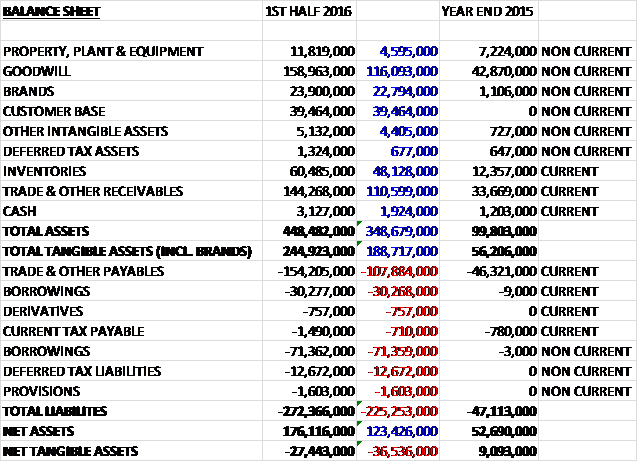
Total assets grew by £348.7M over the past six months, driven by a £116.1M increase in goodwill, a £110.6K growth in receivables, a £48.1M increase in inventories, a £39.5M increase customer base assets and a £22.8M growth in the value of brands. Total liabilities also increased due to a £107.9M growth in payables, a £101.6M increase in borrowings and a £12.7M growth in deferred tax liabilities. The end result was a net tangible asset level of -£27.4M when we include the value of brands, which is a detrimental movement of £27.4M over the half year period.

Before movements in working capital, cash profits increased by £1.8M to £5.8M. There was a large cash outflow due to working capital, however with a particularly big fall in payables which is expected to unwind in the second half of the year. This meant that after increases in interest and tax paid, the net cash outflow from operations came in at £8.4M, a detrimental movement of £10.1M year on year. The group also spent £1.8M on tangible fixed assets and £991K on intangible assets. They also spent £199M on the acquisition, took in another £10.9M in net debt from the acquisition and incurred £6.7M of exceptional costs related to the acquisition which all meant that before financing there was a cash outflow of £227.7M. The group still paid £4.2M in dividends – maybe it would be better to cease these for a while. We then see a £131M in proceeds from share sales and £80M in new loans to give a cash outflow for the half year of £20.5M and a cash level of -£19.3M at the period-end.
The EBITDA in the off-trade segment was £4.5M, broadly flat year on year with a decline of just £93K. Strengthening the franchisee base led to a 7.4% increase in the number of stores owned by multi-site franchisees over the last 18 months to 276 and the number of stores owned by multi-site franchisees has increased 31%. 16 new franchisees have joined the group, resulting in 19 stores opening in the first half compared to 8 in the prior year. Closures reduced by 49% with 18 closures during the period resulting in a net increase of just one. Franchisee profitability remained strong with profits about 12% above 2012 levels and resilient to the changes in the national living wage.
The UK retail environment continues to be highly competitive but there are a number of initiatives underway. The Bargain Booze app continues to grow its user base with 46,000 downloads and in April, Click and Collect was trialled with a gradual roll out to 165 stores. This development phase has apparently been a very informative process and by April 2016, a further 1,000 lines will be added to the offer.
The pipeline of new stores is at a three year high with 162 potential sites under review and the group are targeting a net increase of fifty stores by the year-end. The retail business remains positive about acquisitions but I would rather they concentrated on bedding in the Matthew Clark one first. The strategy to grow the Wine Rack business is showing positive results with LFL growth of 5.3% during the period and LFL growth over Christmas of 11.1%. The “try before you buy” any wine offer has had a positive response from customers and has led to sales of wine and spirits increasing by 10% and 21% respectively during the peak weeks.
The EBITDA in the on-trade segment was £2.1M which represents the maiden contribution from the business, representing about a month of trading. Since the acquisition, some 841 new outlets have chosen to be serviced by the business, an increase of 27% over the same period of last year. In December the business has acquired a controlling interest (61%) in Peppermint, one of the UK’s largest events bar operators, gaining access to the large and fast growing market for drinks consumed at leisure events and festivals. Last year, Peppermint generated revenues of £13M and normalised EBITDA of £500K. There was an initial consideration of £1.8Min cash the group have agreed to acquire the remaining 39% of the business by 2020 with the price dependent on Peppermint’s EBITDA and cash flow.
The gross margin in the post-acquisition period was slightly ahead of the corresponding period in the prior year at 12.4%. Margins at Matthew Clark are higher than those of Conviviality Retail as they do not sell tobacco which has lower margins than alcohol. The EBITDA margin post-acquisition was 3.4%
Over Christmas, LFL sales at Conviviality stores were up 1.1% which was better than the rest of the year at a time when customers are traditionally more likely to visit larger supermarkets.
Champagne and Sparkling Wine saw sales increase 31%; premium bottle ales were up 300% and cases of craft ales were up 218%. Matthew Clark delivered a strong Christmas performance with sales to its outlets up 20%.
Obviously the transformational news during the period was that in October the group acquired Matthew Clark for a total consideration of £198.7M funded by the placing of 86.7M new shares which raised £130M along with £80M of new term loans. The acquisition generated goodwill of £116.1M which, according to the board largely relates to synergy and integration benefits – all the more reason for Goodwill to be amortised like other intangible assets in my view. In addition, an assessment of the depots at Matthew Clark identified that some renovation works would need to be carried out and therefore a provision for £1M was made to account for this. The acquired business made an operating profit of £10.5M over the last half year so although expensive, the value is not that bad.
The board have completed a detailed analysis of supplier terms, held a joint supplier conference and started negotiations to deliver the buying synergies that they now expect to deliver significantly ahead of plan, benefiting 2017 and beyond. The analysis of the supply chain is underway and the potential for distribution synergies will be identified before year-end. During the period, Mark Aylwin joined the business as MD of Matthew Clark having joined from Booker, and David Robinson will be joining as MD of Conviviality Retail, coming from Home Retail.
Looking ahead, trading is in line with expectations, there is a strong pipeline of franchisee openings in the retail business as well as a strong pipeline of customers in the Matthew Clark business. The success over the Christmas trading period gives the board confidence that the second half will deliver further profitable progress.
Net debt at the period-end stood at £98.5M compared to a net cash position of £1.2M at the end of last year. At the current share price the shares trade on a PE ratio of 20.6 which falls to 15.6 on the full year forecast. After a 5% increase in the interim dividend, the shares are currently yielding 4% which grows to 4.1% on the full year forecast.
Overall then, this six month period was dominated by the acquisition of Matthew Clark and due to this the group made a loss during the period. If we exclude the acquisition and restructuring costs, however, the profit was slightly ahead. The real issue in my view is the precarious looking balance sheet with negative tangible assets even if we include the Matthew Clark brand as having value.
Due to a large fall in payables, there was a cash outflow at the operating level but cash profits did increase during the period.
The performance at Conviviality Retail was broadly flat but there seems to be a good pipeline of new stores going forward. Matthew Clark seems to have produced a decent amount of operating profit and the synergies going forward should improve this further. With a forward PE of 15.6, however, and the negative net tangible book value, these are not really for me at the moment and despite a 4.1% dividend yield, I will not be updating this again until the balance sheet has improved a bit.