

UK Mail has now released its interim results for the year ending 2015.

In the first half of the year revenues fell compared to the same period of 2014. The decline was driven by a £5.9M fall in mail revenues, partially mitigated by a £3.6M increase in parcels sales and a £500K growth in courier revenue. The group received an £800K compensation payment from HS2 relating to the delay in automation of the operation due to the impact of HS2 on the groups plans, with further amounts expected to be taken in the second half of the year. Cost of sales were slightly lower but this was not enough to stop gross profits falling by £500K. Admin expenses fell but there was then a £7.3M impairment of goodwill in the pallets business which meant that operating profit was £4.9M which became just £2.2M after tax, a £7.1M fall when compared to last time due to the impairment but if that and the compensation were taken out, underlying profits were still lower than in the first half of last year.

When compared to the end point of last year, total assets at the six month fell by £14.6M driven by a £17.9M decline in cash levels, a £7.3M decrease in goodwill and a £2.4M fall in trade and receivables, partially offset by a £10.8M increase in property, plant & equipment and a £2.2M growth in other intangible assets. Total liabilities also fell as trade & other payables declined by £9.1M, which was the only significant change in liabilities. The end result is net tangible assets that were broadly flat over the last six months, increasing by just £100K.
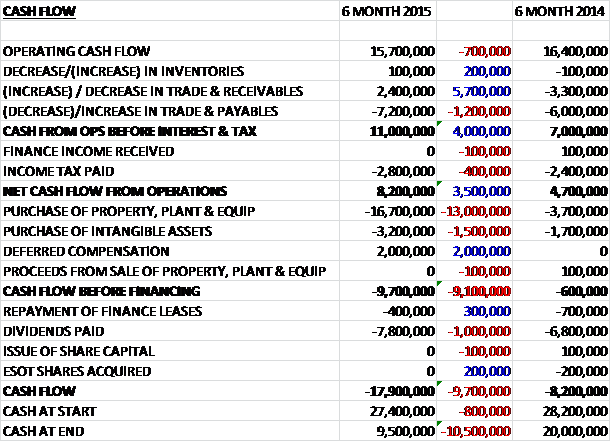
Before movements in working capital, cash profits fell by £700K to £15.7M before a large decrease in payables and a small increase in tax paid meant that net cash from operations was £8.2M, an increase of £3.5M when compared to the first half of last year. Unfortunately this did not cover the £16.7M of property, plant and equipment purchase, £4.1M of which was spent on IT, £1.3M on the network, £8.1M in the new hub and £3.2M invested in automation but this was offset by a further £2M received with regards to HS2 compensation before the group spent another £3.2M on intangible assets to give a cash outflow before financing of £9.7M. The group then spent £7.8M on dividends to give a cash outflow of £17.9M to leave a cash pile of just £9.5M at the end of the period which is clearly not a sustainable situation although that capital expenditure is particularly high at the moment and there is a £25M credit facility that has not yet been drawn.
Underlying operating profit at the Mail business fell by £100K to £6.2M which can be attributable to the extra working day that occurred during the first half of last year. There was a decline in revenues due to a mix change towards Customer Direct Access mail which carries a substantially lower revenue per item as the group won a significant public sector CDA contract during the year. Daily mail volumes fell by 2% during the period compared to a wider market fall of 3%, demonstrating further market share gains in a declining market but operating margins did manage a small increase from 5.5% to 5.6%. Imail, the web to print postal service continued to show good revenue growth. The group continues to invest in capacity and provide additional services with imailprint being launched during the period. This provides a printing service which in addition to providing a mail service, also generates printed documents for general use and the board see this as a low risk, medium term growth opportunity. The new packets service which allows them to offer customers a two/three day low cost delivery service, continued to make progress and the capacity provided by the new hub should enable the group to develop this service further. The mail business remains well positioned in its market with a healthy pipeline of new business opportunities
Underlying operating profit at the Parcels business increased by £100K to £11.2M as the group achieved volume growth in both the B2B and B2C segments with daily volumes increasing by 6.3% but there was a continued volume mix towards the lower margin B2C segment with operating margins falling from 10.6% to 10.2%. Unfortunately despite the strong first quarter, the latter weeks of Q2 were more challenging which reflected a wider market trend with weaker trading seen across the retail sector. The group continued to make progress with product innovations with ipostparcels offering a user friendly, low cost online collection and delivery service with profits growing for this business. The enhanced next day delivery service which offers advance notice one hour delivery collection windows is now fully operational and includes a text service which informs customers when their delivery is ten minutes away. Looking forward, management sees slower parcels growth during the second half of the year as the group continues to face challenging market conditions in the near term.
Underlying operating profit at the Courier segment was flat at £1.4M despite increasing revenues as operating margins fell from 17.8% to 16.1% with the segment working increasingly closely with the parcels business as it represents a key part of the retail logistics operation. Underlying operating profit at the Pallets business fell by £400K to £200K with a similar fall in revenues. The group once again experienced gaps in the network which reduced input volumes and caused increased delivery costs and this seems to be difficult to resolve which means that the business is likely to operate at a lower level of profitability than has been the case historically despite actions to secure new, long term network members and taking actions to address the performance of the business.
During the period the group spent £8.1M on the new hub and £3.2M on automation. The cumulative total expected to be spent on land and buildings over the period to the end of 2016 is some £35M. It is expected that the group’s contribution to the building of the new hub to be about £15M (the rest likely to come from HS2) which covers the enhancement of the site and building beyond the scale of the current facility. The investment in automation reflects the initial payments for the design and development of the hub and network automation equipment. As previously guided, the total expected to be spent on this equipment up to the end of the year is some £20M, so quite a lot to come in the second half of the year then with the benefits likely to be seen from mid-2015 onwards. The group has committed to capital expenditure of £17.2M which will likely use up all the cash reserves that they have left.
The decline in the performance of the Pallets business in the first half of the year meant that management estimates of the cash generating unit growth rate over the next five years resulted in a goodwill impairment charge of £7.3M which leaves a goodwill asset of just £600K in the business which the directors will reassess at the year end. Trading in the first few weeks of the second half of the year and overall trends within the individual business have been anticipated and with the peak trading weeks over Christmas still to come, the board’s expectations for the full year remain unchanged. The board remain excited about the medium term growth prospects for the group.
At the end of the period the group had a net cash position of £9.5M compared to £27M at the end point of last year. After an increase of 2.8% in the interim dividend, at the current share price the shares are yielding a decent 4% for the year.
Overall then, this seems to have been a bit of a stuttering performance for the group. Profits in general fell, predominantly due to the decline in the pallets business which sounds as though it could be terminal. Net tangible assets were flat but there was a hefty cash outflow due to the investment in the new hub and automation. Operational cash flows did improve during the period, however. The mail business seems to be holding up against the backdrop of a market in structural decline so it is therefore disappointing to see slow growth in the parcels business as trading towards the end of Q2 became more difficult, which is a trend likely to carry on into Q3. In the second half of the year, there will be more large capital expenditure spends, particularly in automation equipment and this, along with the slow-down in the parcels business and pallets segments means that I think H2 might be quite tough going for the group.
On the 13th January the group announced its Q3 trading update which includes the ever important Christmas trading. Overall, performance was in line with expectations with the Parcels business handling record volumes and the network remaining robust during the peak weeks. The demise of City Link is likely to have a positive impact on the industry as a whole and the group have taken on some volumes from ex-City Link customers. It will be some time, however, before the longer term outcome of this on UK Mail can be properly assessed. The board’s expectation for the outcome for the year remain unchanged. The construction and fit out for the new hub is on track for completion before the end of January. The hub automation has been installed and is now entering a commission and testing phase ahead of implementation in May.
The challenges at the Pallets business have continued and a proposal has now been made to close it. The board estimate that cash costs of this action will be about £1M with asset write downs of some £2M including the rest of the goodwill associated with the business. Last year the division earned 2.3% of the total group operating profit so it is a small part of the business but a shame nonetheless. There is no mention of the slow-down in the Parcels business which I take as a good sign and it is good that the automation investments seem to be mostly complete but there will still be a heavy cash impact this half and now there is the further distraction of the pallet business sale. I still don’t really see this as a good time to buy the shares.
On the 9th April the group released an update covering trading in Q4 and for the year as a whole. Group revenues, excluding Pallets, showed an increase of 5% in Q4 giving a total reported revenue growth of 1% during the year. The parcels business saw volumes increase by 12% in the quarter, partly driven by new account wins as a result of the collapse of City Link. This increase in volume has taken the parcel volumes above the group’s operational capacity which has resulted in higher costs being incurred during the quarter which is expected to continue into the first half of next year until the volume can be absorbed when the move to the new hub is completed.
The mail business achieved decent volume and revenue growth in the quarter, increasing by 5% with growth driven by good customer retention and new business wins, which have further increased the group’s share of the Down Stream Access market. The courier business saw a decline in revenue growth in Q4 but achieved growth in the year as a whole. As a result of some of these issues, the performance for the year is expected to come in at the lower range of current expectations. The Pallets business has now ceased operating with the wind down being handled without disruption to customers and with closure costs in line with expectations.
The new hub and head office has now been completed on budget and on schedule. The move of the head office staff to the new office is now largely completed with the move to the new automated hub commencing in May with a plan to be complete by the end of July. The commission and testing phase of the hub’s automation equipment is progressing and approaching completion with the scale of automation of the parcel sortation operation planned to increase from 20% to 80%. Despite the short term headwinds, once the move to the hub is complete the group should see an improvement in performance and with the loss of City Link, there is now a better competitive environment that should be good for UK Mail in the medium term. I am tempted to buy in here but think I would prefer to wait for some evidence that profits are on the up before doing so.
On the 9th April the group released a trading update for the year ended 2015. Excluding Pallets, reported revenues are expected to increase by 1% driven by a 5% growth in Q4. The parcels business performed well with volumes in the quarter increasing by 12% driven by new account wins following the collapse of City Link. This increase in volume, however, took volumes above the effective operational capacity, resulting in above normal costs being incurred which is expected to continue into the first half of the new year until the increase in volume is absorbed by the completion of the new hub. The mail business saw good volume growth in the quarter, increasing by 5% driven by strong customer retention and new business wins. The courier business saw a decline in revenues in Q4 but this was not enough to prevent a growth for the year as a whole. Overall then, it is expected that performance is going to be around the lower end of current estimations.
The pallets business has ceased operating with the wind down being handled without customer disruption and closer costs being in line with expectations. The new hub has now been completed on schedule and within budget and the move of the head office is now largely complete with the move to the new automated hub expected to be completed by the end of July. The testing of the automation equipment is progressing well and approaching completion and should increase automation of parcels sorting from 20% of total volume to 80% by September. The demise of City Link and the new hub are likely to be catalysts for decent growth in the medium term but it is disappointing to see the courier business struggle and in the short term, working over capacity seems to be causing a drag on results so I feel a watching brief is still most appropriate here.