

Finsbury Foods has now released its interim results for the year ending 2016.

Revenues increased when compared to the first half of last year with a £46.9M growth in UK bakery revenue and a £2.1M increase in overseas revenues. Cost of sales also increased to give a gross profit some £17.7M above that of last time. Depreciation increased by £1.2M and amortisation grew by £238K with other admin expenses up £12.7M. The group benefited from the lack of £1.3M acquisition costs that occurred last year but there was a £119K negative swing in forex hedges which meant that the operating profit grew by £4.7M. There was a positive change in the value of interest rate swaps, offset by no unwinding of deferred consideration receivables and an increase in bank interest payable but a close to £1M increase in tax meant that the profit for the half year came in at £5.6M, a growth of £3.7M over the past six months.
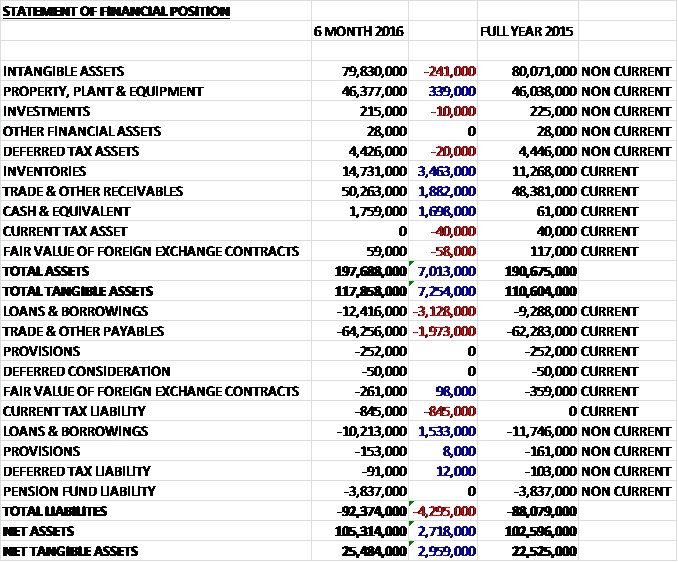
When compared to the end point of last year, total assets increased by £7.3M, driven by a £3.5M growth in inventories, a £1.9M increase in receivables and a £1.7M growth in cash. Total liabilities also increased during the period due to a £1.6M growth in borrowings, a £2M increase in payables and an £845K growth in current tax liabilities. The end result was a net tangible asset level of £25.5M, a growth of £3M over the last six months.
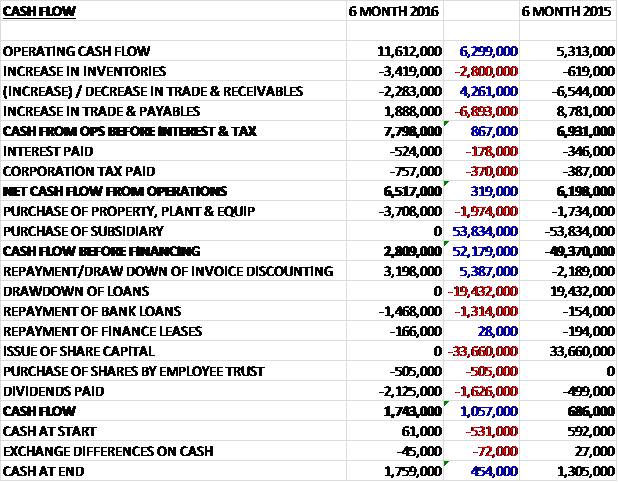
Before movements in working capital, cash profits increased by £6.3M to £11.6M. There was a cash outflow through working capital with an increase in inventories and a growth in payables that was much lower than last year so that after a £178K increase in interest payments and a £370K growth in corporation tax paid, the net cash from operations came in at £6.5M, a growth of £319K year on year. The group spent £3.7M on capex which meant that the free cash flow was £2.8M. We then see a £3.2M draw down through the invoice discounting facility and a £1.5M repayment of other loans and £2.1M spent on dividends to give a cash flow of £1.7M for the half year period and a cash level of £1.8M at the period-end.
The underlying operating profit at the UK Bakery business was £7.2M, a growth of £3.4M year on year with a like for like growth of 23% on revenues that increased by 6.1% on a like for like basis. The grocery cake market is mature with year on year volume decline of 1.9% and value increase of just 0.5%. The revenue growth experience by the group has been driven by a successful Christmas trading period and the success of the Minions licensed celebration cake and promotional activity on bites.
The bread and morning goods retail market is also mature with year on year volume growth of just 1.9% and value decline of 1.5%. The acquisition of Fletchers in 2014 has significantly expanded the group’s existing opportunities in this market with the introduction of new retail and foodservice customers. Their focus is on more niche style bakery products as opposed to traditional bread and therefore their revenue growth exceeds that of the market as a whole.
The group’s foodservice sales are experiencing strong organic growth supplemented by new bread and morning goods products such as organic bread and the launch of 10 inch round cakes sold under the Kara Foodservice brand. The acquisition of Johnstone’s in July has brought opportunities for further cake and bread product diversification into the coffee shop and foodservice sector. The overall operating margin increased from 3.9% to 5% due to operational efficiencies within the factories and the group will continue to invest in automation and operational improvements to increase margins further.
The underlying operating profit at the overseas business was £768K, an increase of £173K when compared to the first half of last year on revenues that increased by 19%. This seems to be a good performance considering the exposure to the Euro.
The group seem to be on the lookout for further acquisitions. They will either consolidate their market share in existing product areas or introduce further diversification. I think I would prefer them to concentrate on organic growth for the moment to be honest. Several times throughout the report, the board are keen to point out how strong the balance sheet is – it is not bad, but I am getting a bit concerned that the company will go down the same route as they have done previously and try and grow too quickly.
The National Living Wage legislation presents a challenge to the group that they are preparing for through a number of initiatives. Adjusting and mitigating the impact will take time, however, and will require a greater focus on efficiency improvements and cost reduction exercises.
Whilst the UK grocery market continues to be challenging, the wider economic environment is slowly improving. The board expect the first half performance to continue into the second half of the year as they deliver the planned acquisition related synergy benefits.
At the period-end the net debt stood at £21.1M compared to £21.3M at the end of last year. After a 12% increase in the interim dividend, the shares have a yield of 2.3% which increases to 2.5% on the full year consensus forecast. The forward PE ratio is currently at 12.
Overall then this has been a very good six month period for the group. Profits were up, net assets increased and the operating cash flow improved with a decent amount of free cash being generated. Both the UK and French bakery businesses have performed well with the group seeing a good Christmas and strong sales of the Minions cake along with growth in the foodservice category. The national living wage looks like it will cause a problem going forward, however, and the board need to be careful to not rush into expansion for the sake of it but with a forward dividend yield of 2.5% and PE of just 12, I am more than happy to hold here.
On the 20th April the group announced the appointment of Zoe Morgan as a non-executive director. She was previously marketing director of the Co-Op, HBos retail and Boots UK. She also holds other directorships and is currently a board member of Moss Bros, Kind Consumer and the Good Care Group. Also, after 13 years at the group, Edward Beale is stepping down as non-executive director at the AGM. He was appointed a director when Memory Lane Cakes was reversed into a cash shell to create Finsbury in 2002 and serves as interim finance director for the first year.
On the 27th April it was announced that legacy unapproved options granted in 2011 to the CEO and Finance Director over a total of 5,254,000 shares were settled. They have cancelled their options and have been issued with 2,317,824 shares. These options were put in place at a share price of 20.5p and the performance conditions attached to them were met in full in 2013. The net effect for the directors is the same as if they exercised the options in full and sold the number of shares necessary to meet the exercise price of 20.5p per share and the tax costs associated with the exercise of the options.
A cash amount of £2.5M will be paid to meet the PAYE and national insurance payable in respect of the settlement of the options. Following this, the directors have sold all of these shares issued to them with the shares being acquired by the Employee Benefit Trust at a price of 122.33p and are intended to be used to satisfy awards made under the LTIP and to satisfy future bonuses. Following these transactions, Mr Duffy remains interested in 2,197,599 shares and Mr Boyd has 961,034 shares.
On the 29th June it was announced that appropriately named Chairman Paul Baker purchased 40,000 shares at a value of £43.2K. He now holds 86,000 shares in total so this has nearly doubled his holdings.
On the 18th July the group released a trading update covering the year ending 2016. Following the positive first half trading performance, strong trading has continued in the second half and the group is confident of delivering profits in line with market expectations. Total company sales grew to £319.7M, an increase of 25%, following the integration of the prior year acquisitions of Fletchers and Johnstones. This includes like for like growth of £12.8M, a 5% increase versus the prior year. The UK bakery division grew by 3% on a like for like basis while the overseas business grew by nearly 26%. Sales to the foodservice channel grew by 5.3% on a like for like basis.
The second half performance benefited from a growth in sales revenues ahead of the UK market as a whole although the rate of growth was lower in the second half as they annualise against strong sales in H2 last year. Whilst it is too early to fully understand the impact of the Brexit vote, the board believes it is well equipped to manage the potential effects and continue to deliver growth over the coming years.
Not really much to go on here but all sounds like it is ticking along well.