
RPS has now released its interim results for the year ending 2015.

Overall revenues increased when compared to the first half of last year as a £28.2M decline in energy revenue was more than offset by a £1.9M increase in Australia Asia Pacific, a £10.9M increase in N. America built environment and a £20.1M growth in European built environment. It should be noted that the Norwegian business is now reported in the BNE Europe segment as opposed to the Energy segment. Recharged expenses remained broadly flat year on year to give a fee income some £4.8M ahead at £253.4M. Operating costs, however, grew by more than £6.5M and we also see a £2M increase in amortisation of acquired intangibles to give an operating profit £2.8M lower than last time. A considerable increase in finance costs was then more than offset by a fall in the tax expense to give a profit for the half year of £13.2M, a fall of £2.1M year on year – although it should be noted that at an equity level, this was entirely wiped out by foreign exchange translation.
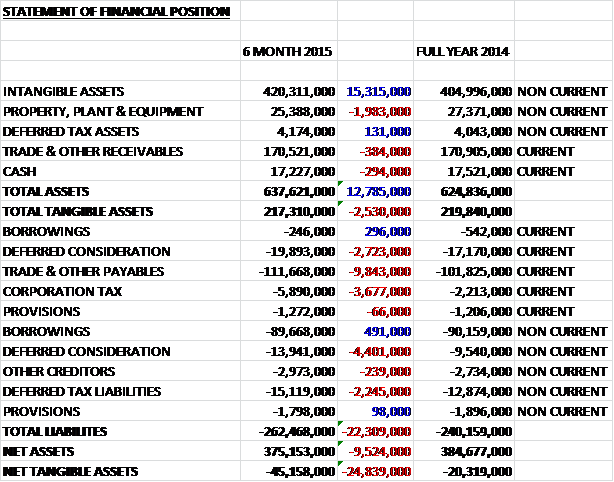
When compared to the end point of last year, total assets increased by £12.8M driven by a £15.3M increase in intangible assets, partly offset by a £2M fall in property, plant and equipment. Liabilities also increased during the period due to a £9.8M increase in payables, a £7.1M growth in deferred consideration, a £3.7M increase in current tax liabilities and a £2.2M growth in deferred tax liabilities. The end result is a £24.8M decline in net tangible assets to a negative £24.8M which is looking increasingly stretched to me.

Before movements in working capital, cash profits fell by £1.5M to £36M but after favourable movements in both receivables and payables, no deferred consideration as remuneration and £3.9M less paid in tax, partially offset by a higher amount of interest paid, the net cash from operations stood at £40.7M, an increase of £24.2M year on year. The bulk of this was paid for the acquisition of a subsidiary but it also comfortably covered deferred consideration and capital expenditure to give a free cash flow of £10.6M. This just about covered dividends and a modest repayment of dividends to give a cash flow for the half year of £300K and a cash level of £17M at the period end.
The group made two acquisitions during the period. Klotz, a water and transportation consultancy based in the US, was acquired for a total consideration of £15.6M, £11.1M in cash initially with a further £4.5M of deferred consideration. This acquisition came with £5.8M of intangible assets and generated goodwill of £9.1M. In the four and a half months since acquisition the business has contributed £563K to operating profit on revenues of £7.9M so this seems fairly averagely valued on first sight. The other acquisition was Metier, a project management and training business based in Norway. The total paid for Metier was £22.2M which included £14.4M in initial cash and £7.7M in deferred consideration. The acquisition came with £8.6M of intangible assets and generated goodwill of £15.5M. The business contributed £145K to profit in the two months since acquisition and although it is still early days, that one seems a bit richly valued to me. The board have stated that further acquisition opportunities are being evaluated.
Since the period end, the group have put in place a five year £150M revolving credit facility with Lloyds Bank and HSBC. This replaced an RCF with Lloyds of £125M due to expire next year on more favourable terms. In addition six years remain on the £52M fixed term fixed rate notes issued in 2014.
Profit in the European Built and Natural Environment division increased by £2.7M to £14.3M and the margin increased from 12.8% to 13.4%. The acquisitions made in 2014 have been integrated successfully and assisted the growth of the UK water and planning businesses. Those activities which assist clients in developing new capital projects, particularly the planning and development business in the UK, continued to benefit from improving market conditions. Those exposed to operational environments such as providing environment management advice continued to struggle in the face of customer’s tightening budgets. The water business in the UK along with the lab activities in the Netherlands, however, performed well in the period by offering cost efficient services. The group have won significant new business in recent months, particularly in the form of large long term contracts and are looking forward to a successful second half of the year.
The North American built and natural environment business increased profits by £1.1M to £5.3M but margins fell from 22% in the first half of last year to 18.7% this year. This business has significant exposure to the provision of environmental services to the energy infrastructure market which held back progress in recent months as clients reduced and delayed expenditure on this type of project. The acquisition of Klotz earlier in the year continued the process of diversifying into more traditional planning and development and environmental consultancy activities, as did the acquisition of GaiaTech last year. Both businesses performed well and assisted the division to secure year on year growth. The board are expecting the first half trends to continue for the rest of the year with full year growth being achieved.
The Energy business saw profits fall by £7.1M to £9.6M and margins decline from 18.8% to 14.3%. The division was hit by a significant reduction in their client’s spend and an extended period of uncertainty about whether and when projects might commence. They continued to benefit from a good demand for their range of advisory services, particularly in relation to transactions and valuations. Their client’s budgets remain substantial, although many of them have delayed start-up decisions. As a result the total volume of work available so far this year has reduced significantly and fee rates have come under pressure. National Oil companies and government agencies have been less affected than the international companies so the group have further developed their relationship with those clients.
The year started slowly but activity in Q2 was somewhat higher than in Q1 and profit in Q2 was well ahead of Q1. The cost base has been significantly reduced and the group anticipate the second half should deliver further improvement.
The Australia Asia Pacific division saw profits increase by £1.9M to £5.8M and margins increase from 7.7% to 11%, primarily as a result of the group repositioning their strategy and the acquisition of Point last year. The board see activity in the resources sector remaining flat at best, as Australia unwinds its high cost production structure. Point has made a significant contribution to the strategy to take advantage of increased public expenditure on infrastructure. Following recent elections in New South Wales, Victoria and Queensland, this is an increasingly attractive market. The board, therefore, see further growth being achieved in the second half of the year.
The broad spread of clients, services and geographies has enabled the group to weather the storm in some difficult market conditions. Energy profit grew significantly in Q2 compared to Q1 and it is expected that the second half will show further improvement. After a much improved first half, AAP is expected to achieve further growth in the second half of the year. In all, it is expected that the BNE business will also continue to perform well and with AAP should help balance any further softness in energy for the remainder of the year.
After a 15% increase in the interim dividend, at the current share price the shares have a dividend yield of 4.1% which increased to 4.4% for 2015 as a whole, which is a decent amount actually. At the period end the group has a net debt position of £72.7M compared to £73.2M at the year-end.
So, this has been an interesting six months for the group. Profits fell year on year as the decline in energy profits was not quite totally mitigated by increases in the other divisions. Net tangible assets also showed a concerning fall with a large negative value now apparent as payables and deferred consideration both increased substantially. The operational cash flow was good this year but this was entirely due to favourable working capital movements – it is unclear whether this will reverse in the second half but I would guess it will to some extent. The group continues to make more acquisitions and these ones seem more fully valued than they have been in the past but the despite this, net debt did not increase as a result of the tight working capital management mentioned above.
Operationally, the performance in the built environment divisions has been good and partly offset weakness in the energy division as the continued decline in the oil price has encouraged clients to cancel and delay projects. Given the similar issues surrounding commodity prices, the performance in the Australia Asia Pacific division has been surprisingly robust and I suspect most of this is due to recent acquisitions. The potential dividend yield of 4.4% is good carrot that is dangled in front of investors but given the continued weakness in energy and commodity prices I see this as a bit too risky at the moment given the levels of debt and deferred consideration on the books along with the weakening balance sheet.
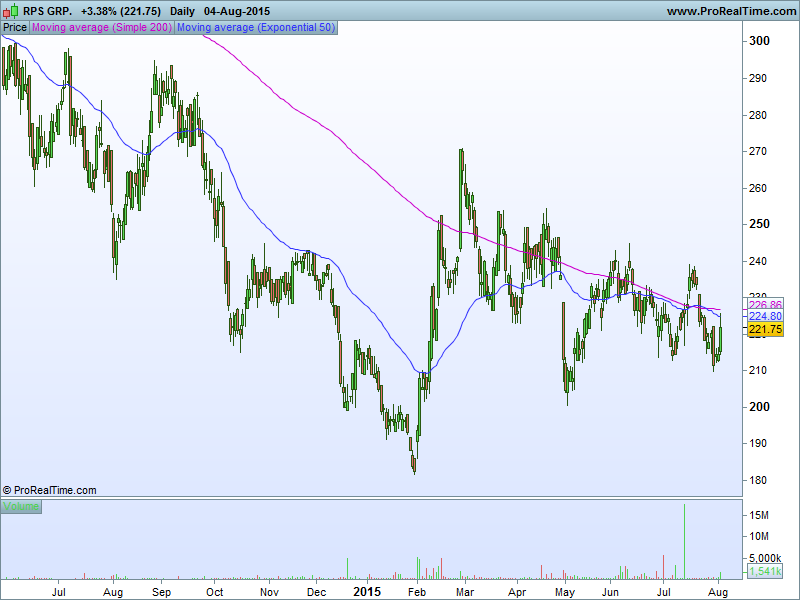
This chart is not really one that I want to invest in either so I am keeping a watching brief.
On the 30th October the group announced two new acquisitions. They purchased Iris Environmental, a Californian based consultancy providing environmental services in the US market, for a maximum consideration of £8.8M. Iris is headquartered in San Francisco with an office in LA and undertakes projects associated with managing environmental risk primarily for private sector clients in California. Last year it made a pre-tax profit of £1.5M and comes with net assets of £1.6M. Of the total consideration, £5.3M was paid in cash on completion and £1.8M in cash will be paid to the vendors on the first and second anniversaries of the transaction subject to certain operational conditions.
The other acquisition was Everything Infrastructure for a maximum consideration of £15.2M. Founded in 2006, the business is headquartered in Sydney with offices in Melbourne and Brisbane. It provides strategic advice in respect of infrastructure development, delivery and management. They have experience in all the major sectors of investment including roads, heavy and light rail, power and water. The business made a pre-tax profit of £2.7M las year and comes with net assets of £600K. Of the total consideration, £9.1M was paid in cash on completion and a further two sums of £3M each will be paid to the vendors on the first and second anniversaries of the transaction subject to certain operational conditions being met.
The acquisition of Iris extends their capability in the US environmental risk/due diligence market which was established with the acquisition of GaiaTech in 2014. EIG further develops their penetration of the infrastructure market in Australia and supports their diversification away from the resources sector in that country. As we are near the company’s year end, they do not expect to get a material contribution from either but they should from next year, diluting further the continuing effect of the downturn in the oil and gas sector on their energy business.