Utilitywise Share Blog – Final Results Year Ended 2016

Utilitywise has now released its final results for the year ended 2016.
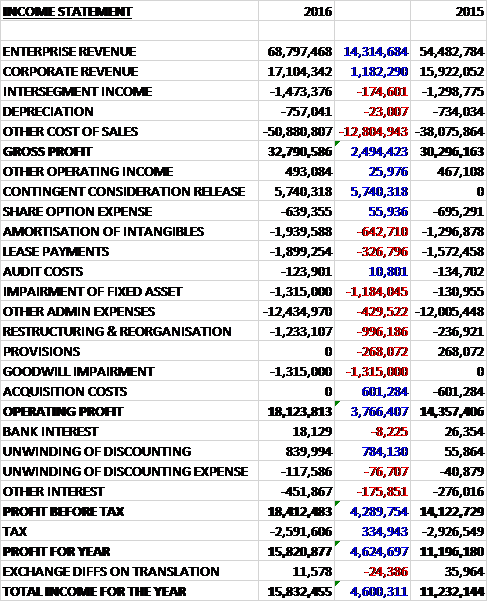
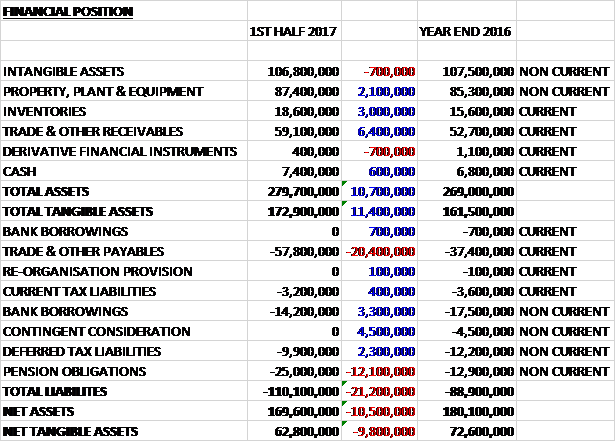
Revenues increased when compared to last year with a £14.3M growth in enterprise revenue and a £1.2M increase in corporate revenue. Cost of sales also grew to give a gross profit £2.5M above that of last year. We then see a £5.7M contingent consideration release offset by a £643K growth in amortisation, a £327K increase in lease payments, a £1.2M growth in impairments, a £996K increase in restructuring costs, a £1.3M goodwill impairment and a £430K growth in other admin expenses to give an operating profit £3.8M above that of last year. Finance income increased and tax payments reduced so the profit for the year came in at £15.8M, a growth of £4.6M year on year.
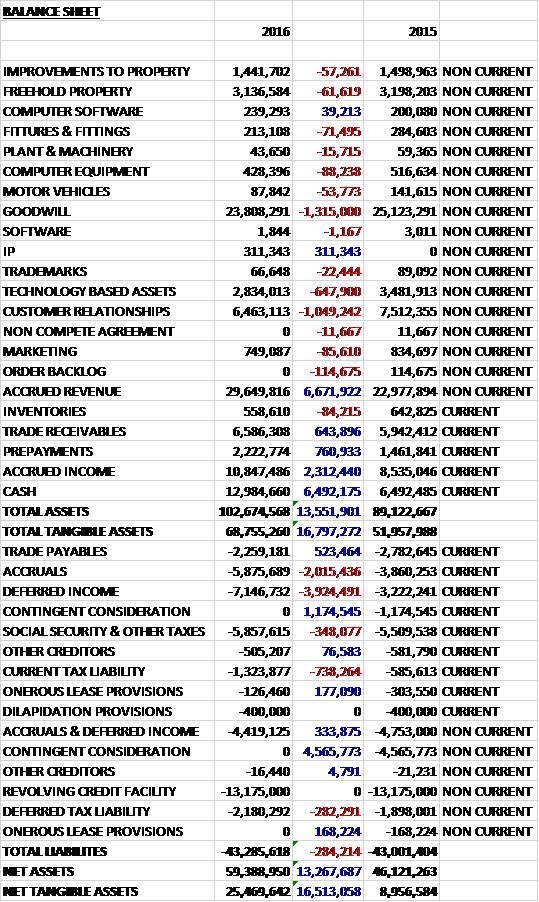
When compared to the end point of last year, total assets increased by £13.6M driven by a £9M growth in accrued income and a £6.5M increase in cash, partially offset by a £1.3M decline in goodwill and a £1M fall in the value of customer relationships. Total liabilities also increased modestly as a £3.9M growth in deferred income and a £2M increase in accruals was partially offset by a £5.7M decline in contingent consideration. The end result was a net tangible asset level of £25.5M, a growth of £16.5M year on year.
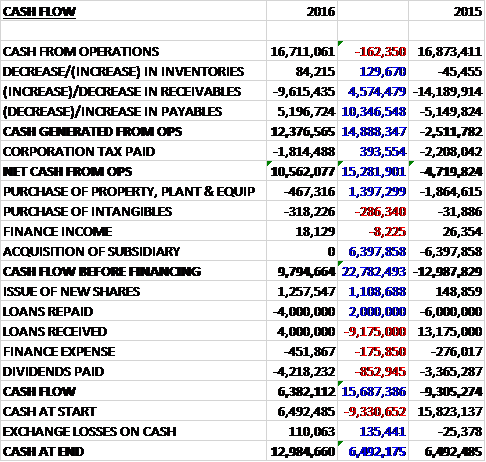
Before movements in working capital, cash profits declined by £162K to £16.7M. There was a cash outflow from working capital with receivables increasing once again but this was less pronounced than last year and after tax payments declined by £394K the net cash from operations came in at £10.6M, a positive movement of £15.3M year on year. The group then spent just £467K on fixed tangible assets and £318K on intangibles to give a free cash flow of £9.8M. The group issued new shares to the value of £1.3M and paid out £4.2M in dividends to give a cash flow of £6.4M and a cash level of £13M at the year-end.

The adjusted EBITDA in the Enterprise division was £17.1M, a growth of £2.8M year on year with the UK and Ireland order book additions increasing by 35% although margins fell somewhat due to the higher attrition in the sales force population. European revenues were up £2.2M to £7.7M with continued progress in the main markets of France and Germany.

The adjusted EBITDA in the Corporate division was £1.2M, a decline of £2.3M when compared to last year as the group increased its investment for future growth and the growth in lower margin ESOS project work which resulted in the acquisition of 214 new customers with 37% actively considering procurement. Revenues were up 7% due to a full year contribution from T-Mac, otherwise they would have fallen.

The change in payment terms with some suppliers combined with a reduced reliance on renewals and extensions has improved the cash conversion and the group expect this to continue.

The year was impacted by the energy consultant headcount falling behind the planned growth rate and as a result the year-end number of 625 represented only a 2.5% increase over the prior year and although they have been successful in recruiting new energy consultants during the period, the net increase was low due to the level of attrition. The attrition challenge is being addressed by a number of initiatives following the appointment of a People Operations Director. These include improvements to the recruitment process, a new on-boarding, training and coaching programme to advance consultant success rates and the strengthening of the team and management structure including a higher ratio of support staff to energy sales people.

The group have appointed Brendan Flattery as CEO and Geoff Thompson, the founder and previous CEO has stepped into the role of executive chairman with the current chairman moving to a non-executive role. Earlier in the year MD of the Enterprise division Steve Attwell left the group and Chris Charlton was promoted internally having managed the European business immediately prior.

The integration of T-mac Technologies has been successful and enabled the group to access additional opportunities as a result of their enhanced offering. The acquisition added cloud based energy monitoring and controls capability to the service portfolio. The number of customers benefiting from the smartdash data analytics software acquired with T-mac is currently at 1,808 and a plan is in place to roll out the software to all customers as they arrange installation of its AMR Smart Meter.
This service enables a wider and more comprehensive dialogue around energy management with customers and includes the deployment of the Edd:e monitoring hardware alongside the T-mac controls hardware as a key part of this.

The partnership with Dell to introduce internet of things building automation solutions to customers is progressing well with trials underway and the group see a significant opportunity to roll this out to both new and existing customers. IoT connects internet-enabled devices with software to provide users with a more granular control over energy consuming assets. Devices include heating, ventilation and aircon, security, refrigeration and lighting. Connecting disparate devices together in a single, intelligent system can provide significant cost and performance advantages over traditional building energy management systems.

Exceptional items in the year relate to an impairment charge in connection to the acquisition cost of T-mac Technologies. There is also a credit of £5.7M which has arisen from the release of deferred consideration where earn-out criteria are not anticipated to be met. There was also a charge of £509K in relation to legal fees incurred as a result of a dispute with a competitor and restructuring and re-organisation costs such as settlement payments of £678K.

Future secured revenue as declined by 2.3% to £25.6M but order book additions in the UK and Ireland were up 35% to £84.5M. The board are confident in their outlook for the year ahead and having started the year in line with expectations, look forward to continued strong revenue growth and profit generation. The will launch in Q2 their family of internet of things technology solutions and have developed the Advantage Plan, created new revenue streams and changed the nature of their billing relationship with customers. The deregulation of the commercial water market in England also provides another revenue opportunity that they will run alongside their existing energy procurement offering.

At the current share price the shares trade on a PE of 11.9 (excluding some impairments and the deferred consideration movements) but this falls to 9.7 on next year’s consensus forecast. After a 30% increase in the total dividend the shares are yielding 3.4% which grows to 3.7% on next year’s forecast. The net debt position at the year-end was just £200K compared to £6.7M at the same point of last year.

On the 17th October the group announced that it had been selected by Asda Stores as their chosen supplier of internet of things building solutions. Under the terms of the agreement, they will work with Asda’s facilities services partner, City Holdings, to deploy their Integrated Technology Management Solution across its UK estate.
On the 31st October the group announced that new CEO Brendan Flattery acquired 60,000 shares at a value of just under £100K. This represents his first purchase.

Overall then this has been a bit of a slow year in some respects but progress has been made in others. Profits did increase but when we take out the effects of the goodwill impairment and contingent consideration release, they were broadly flat with a small decline. Net assets grew and the operating cash flow was up with some decent free cash. This was due to an improvement in working capital movements, no doubt aided by the improved payment terms. Cash profits actually declined marginally during the year.

The enterprise division seems to be doing fairly well with increased profits but sales personnel attrition is holding it back somewhat. The corporate business saw profits fall which is being attributed to lower margin work and greater investment in the business. There does seem to be some decent new technology and revenue streams coming on line and although the future secured revenue has declined, the order book is up.

The forward PE of 9.7 and dividend yield of 3.7% looks pretty good and there is very little in the way of debt at the moment. This is a tricky one – now that the group seems to be cash generative, this has removed a lot of the issues I had with it but operationally, this year has been rather difficult. I am tempted to take a punt at these levels.

On the 15th December non-executive director Richard Feigen sold 58,675 shares at a value of £111K. He is now interested in just 10,000 shares – not a good omen.

On the 23rd December the group announced that non-executive director Paul Hailes sold 10,000 shares at a value of £19.4K. Not a huge sale and he still holds 35,000 shares.

On the 21st February the group released a trading update for the six months to the end of January. The group performed in line with management expectations during the period with double digit revenue growth compared to the same period of last year. Net debt was £4.1M compared to £10.2M at this point of last year and £200K at the year-end.

The enterprise division performed strongly with an increase in revenue and profit compared to the same period of last year. Gross order book additions were £50.2M compared to £40.4M last time and the revenue pipeline increased from £25.6M to £28M over the period.

The corporate division saw a reduction in revenue primarily due to slower progress than previously hoped in the deployment of technology solutions to certain customers but was also impacted by ESOS related revenue in the first half of last year which has not recurred this time. That revenue reduction, coupled with the ongoing investment that started in the second half of last year, has led to a reduction in profit compared to H1 last year. The board remains confident in the outlook of this division.

Solid State Share Blog – Interim Results Year Ending 2017

Solid State has now released its interim results for the year ending 2017.

soliincomeinterim

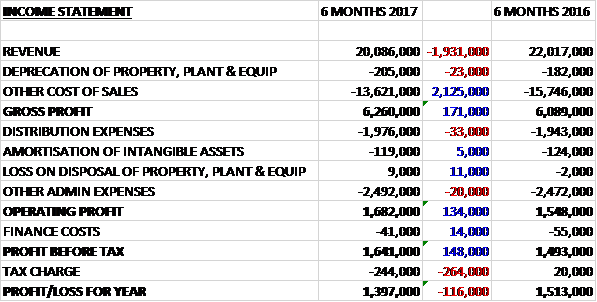
Revenues declined by £1.9M when compared to the first half of last year due to the lack of the mobilisation element of the MOJ contract that was terminated – underlying revenue was flat. Cost of sales also fell, however, due to the MOJ contract being very low margin to give a £171K increase in the gross profit distribution and admin expenses increased modestly and the operating profit grew by £134K. There was a £14K decline in finance costs but the tax charge increased by £264K from a credit last time following a lower R&D claim to give a profit for the period of £1.4M, a decline of £116K year on year.

soliassetsinterim

When compared to the end point of last year, total assets declined by £3.4M driven by a £4.4M fall in receivables and a £762K fall in cash, partially offset by an £887K increase in inventories and a £738K growth in the value of intangible assets. Total liabilities also declined during the period due to a £4M fall in the overdraft and a £524K decrease in payables. The end result was a net tangible asset level of £10.5M, broadly flat over the past six months with a decline of just £14K.

solicashinterim

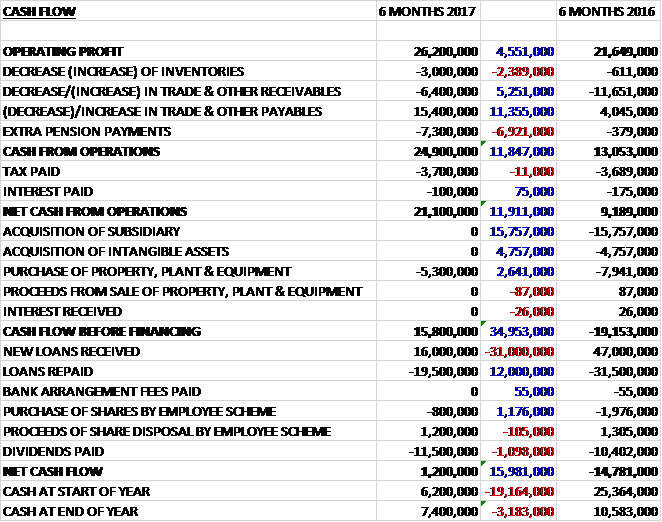
Before movements in working capital, cash profits increased by £141K to £2M. There was a large cash inflow from working capital with a £5.2M decrease in receivables so after interest payments declined modestly, the net cash from operations was £6.1M, a positive movement of £6.5M year on year. The group spent a net £136K on capex and £2.1M on acquisitions to give a free cash flow of £3.9M. After the £677K dividends were paid, the cash flow for the period came in at £3.2M and the cash level at the end of the half was -£203K.

The group benefited from forex gains in the period, reliant in part on forward currency hedges. A continuing weakening of Sterling would not result in a repeat of this benefit in H2, however due to some limited US dollar exposure.

In May the group completed the acquisition of Creasefield for a total consideration of £1.6M. The business specialises in the design and manufacture of custom battery packs to a diverse range or industry sectors principally in the UK including Commercial Aerospace, Oil & Gas, Medical, Subsea, Safety, Water, Rail, Military, Security and Government. It will make a positive contribution to the performance of the group as a whole for the remainder of the year after integration costs and a more significant contribution next year.

The integration of the Creasefield battery operation with the Steatite business has progressed well with efficiencies achieved across both the Redditch and Crewkerne facilities. Production of battery packs are now being predominantly carried out in Crewkerne with the Redditch site focussing on the delivery of computing and communications products. The acquisition has broadened the battery chemistries offered and the range of industrial sectors served by the division and has allowed for a greater share of production and engineering resource.

The combined battery operations are responding to strong demand for power solutions. As well as new opportunities in the industrial sector and harsh environment robotics, existing customers in the aerospace and safety markets are placing repeat business, which gives management confident in the growth potential of this division. The oil and gas industry, which previously accounted for a large proportion of the battery division’s revenue is starting to show signs of recovery but this revenue is now considered supplementary to the existing business flow of the battery division as opposed to being its core as was previously the case.

In the period, Steatite Antennas has had success innovating with a major prime contractor on an electronic solution countering the threat from piracy at sea. In addition, they are now seeing the benefit of interdivisional co-operation and the resulting force multiplier with their battery, computing and rugged communications teams partnering with a third-party company producing a chemical, biological, nuclear and radiological sensor.

The relocation of the division to its new purpose built facilities in Leominster is now underway. Installation of the advanced near field antenna test chamber has already been completed. With additional technical and commercial staff recruited to address pent up demand and to take existing outsourced functions in-house, the business is poised for growth. The business has been requested by a longstanding tier 1 defence OEM client to supply an enlarged loom wired cabinet for advanced systems integration. This is an example for the contribution that Steatite brings to the client relationship through its design-in services and broad product manufacturing capability.

Additionally, the business has been a long term supplier of ticketing machines to the train operating companies. They have been working with them on a redesigned ticketing machine to replace the ones in service at the moment. Just over half these replacement machines have now been supplied to selected companies with the remaining machines to be rolled out under a controlled programme.

At Solid State Supplies, all key metrics are either on target or ahead of target. The book:bill ratio remains positive and the order backlog at the half year point is up 6% and EBIT is slightly ahead of the half year target. In the period the business has expanded its sourcing operation into both component and obsolescence supplies.

Several of the existing customers have carried out audits of their capability in this area and have added them to their register of approved obsolete components suppliers. The division expects several new customers will be added early in 2017 and this area of the business will make a positive contribution to growth in 2018.

The Silicon Labs franchise is now making a significant contribution to the overall business and is expected to increase in value throughout the remainder of the year. During the period the business also secured the Kemet franchise which is a manufacturer of capacitors which complement the existing range of products.

The Ginsbury display business is now benefiting from extensive cross selling and the business has established a close relationship with a number of key Chinese suppliers that is giving it a significant advantage in the market without any compromise in quality. Plans for group cross selling of the battery business are now well advanced and the business has gained access to an increased portfolio of battery cells from leading premium manufacturers.

Despite the fact the MOJ contract was terminated last year, the settlement was not agreed until May 2016. This was agreed on a without fault basis and has resulted in a settlement which will be deployed in the further growth of the group both organically and through acquisitions, of which there is a strong pipeline of potential targets.

While the broader economy continues to encourage prudence in clients’ buying patterns following the Brexit vote, the group order backlog at the period end stood at £14.8M which comprised £12.7M of underlying revenue and £2.1M of Creasefield revenue which compares to £14.2M at the end of last year when the MOJ revenue is taken out so this looks like a reduction in the like for like order backlog, apparently due to shorter order schedules. The board are optimistic about their prospects.

At the current share price the shares are trading on a PE ratio of 8.5 but this increases to 12.1 on the full year consensus forecast. After the interim dividend was maintained at the same level as last year, the shares are yielding 2.9% which increases to 3% on the full year forecast.

Overall then there was not much movement during the period. Profits declined due to a lower R&D tax claim and net tangible assets were flat. The operating cash flow saw a big increase due to a huge reduction in receivables but cash profits did increase modestly too. A lot of free cash was generated due to the big receivable fall, and without this boost the operating cash flow would not have covered the acquisition.

The Creasefield business seems to be bedding in well and Solid State Supplies seems to be enjoying quite a bit of success but progress seems quite sluggish in the other businesses. The order backlog has increased but on a like for like basis, this has seen a decline, apparently due to shorter order schedules. The forward PE of 12.1 and yield of 3% is not too taxing but progress here seems to be a bit slower than I initially thought and although I am currently holding on to the shares, it is not a particularly strong hold.

On the 23rd March the group released a trading update for the year as a whole. Underlying profit before tax is expected to be broadly in line with expectations at over £3.1M. Q4 has seen a number of projects within the higher margin antenna division being delayed so contribution from these projects is expected in future months. The other areas of the manufacturing business unit have performed broadly in line with expectations and the distribution business has performed slightly ahead of expectations.

Profits will be impacted by one off costs arising from the re-organisation of the manufacturing business and the Creasefield acquisition costs of about £200K, and the recent decision to cease development activity in the Steatite Electronic Monitoring Systems business unit. This unit will be treated as a discontinued activity in the year-end accounts and is expected to have attributable losses of about £500K. In addition there are non-cash amortisation charges of acquired intangibles of £200K. The group’s order book stood at £18.1M compared to £16.45M at this point of last year.

Overall though, this all seems a bit like progress is rather hard to come by and I have taken a profit and sold up – I may re-enter after the results if it looks like more progress is being made.

James Halstead Share Blog – Final Results Year Ended 2016

James Halstead has now released its final result for the year ended 2016.

jhdincome

Revenues declined when compared to last year due to forex movements (constant currency revenues were up 2%) as a £901K decline in European revenue, a £615K fall in UK revenue and a £187K decrease in Asian and Oceania revenue was partially offset by a £583K growth in ROW revenue. Staff costs increased by £1.3M but R&D costs were down £296K and other cost of sales fell by £3.3M which meant that the gross profit increased by £1.2M. Selling & distribution costs increased by £589K and depreciation was up £146K but other admin expenses fell by £802K and the operating profit was up £1.4M. There was a small increase in finance costs and tax was broadly flat so the profit for the year came in at £35.3M, a growth of £1.3M year on year.

jhdassets

When compared to the end point of last year, total assets increased by £4.8M driven by a £4.1M growth in inventories, a £1.8M increase in freehold land & buildings, a £2M increase in trade receivables and a £1.4M growth in plant & equipment, partially offset by a £3.3M fall in cash levels and a £1.8M decline in derivative financial assets. Total liabilities also grew during the period with a £6.9M increase in pension obligations, a £3.5M growth in trade payables and a £2.1M increase in derivative financial liabilities. The end result was a net tangible asset level of £94.2M, a decline of £9M year on year.

jhdcash

Before movements in working capital, cash profits increased by £1.4M when compared to last year. There was a cash inflow from working capital which was much more favourable than last year which meant that even after tax payments increased by £1.8M, the net cash from operations came in at £40.2M, a growth of £6.5M year on year. The group spent a net £4.6M on capex so the free cash flow was £35.6M. All of this and more was then spent on dividends so there was a cash outflow of £4.1M for the year and a cash level of £44.1M at the year-end.

The first half continued the worldwide growth the group saw in the early part of 2015 but the second half saw a distinct slowing down in UK sales whilst exports continued to expand. The malaise in the UK in H2 has been tangible and might be allied to the Brexit nervousness leading up to the vote. In addition, a cut to NHS repairs funds have affected demand with the 2016 budget reducing the repair fund by £1.1BN, some of which would have been allocated to flooring refurbishment.

Objectflor increased sales by some 3.7% in a highly competitive market. Germany is the largest market for vinyl flooring in Europe and the relative weakness of the EU marketplace has made all business hard won and there has been a degree of margin erosion due to the weakness of the Euro in the year causing a 3.5% fall in profits.

There was good growth in rubber flooring and heterogenous sheet progressed on the back of new range launches. Karndean branded sales of luxury vinyl tiles have expanded with the demand from retail shop fitters being solid. The group have adopted the policy of attending more regional trade fairs to meet contractors and their attendance at fairs in Lyon, Holzund and Belgium have been positive in gaining new business.

The French business continues to progress with a 12.5% increase in turnover. They have expanded their sales network in the country and improved customer service, the results of which have given them confidence to continue this investment. Their market share remains small but despite the difficult conditions they are taking business from competitors. Some of the projects completed last year include Le Bon Marche in Paris and the team in France won the project to supply flooring to Orange Telecom in Madagascar.

A restructuring of the sales focus in central Europe has seen the group target new market sectors for their products and in conjunction with new collections continue to attract market interest. During the year Objectflor has continued to show its strength in Germany and now also has a solid presence in the rest of Europe. Examples are the new Hyundai HQ in Belgium, the refurbished Marriott hotels in Rotterdam and Amsterdam and the Hotel Arora in Croatia. In Germany itself the Johannisgarten development of over 100 appartments in Erfurt has been supplied by the group.

The re-launch of the Artigo range of rubber flooring has apparently been well received. As a result of the growth in these markets, the group’s warehousing has reached capacity and plans are afoot to invest in an expansion of this facility which will encompass a new enlarged service centre, showroom and customer training facilities. In the Benelux they have revised their sales network and are now focused on this region as a stand-alone territory in order to further increase their market share.

Polyflor Australia increased turnover by 7% in constant currency terms but the adverse translation effect was about 8%. New management in Australia has overseen a total re-evaluation of this business and throughout the year there has been a growth in market share with sales teams securing many new products such as 135 Woolworth stores and 55 Kmart stores. Against a flat economic backdrop, with a 5% reduction in construction, the core sales sectors in healthcare, retail and educations are moving against this trend.

Internally the group have made logistics changes over the past eighteen months which have resulted in discontinued stock standing at less than 2% of total inventory. In addition, they have boosted their representation to architects and improved customer service focus by extending operating hours to support an expansion of next day delivery. Further customer service gains should ensue on the re-location of the Victoria warehouse, for which plans are at an advanced stage. Overall the board believe that the main rewards of the restructuring are yet to come and expect sales and profit in the country to continue on an upward trend.

In New Zealand sales were 9.4% ahead in constant currency terms as the country continued its steady recovery and grew its sales of Polyflor manufactured products. They continue to win projects and with the pending move to new warehousing in Auckland they anticipate a further year of growth.

Asia by contract has proved to be a difficult market through the year with margins under pressure. In response, the group focused on the price structure in this market along with a focus on core market sectors such as ship building, healthcare and education infrastructure projects. Whilst they continue to win projects, the day to day distribution business remains difficult to access.

There was a 0.7% decline in UK turnover but profit margins held up due to raw material prices softening and improved plant productivity at Riverside. In Radcliffe, the latter part of the year saw adverse volumes, mainly from the UK, leading to over-capacity against the shift patterns. To a great extent this was also the result of improved line speed and conversion improvements meaning that the same volume could be produced with fewer man hours. This led to a period of short time working and the redundancy of 26 employees. The reduced volumes were mainly of homogenous sheet vinyl and the luxury vinyl tile and heterogeneous sheet vinyl production continued to grow.

Notwithstanding these issues, the UK profits increased. Their market share remains unchanged and during the year the Voyager Maritime Collection targeted at marine shipping was re-launched; their Simplay loose lay luxury vinyl tile collection was re-vamped and Polysafe Wood FX, a heterogenous sheet was re-launched with new colours.

The Scandinavian markets saw less sales activity than in the prior year with a 10% shortfall against 2015. Sales of Polyflor products remained strong, however, and overall on a par with the previous year. Sourced product sales did not fare so well in this market, being very much project oriented in a year where projects were fewer. The Norwegian market was sluggish and in Sweden projects were very competitively fought.

The business in Canada goes from strength to strength and the group have increased sales resources in response. The retail sector continues to present new projects and the group have supplied numerous clients of which a few examples are Shoppers Drug Mark, Indigo and Good Life Fitness with their flooring solutions. Healthcare and education are also key markets and recent successes include the Bergeron Centre in York University, Toronto. As a result they now have a programme to invest further in expanding their sales network and service.

The group continues to build their structure in India which is still largely in the formation stage, although they have now appointed dealers in the key cities of Mumbai, Bangalore, Chennai, Hyderabad, Cochin, Delhi and Kolkata. Their sales team are focused on gaining specifications for products in the healthcare, education and retail sectors. Current projects include Made Easy Primary School in Delhi and Howards Storage World in Bangalore. Although projects are being won and sales continue to grow it will take time before this market delivers the true results they are aiming for.

The average exchange rate for the year impacted adversely on turnover but as exports represent 67% of the business, the decline in sterling following the Brexit vote offers opportunity for further progress. The group continue to have a large market share in the UK but the curbing of repair and renewal spending by the NHS was very noticeable in the first two months trading of the new year. Refurbishment in the education sector too has seen reticence in this period, which is uncharacteristic. The UK accounts for about a third of business, however, and the doubts over the economy in the weeks after the Brexit vote seem to be lessening.

At the current share price the shares are trading on a PE ratio of 29.2 which falls to 27.6 on next year’s consensus forecast. After an 8.2% increase in the final dividend, the shares are yielding 2.4% which increases to 2.6% on next year’s forecast.

Overall then this has been a bit of a mixed year for the group. Profits did increase, as did the operating cash flow as the group continued to generate plenty of free cash. The net asset level did see a decline, however. European performance came under pressure due to margin erosion related to the weak Euro and the performance in Scandinavia was flat. Australia and New Zealand are doing well operationally, but again forex movements restricted growth. The Asian market was tough and the UK is not looking as good as it did with NHS cuts to refurbishment, although the group did increase profits there this year.

Going forward, the cut to the NHS refurbishment budget is a concern, as is the reduction in education refurbishment but this remains a quality company. Despite this, I feel the forward PE of 27.6 and dividend yield of 2.6% are a little expensive at the moment and I remain out of the share.

On the 2nd December the group released a trading update covering the first five months of the year. The fall in the value of Sterling following the Brexit vote has contributed to increased margins on overseas sales, increased competitiveness and positive growth. There are off-setting price pressures from the lower value of sterling but overall the benefit is positive.

The decline in UK revenues noted in the full year results has continued. There is no slippage in market share, but the market itself is lower than last year with a reduction of around 5%. Nevertheless these were known factors and management has factored them into budgets.

In recent weeks there has been a significant upward pressure on the pricing of plasticiser, one of the key raw materials, due to a suspension of production following an explosion at one of BASF’s European plant. They are not one of the group’s main suppliers and to date they have been able to access appropriate volumes elsewhere in the market but their failure to supply has raised industry prices and introduced supply chain delays and shortages which may well continue into the second half of the year.

In conclusion, trading has been challenging and making progress against the comparative half year will be difficult but cash balances have grown which underpins a further 8.2% increase in the dividend being proposed and the board are confident in the prospects of the company going forward. That being said, there is nothing here that makes me want to re-enter here.

On the 30th January the group released a trading update covering the first half of the year. Turnover has increased by some 3-4%, boosted by a confident December and profit is in line with expectations. The raw material issues have ameliorated to a degree and major retailer contracts continue with customers such as Vodafone, Co-Op, Specsavers and Premier Inn. Confidence in the full year is unchanged.

Omega Diagnostics Share Blog – Interim Results Year Ending 2016

Omega Diagnostics has now released its interim results for the year ending 2017.

odxincomeinterim

Revenues increased when compared to the first half of last year, £500K of which was due to favourable currency movements, with a £502K growth in food intolerance revenue, a £172K increase in allergy revenue and a broadly flat infectious disease revenue. Cost of sales saw a modest increase and gross profit grew by £583K. Amortisation and share based payments saw small declines but other admin expenses were up £453K and there was no grant amortisation which saw an income of £73K last time. This meant that the operating profit increased by £138K. There was an £11K decline in interest receivable and a £58K fall in tax receipts due to a reduced tax credit so the profit for the period came in at £382K, a growth of £70K year on year.

odxassetsinterim

When compared to the end point of last year, total assets increased by £1.3M driven by a £992K growth in intangible assets, a £317K increase in property, plant & equipment, a £285K growth in inventories and a £127K increase in receivables, partially offset by a £545K reduction in cash. Total liabilities also increased during the period due to a £299K growth in payables. The end result was a net tangible asset level of £6.6M, a decline of £85K over the period.

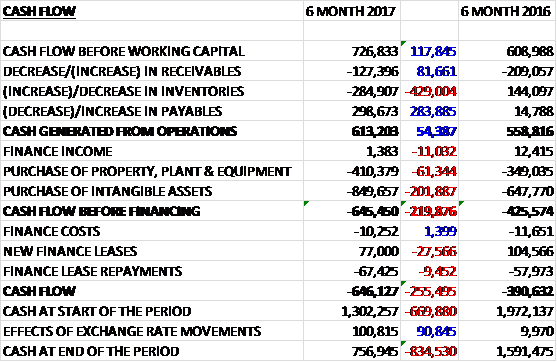
odxcashinterim

Before movements in working capital, cash profits increased by £118K to £727K. There was a cash outflow from working capital due to a growth in inventory and receivables to give an operating cash flow of £613K, a growth of £54K year on year. The group spent £410K on property, plant & equipment; and £850K on intangibles to give a cash outflow of £645K before financing. New finance leases offset finance costs and there was a cash outflow of £646K for the period to give a cash level of £757K at the end of the half.

The loss in the Allergy and Autoimmune division was £96K, an improvement of £59K year on year with revenue up 11%, mainly due to a favourable currency impact from the domestic German allergy business. In constant currency terms, revenue was stable in Germany, halting the recent history of decline due to reimbursement pressures.

The pre-tax profit in the Food Intolerance business was £1.6M, a growth of £509K when compared to the first half of last year. The microarray-based Foodprint system has achieved particularly good growth with revenue increasing by 46% to £2.2M, including one account win in North America, a market which is seen as increasingly important for longer term growth. Food Detective revenue fell by 22% to £930K as the group took a decision to reduce pipeline stocking in two of their key markets.

The pre-tax loss in the Infectious Disease business was £147K, an improvement of £56K when compared to the first half of 2016 with gains in some regions being oddest by reductions elsewhere. The modest increase in revenue was due to favourable currency movements.

With the point of care tests, the group have confirmed they have eliminated an ambient temperature effect when tested on over 100 HIV+ samples in a UK hospital. They also have data on a further 400 samples and results overall indicate they are meeting their design goals of sensitivity and specificity. They are now in a period of formal design control which means they now have the device format which they expect to take to market. The remaining work they plan to do will be undertaken to confirm this is the case. They have now manufactured all the components necessary to assemble a scaled-up batch size of 10,000 devices which will be used in external trials and for assay robustness studies.

For the rapid test manufacturing, the group intend to complete all stages of the BSI Quality Management System review for their facility in Pune and remain on course to achieve CE-marked malaria and pregnancy tests available for sale in Q4.

In allergy automation they CE-marked their allergy launch panel comprising 41 allergens which are capable of being run on the IDS-iSYS instrument and whose performance matches that of the market-leading product. They are also finalising a long-term supply contract with their first customer in Germany. They have initiated recruitment of skilled project managers and leaders into the scientific team that is responsible for delivering menu expansion, beyond the initial launch panel.

After the period-end, the group have been approached by their Allersys licensor with a view to changing the nature of the commercial relationship with the company which could extend to the acquisition of all or part of the Allergy business. Under the terms of the agreement, the license can be terminated by IDS should they wish to do so. The board believe that it is in both parties’ interests to explore all the possibilities of a new commercial relationship and to avoid a situation whereby there are no winners should IDS exercise their right to terminate the contract. That’s as clear as mud.

The approach from IDS notwithstanding, the outlook for the rest of the year is encouraging within the core business with revenue and adjusted profit expected to be at the higher end of market expectation due, in part, to favourable currency movements.

The company is not exactly a value play, at the current share price the shares trade on a PE ratio of 35.2 which falls to 16.4 on the full year forecast.
Overall then this has been a solid period of progress for the group. Profits were up, as was operating cash flow but there was no free cash generated. Net tangible assets were broadly flat during the period. Both the allergy and infectious disease businesses posted slightly improving losses with currency movements likely the reason. The group continues to be carried by the food intolerance business where Foodprint drove growing profits in the division.

Going forward, it seems real progress is being made on the infectious disease tests and the allergy tests seem ready to go, although the approach from IDS injects some uncertainty here so it would be good to find out what they are intending to do. With a forward PE of 16.4 these shares are not cheap but I think they show enough promise to carry on holding.

On the 27th January the group released an update on negotiations with IDS. They have confirmed that their preferred course of action is to pursue an enlarged distribution relationship with the group. Currently they have contractual rights to be appointed exclusive distributor in the UK, France, Germany, Austria, Switzerland, Scandinavia and the USA. The ongoing discussions will focus on how Omega can attain a more global reach for its Allersys tests in a structure that benefits both companies. Currently they have 41 tests which can run on the automated instrument.

On the 29th March the group announced that it has CE-marked its VISITECT range of Malaria tests. The completion of the validation programme means these tests are available for general sale through the business to business channels in those countries that do not require individual product registration. The group anticipate achieving additional regulatory approvals within the next 12 months to enable them to participate in higher volume tender business.
In addition, they confirm that their manufacturing facility in India has undergone an annual inspection from the Indian FDA, confirming the facility is compliant with the GMP processes for manufacturing, testing, storage and QA processes and that its manufacturing license is valid until the start of 2021. Whilst the board expect relatively modest sales during 2018, they anticipate generating significant demand from the subsequent financial year onwards.

On the 25th April the group announced that results for 2017 will be in line with market expectations. Revenues are expected to be £14.3M, 3% ahead of last year on constant currency terms and 12% ahead of last year’s result on an actual basis. Food intolerance is expected to rise 13%, allergy and autoimmune up 14% and infectious disease up 5%. Adjusted pre-tax profit is expected to be £1.1M.

In Allergy, the group continue to have discussions with IDS on how best to commercialise their Allersys range or reagents and believe they can achieve an outcome that will benefit both parties. They have continued to develop the allergen range and they have now optimised a further nine allergens in addition to the 41 allergens which are CE market for use on the IDS instrument.

In Infectious disease, they have now attained formal design freeze with their VISITECT CD4 test following the successful manufacture of three pilot batches. Devices from these batches were tested at three UK hospital sites, on sufficient numbers of patient samples to demonstrate that they now have a method for manufacturing devices which consistently meet their design goal specifications.

Achieving this milestone means that the group have now progressed into the formal verification and validation phase. They will use the chosen design to manufacture three validation batches which will be sent for field trial evaluation at selected sites in the UK and India. The field trial results, combined with a number of planned internal experiments to support product claims will, if successful, enable them to CE-Mark the test after the conclusion of these activities.

The group have also achieved full operational capability with their manufacturing facility in India which should achieve modest sales of their Malaria range of tests this year. Going forward, the food intolerance division continues to grow and the board are reviewing initiatives as to how they may grow this business in North America. The allergy business in Germany achieved a 3% increase in Euro denominated turnover, reversing the declining trend.
Things seem to be ticking along OK but the major uncertainty remains the discussions with IDS over the Allersys range.

Trifast Share Blog – Interim Results Year Ending 2017

Trifast has now released its interim results for the year ending 2017.

triincome2

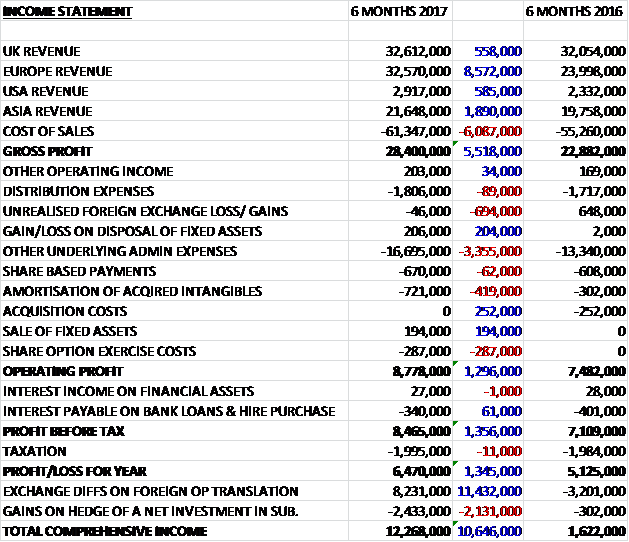
Revenues increased when compared to the first half of last year with an £8.6M growth in European revenue, a £1.9M increase in Asian revenue, a £585K growth in US revenue and a £558K increase in UK revenue. Cost of sales also increased to give a gross profit £5.5M above that of last time. There was a £694K detrimental movement to exchange losses and other underlying admin expenses increased by £3.4M. We also see a £419K growth in the amortisation of acquired intangibles and a £287K share option exercise costs, partially offset by the lack of £252K of acquisition costs and £194K from the sale of fixed assets which meant that the operating profit grew by £1.3M. Interest costs reduced slightly and taxation was broadly flat so the profit for the half year came in at £6.5M, a growth of £1.3M year on year.

triasssetsinterim

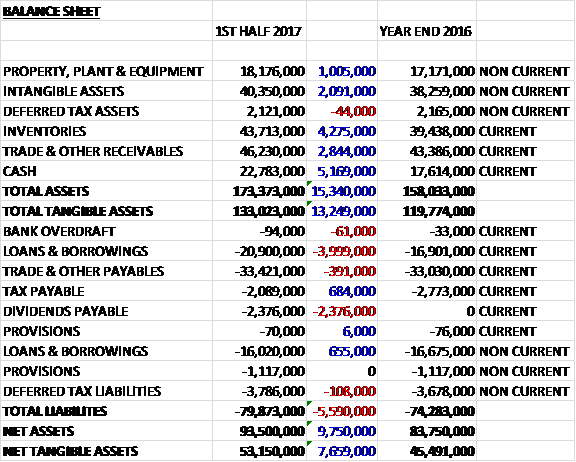
When compared to the end point of last year, total assets increased by £15.3M driven by a £5.2M growth in cash, a £4.3M increase in inventories, a £2.8M growth in receivables, a £2.1M increase in intangible assets and a £1M growth in property, plant and equipment. Total liabilities also increased during the period due to a £3.3M growth in borrowings and a £2.4M increase in dividends payable. The end result was a net tangible asset level of £53.2M, a growth of £7.7M over the past six months.

tricashinterim

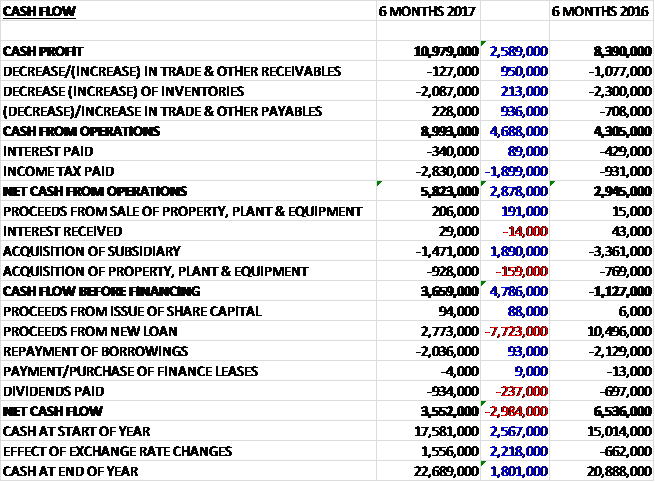
Before movements in working capital, cash profits increased by £2.6M to £11M. There was a cash outflow from working capital but this was less than last year but tax payments increased by £1.9M to give a net cash from operations of £5.8M, a growth of £2.9M year on year. The group spent £928K on property, plant and equipment (expected to increase in the second half) along with £1.5M on acquisitions which represented the final deferred payment for Kuhlmann, which meant that the free cash flow was £3.7M. Of this, £934K was spent on dividends but a growth in loans meant that the cash flow for the period came in at £3.6M to give a cash level of £22.7M – could another acquisition be on the cards?

Overall forex tailwinds brought an additional £1M to underlying pre-tax profit. Despite negative media predictions of both UK and global economic malaise, the group has sustained its trading dynamics in most geographic sectors. The one exception is the reduced domestic automotive output in Malaysia which has affected Power Steel and Electro Plating Works. That is currently being addressed by promoting its unutilised capacity to the Tier 1 automotive customers in the EU and US. Meanwhile all the other businesses are maintaining organic growth.

Over recent years there has been a trend for high volume assembly operations to migrate to new countries to preserve competitive advantages. It is this transience that helped to drive the group’s international expansion by following customers to new production sites, the latest step seeing them open a new logistics centre in Barcelona. Trading from this greenfield site is expected to start early next calendar year and responds to customer requests to provide technical and logistics support locally in Spain.

With meaningful manufacturing capacity expansion projects underway in Italy and Singapore, the UK management team is reviewing the cost benefits of how they collect, store and access the group’s purchase logistics and sales data by means of more interactive systems that will improve processing efficiency. This is a long-term project with the benefits expected by the end of 2018.

The underlying profit from the UK business was £3M, a decline of 52K year on year with marginal growth in revenue.

The underlying profit from the European business was £5.3M, a growth of £2.4M when compared to the first half of last year with £600K of that coming from Kuhlmann. The most recent acquisition, Kuhlmann in Germany, is performing well and has enlarged its sales force to add more resource to its domestic growth opportunities that have been identified by the team. Along with the contribution from Kulmann, there was strong organic growth in the domestic appliances business in Italy, electronics in Hungary and automotive across the Netherlands and Sweden.

The underlying profit from the US business was £166K, a decrease of £80K when compared to the first half of 2016 despite revenues increasing. This decline in margin is due to investment in US resourcing levels ahead of the curve to support expected revenue growth. As these revenue streams continue to increase, the margin should improve.
The underlying profit from the Asian business was £3.3M, a decline of £441K year on year with much of this decrease as a result of forex movements, particularly in China. There was growth in the Singapore and Chinese businesses but this was offset by lower sales in Malaysia.

The group announced that having been involved in the business for over 35 years and as executive chairman since 2009, Malcolm Diamond announced that he was relinquishing his executive duties and the end of the year to become non-executive Chairman.

There are some macroeconomic factors that the group can’t fully mitigate, including the ongoing volatility in forex movements and raw materials markets, as well as the wider potential implications of Brexit on the business and the UK economy. The group are already starting to see some purchase price challenges in the UK business from the ongoing weakness in Sterling and they expect these pressures to increase over time if that weakness persists. As in international business with over 70% of revenues being generated outside the UK, however, the board remain confident they have the flexibility to meet these challenges head on as and when they arise.

Europe remains the key area for organic growth. They have investment projects already underway to increase their manufacturing capacity in Italy and their new greenfield site in Spain is already providing opportunities to better access the multinational OEMs operating in the region. Additional investments are being made across the world, in both their global and local sales resources and supporting teams, as well as to improve the digital and integrated business management systems.

At the current share price the shares are trading on a PE ratio of 22.3 but this reduces to 12.8 on the full year consensus forecast. After the interim dividend was increased, the shares are yielding 1.6% which remains the same on the full year forecast. At the period-end the net debt positon was £14.2M compared to £16.3M at the same point last year and £16M at the year-end.

Overall then this has been a pretty solid year for the group. The profits increased but this seems to be attributable to the Kuhlmann acquisition and favourable forex movements – like for like profits seem a bit flat. The net assets increased and the operating cash flow improved too with a decent amount of free cash being generated. Profits in the UK were flat so the growth all came from Europe with a good contribution from Kuhlmann and improvements in Italian domestic appliances, Hungarian electronics and Dutch/Swedish automotive, aided by the weakness of Sterling.

Elsewhere, the US saw a modest decline in profits due to increased costs before future revenues come on stream, and Asia saw a larger decline due to less favourable currency movements and a reduction in automotive output in Malaysia. The Brexit vote could impact on the group and they are already seeing some purchase price challenges in the UK but this should be offset to some extent by more revenue from Europe as the Euro continues to strengthen against Sterling. The forward PE ratio of 12.8 does not look too taxing but the yield of 1.6% is nothing to write home about. Overall these shares remain a hold for me.

On the 16th February the group released a trading update covering Q3. On a constant currency basis they are continuing to report a strong performance. The Asia business returned to growth as it began to benefit from the recovery in demand during the second half and the UK and US operations are continuing to produce results in line with management expectations. In Europe the business overall has performed solidly, delivering growth, although they are seeing a slight change in product mix – there has also been an encouraging start at their newest greenfield operation in Barcelona.

Since the end of the first half, the sustained weakness in Sterling has had a further positive translation impact on profit. In the shorter term, if this weakness persists they expect there to be an additional positive effect on profits but in the longer term they may start to experience some challenges in the UK business in terms of input costs.

Given trading in Q3 and the further forex tailwinds, the group’s performance for the full year is expected to be slightly ahead of previous expectations. This all seems decent enough to me and I continue to hold.

On the 20th April the group released a trading update covering the year. On a constant currency basis, the year finished strongly with the group’s main markets all contributing to trading results ahead of management expectations reflecting the compelling underlying organic growth from the key sectors they operate in.

In Asia, the TR business continued its return to growth building on the profitable return achieved in H1 and benefiting from the recovery in demand both in the domestic and export markets from their key sectors of industrials, electronics and automotive. In the UK they have experienced good growth coming through from both their OEM and distributor export businesses. They US operations, albeit from a small base, have produced double digit growth with trading results in line with expectations. In Mainland Europe the business overall has performed well delivering year on year growth. In the German business they have benefited from both organic and cross-referral opportunities from around the group.

The capital investment programme during the year totalled £3M which has provided additional capacity in Asia and Europe. Last time the board reported that they experienced translational forex tailwinds of about £1M and in the second half the sustained weakness of sterling has had an additional positive translational impact of £1.4M.
Looking ahead the board have already started seeing some purchase price challenges in their UK business from the ongoing weakness in Sterling and they remain mindful that if this weakness persists, these pressures may increase over time. Nonetheless as they enter the new financial year they remain confident in their prospects.

Gattaca Share Blog – Final Results Year Ended 2016

Gattaca has now released its final results for the year ending 2016.

gttaincome

Revenues increased when compared to last year following the acquisition with a £90M growth in technology revenue and a £31.1M increase in engineering revenue. Wages and salaries increased by £10M and other cost of sales were up £87M to give a gross profit £18.2M ahead. We then see a £2M increase in the amortisation of acquired intangibles and a £1.3M growth of restructuring costs, offset by the lack of £1.7M of acquisition costs that occurred last year. Other admin expenses were up £14.3M to give an operating profit that increased by £2.7M. The group benefited from a £1M forex difference but tax costs grew by £2.2M which meant that the profit for the year was £9.9M, a growth of £1.6M year on year.

gttaassets

When compared to the end point of last year, total assets increased by £822K driven by a £4.3M growth in trade receivables, a and a £3.4M increase in cash, partially offset by a £2.6M decline in other receivables and a £2.1M reduction in the value of customer relationships. Total liabilities declined during the year as a £15M reduction in the term loan and a £3.3M fall in accruals and deferred income was only partially offset by a £9.8M growth in the working capital facility, a £2.4M increase in contractor wages creditor, a £1.6M growth in other payables and a £1.3M increase in the current tax liability. The end result was a net tangible asset level of £33.2M, a growth of £8.9M year on year.

gttacash

Before movements in working capital, cash profits increased by £4.8M. There was a small cash outflow due to an increase in receivables and after modest rises in interest payments and tax charges, the net cash from operations came in at £14.6N, a growth of £1.3M year on year. The group spent £471K on fixed assets, £462K on intangibles and £390K on acquisitions so after £420K received from the sale of a subsidiary, the free cash flow was £13.7M. Of this, £15M was used to pay back the loan and £6.9M was paid out in dividends which meant that after exchange rates were taken into account, there was a cash outflow of £6.3M and a cash level of -£11.5M at the year-end.

The new Engineering reporting segment includes the Engineering business previously reported together with the Engineering business included within Networkers and the professional services brands of Barclay Meade and Alderwood. The Technology segment includes the Connectus brand previously reported within professional services and the remaining Networkers business.

On a like for like basis overall operating profit increased by just 1%. On the back of the acquisition the group has achieved £3.1M of cost synergies, the majority of which will be realised in 2017. Large parts of the integration are complete but they have further work in harmonising systems and they expect a final £500K of integration related costs in the first half of 2017.

The operating profit in the Engineering business was £14M, a growth of £864K year on year. Infrastructure performed particularly strongly with 18% NFI growth on the back of continued investment in the UK on major projects including Crossrail, Thames Tideway, London Bridge, South West Rail extension, major highway upgrades and HS2. To accelerate growth the group have increased headcount in the London office. They also see significant opportunities internationally, particularly in the US where Texas Road and Highway Construction alone has an annual budget of $2.5BN dedicated from 2018 and is an opportunity to mirror one of the UK’s strongest divisions in the Dallas office.

The energy business as a whole was down 7% due to the continued global downturn in oil and gas but was mitigated somewhat by the nuclear, renewables and transmission sectors. There was growth in the renewables market in the UK, the Middle East and Africa. In the UK, delays to the nuclear new build programme slowed activity but the approval since the year-end of Hinkley Point and the renewal of Trident should spur activity in the coming years. The automotive division saw NFI decrease by 4%. In the UK, new car sales are at record highs and R&D investment is high but there are acute skills shortages.

The aerospace division saw growth of 12% on the back of OEMs enjoying strong order books for existing aircraft model production. The group are seeing demand predominantly across precision machining and interiors skill sets. Maritime had a challenging year, with the lull in naval build programmes following the completion of the QE class aircraft carriers leading to a fall in contract NFI of 17%. With new aircraft carriers due to arrive in Portsmouth next year, however, and the successor submarine programme approved by parliament, they expect to return to growth.

Overseas, they continue to build on their success sourcing talent for the Canadian surface combatant programme helping permanent fee income grow 11% and they have recruited staff to capitalise on opportunities in Europe and Australia.

There was growth of 10% in general engineering and permanent fee income increased by 25% as a result. Demand remains high for science and medical staff in pharmaceutical and radiography in private healthcare where UK shortages prompted candidate attraction campaigns in Europe and the US. There was a strong performance from Engineering Technology with contract NFI increasing by 17% and there was also good growth in the professional staffing business with NFI up 16%.

The operating profit in the Technology business was £7.5M, an increase of £3.3M when compared to last year but on a pro-rata basis the division underperformed with NFI down 6% as telecoms delivered strong growth of 9% offset by IT which was down 17% year on year, although the rate of decline did slow (21% in H1 vs 14% in H2).

Telecoms performed well globally, particularly strong in Africa, Asia and Latin America on the back of investment in 4G network rollouts and upgrades. The new markets of IP/broadcast, post-paid billings and mobile money are also creating opportunities. The convergence of Telecoms and IT skills has presented high-end roles in IT security, ERP and development. As previously reported, the group have streamlined the IT structure to focus on five specialisms.

The leadership business performed steadily with NFI broadly the same as last year, supplying change and transformation experts, programme and project managers and business analysts to the engineering, leisure and retail sectors in the UK. ERP was down 30%, impacted by a major client outsourcing its entire IT function. This business has predominantly been focused on the European market delivered from the UK and to improve resilience and growth opportunities, they have increased headcount in the US and Singapore.

There was a 20% reduction in demand from the corporate account and public sector clients and they have integrated their two public sector businesses and formed one, industry-focussed, business unit. Internationally, IT grew by 8% with particularly strong performances in the Middle East, Asia and North America. Going forwards, IT development skill shortages in permanent recruitment are resulting in an active contract market and the focus on small and medium sized organisations is gaining traction, particularly in financial technology. They have a well-established team I the UK and have invested in new headcount in the US and Canada offices.

The business works with system integrators on cloud implementation projects and are seeing increased demand across Europe in the niche cloud applications market and are looking to extend this into other locations. Cyber security is a relatively new specialism and they see this as a growth market with businesses forecast to significantly increase investment, based on the vast amounts of fate being created and the increasing importance of keeping it secure.

It is worth noting that the operating lease liabilities have increased considerably this year and now stand at £12.5M compared to £3M in 2015. The group is somewhat susceptible to interest rate movements and a 1% increase in the rate would reduce profits by £450K. They also have some exposure to exchange rate movements. A 25c weakening of the Euro and Dollar against Sterling would decrease profits and net assets by £3.6M.

In the months immediately before and after the EU referendum, there was a pause in some client’s recruitment, but activity returned quickly to pre-referendum levels. Companies that were recruiting before have continued to do so in the subsequent months. Demand for skilled engineers in both the UK public and private sectors remains strong and they have yet to see any change to vacancy flow. The outcome of the vote continues to make the economic outlook uncertain, however, although it still too early to say what its near term impact will be for the group. Whilst the amount of business they conduct in Europe is not significant, the same cannot be said for many of their clients and any uncertainty can have a knock-on effect in the investment decisions that their clients make.

Going forward, uncertainty about the future of the British economy raises concerns for companies such as this but the approach of partnering with their clients on long-term public and private infrastructure projects mitigates this risk to some extent, as does the increasing geographic diversification. Since entering the new financial year, the group have seen a slowdown in trading in the UK with group NFI in Q1 forecast to be down 3%. They are continuing to invest in their overseas operations which enjoy growth and to some extend mitigates the uncertainty around the UK economy in the medium term. The full year effect of the Networkers acquisition is expected to come through in 2017 with first concrete sales synergies now being realised.

At the current share price the shares are trading on a PE ratio of 9.3 which reduces to 7.2 on next year’s consensus forecast. After the total dividend was increased by 5%, the shares are now yielding a stonking 8% increasing to 8.1% on next year’s forecast. At the year-end the group had a net debt position of £25M compared to £33.6M at the end of last year.

Overall then this has been a solid year of consolidation for the group. Profits were up, net assets increased and the operating cash flow grew with plenty of free cash being generated, although like for like profits were relatively flat so this good performance can be attributed to the acquisition. The engineering business performed well as a strong showing from the infrastructure division along with aerospace and general engineering offset sluggish conditions in the oil and gas and maritime markets.

The technology business performed less well as growth in telecoms was more than offset by a decline in IT, not helped by a major customer outsourcing its IT department during the year. Going forward things seem very uncertain, as Brexit-induced inertia among customers has meant that Q1 is currently experiencing a slowdown. These conditions seem to be reflected in the valuation, however, and the forward PE of 7.2 along with a stonking dividend yield of 8.1% meant that I might have been a bit hasty exiting this position and I am tempted to re-enter at these prices.

On the 8th December the group announced that CEO Brian Wilkinson purchased 34,488 shares at a value of £100K and Chairman Patrick Shanley purchased 15,000 shares at a value of £43K which represents his maiden share purchase. Not a bad lot of buying.

On the 2nd February the group released a trading update covering the first half of the year. Due to the phasing of planned client projects in the second half, and the improving performance of the UT division, the board has confidence that full-year profit will be in line with expectations.

NFI in the period was down 2% to £35.1M with both contract and permanent fees also down 2%. This was flattered by forex movements, however, and at constant currency NFI declined by 5%. Engineering NFI was down 4% to £21.1M as growth in the engineering technology and aerospace sectors were offset by weakness in most other sectors as the time to hire lengthened following the outcome of the EU referendum. Vacancy flow continues to be strong, however.

Technology NFI was down 6% to £14M but within the division, IT saw a return to growth, up 1% following a year of decline. Telecoms declined 14%, however, with a flat year on year performance in the UK offset by delays in a number of client projects internationally.

Also on the same date the group announced the acquisition of Resourcing Solutions, a niche engineering recruitment business. The company operates from three UK offices, providing specialist contract and permanent candidates to businesses operating in the rail, power and built environment sectors. It is expected to generate an underlying EBITDA of £2M this year with the bulk of NFI generated from contract placements.

The group will initially acquire 70% of the share capital for £6.9M from the founder and CEO with the remaining 30% subject to put and call option exercisable from a year after completion for 5x trailing EBITDA. The maximum total consideration payable is £15M and it will all be paid in cash from existing resources.

Overall, it seems as though things are pretty sluggish at the moment and I don’t think I will be investing at this time.

On the 13th April the group released a trading update where they stated that profits for the year are likely to be about 10-15% lower than their prior expectations. The softening of NFI in H1 was driven by near term uncertainty which led to elongated hiring decisions and some projects being delayed although the medium term outlook remains positive with some signs of a return to confidence in recent weeks.

Unexpected one time cost overruns relating to the setting up of international entities to support a pan-European contract win and delays in realisation of back office cost savings will result in overheads exceeding initial expectations in H2. Alongside this the group have been making the appropriate investments in headcount which will further increase costs. This all sounds a bit messy and I am not rushing to invest quite yet.

Redrow Share Blog – Final Results Year Ended 2016

Redrow has now released its final results for the year ended 2016.

rdwincome

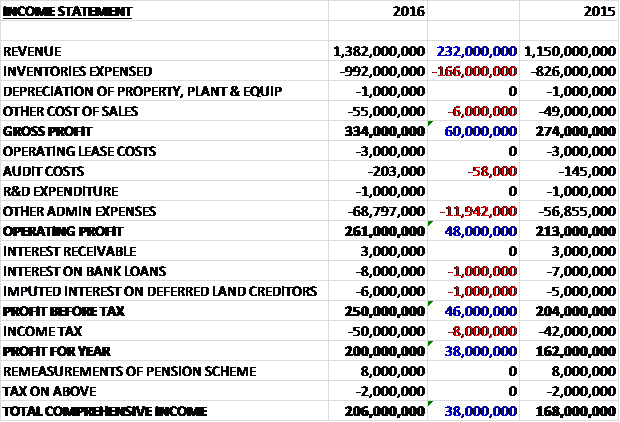
Revenues increased by £232M when compared to last year and after inventory expenses and other cost of sales increased by a more modest amount, the gross profit grew by £60M. Admin expenses increased by £12M and interest costs grew by £2M to give a pre-tax profit some £46M above that of 2015. After tax increased, the profit for the year came in at £200M, a growth of £38M year on year.

rdwassets

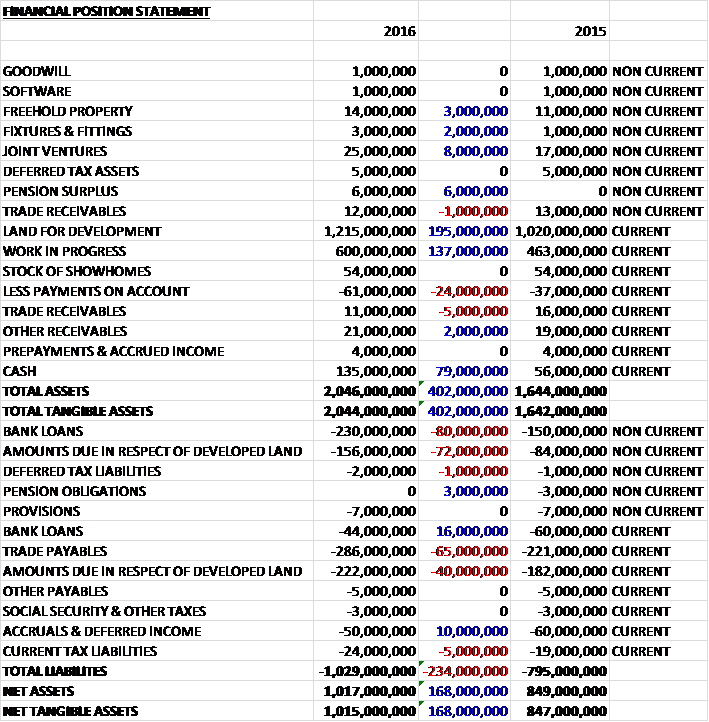
When compared to the end point of last year, total assets increased by £402M to £2.046BN, driven by a £195M growth in land for development, a £137M increase in work in progress and a £79M growth in cash, partially offset by a £24M increase in payments on account. Total liabilities also increased during the year due to a £64M growth in bank loans and a £112M increase in amounts due in respect of developed land. The end result was a net tangible asset level of £1.01BN, a growth of £168M year on year.

rdwcash

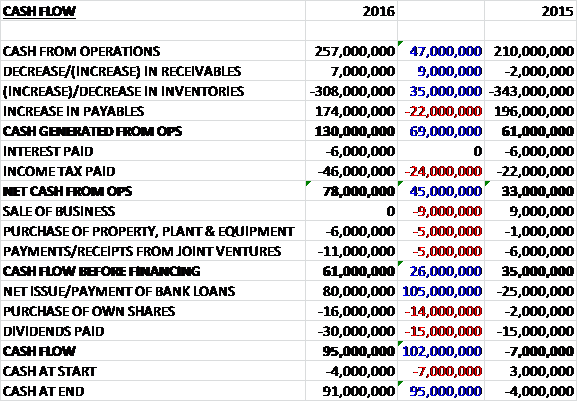
Before movements in working capital, cash profits increased by £47M to £257M. There was a cash outflow from working capital with a growth in inventories, but this was less than last year and after tax payments grew by £24M, the net cash from operations came in at £78M, an increase of £45M year on year. The group spent £6M on fixed assets and £11M on joint ventures to give a free cash flow of £61M. They then took out £80M in new loans to purchase £16M of their own shares for director bonuses, and they spent £30M on dividends to give a cash flow of £95M and a cash level of £91M at the year-end.

Revenues from residential legal completions increased by 26% due to a 17% rise in legal completions to 4,716 combined with a 7% increase in the average selling price to £288.6K. The gross margin improved to 24.2%, mainly due to most of the completions coming from sites purchased after the downturn with the remaining plots purchased before the downturn likely to be sold by the end of 2017. The divisions in the South grew most strongly and the new SE division made a valuable contribution to results in its first year of trading.

The market in the year was stronger than in 2015 with a seasonally stronger performance in the second half of the year. Demand for new homes was strong throughout the year and the growth in output has benefitted from the government’s Help to Buy scheme which has continued to be a major support. At the higher end of the market, in particular in Central London, sales have slowed, mainly as a result of the Stamp Duty changes that came into effect last year and further hikes that came into effect in April this year. Activity in this section of the market remains sluggish but the group’s exposure is very limited and other operational areas such as Outer London have shown strong growth. They have seen very little impact as a result of the Brexit vote.

The group had a successful year in acquiring land and obtaining planning permission on their forward land holdings with the owned and contracted land bank increasing to 26K plots, although obtaining planning through Local Authorities remains tortuous. They benefited from an exceptional pull-through from the forward land portfolio that included 2,900 plots at Colindale in North London.

The group entered the new year with a record private forward order book of £807M, up 54% on the previous year; including social housing, the total forward order book is £897M, up 51%. Sales in the first ten weeks are encouraging and up 8% on a strong comparison last year. They have recently launched a number of significant new sites and have a strong pipeline in the planning process. The strategy continues to grow the business, increasing the number of outlets and the number of homes they build. This process is on track and the board are confident that this will be another year of significant progress for the group.

At the current share price the shares are trading on a PE ratio of 7.4 which falls to 7.2 on next year’s consensus forecast. After a 67% increase in the full year dividend, the shares are yielding 2.5% and I can’t find a forecast covering the dividends. At the year-end, the group had net debt of £139M compared to £154M at the same point of last year.

Overall then this has been a strong year for the group. Profits were up, net assets increased and the operating cash flow improved with plenty of free cash being generated. Legal completions were up strongly and selling price also increased, albeit more modestly. The group are working through their legacy plots purchased before the downturn and should be finished with them next year. The housing market is pretty decent, although the stamp duty changes have weakened the Central London high end market and although Redrow don’t have much of an exposure to this, the risk is that the slow-down trickles down.

So far this year, sales are up again and the shares look cheap with a forward PE of 7.2. The dividend yield of 2.5% is not much to get excited about nut nonetheless, the shares look interesting to me.

On the 9th November the group released a trading update where they stated that the encouraging sales trend reported earlier has continued. Net private reservations are 6% ahead at 1,660 and the sales rate for the 19 weeks to 4th November is 0.71 per outlet per week, up 4%. Demand remains strong across the majority of sites with buyers continuing to make purchasing decisions well ahead of build programmes. The private order book is currently at £941M, a 29% increase on this time last year.

The average selling price of private reservations in the year to date is £355K compared to £334K, including the sale of the last of the high value apartments in Central London. Excluding these sales, the selling price was up to £341K. Net debt is currently £92M an expected to be at a similar level at the end of the year.

Overall, things seem to be ticking along well here and I am tempted to make a
purchase.

N Brown Share Blog – Interim Results Year Ending 2017

N Brown has now released its interim results for the year ending 2017.

bwngincome

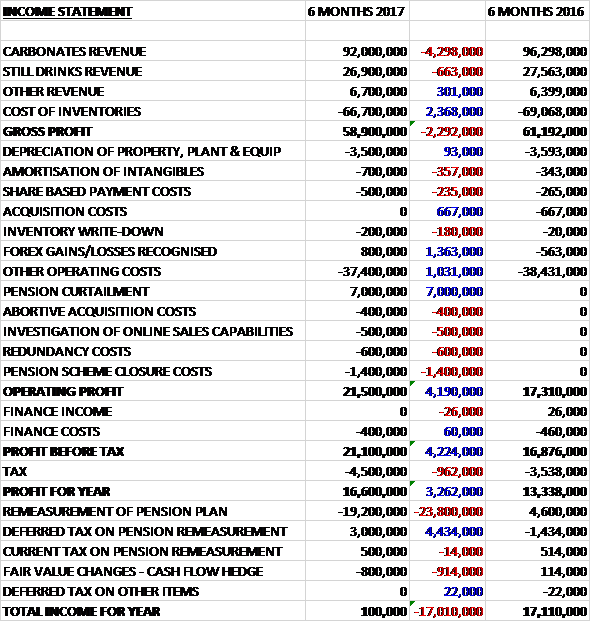
Revenues grew when compared to the first half of last year with a £2.4M increase in services revenue and a £1.7M growth in the sale of goods revenue. Cost of sales increased by a greater degree, however, and gross profit fell by £5.1M, apparently related to the promotional stance taken during the tough trading in the first half. Marketing and production costs increased by £1.5M and depreciation & amortisation was up £1.4M but there was no loss on disposal of fixed assets which was £700K last time and the share option charge fell by £600K, offset by other admin costs that increased by £1.2M. There were no reorganisation costs (£5.3M last time) or clearance store closure costs (£8.9M) but there was a £600K growth in VAT related costs and a £9M charge relating to financial services customer redress, all of which meant that the operating profit declined by £3.1M. The group benefited from a £500K reduction in the fair value adjustment to the forex hedge and tax charges fell by £500K to give a profit for the period of £16.9M, a decline of £2M year on year.

bwngassets

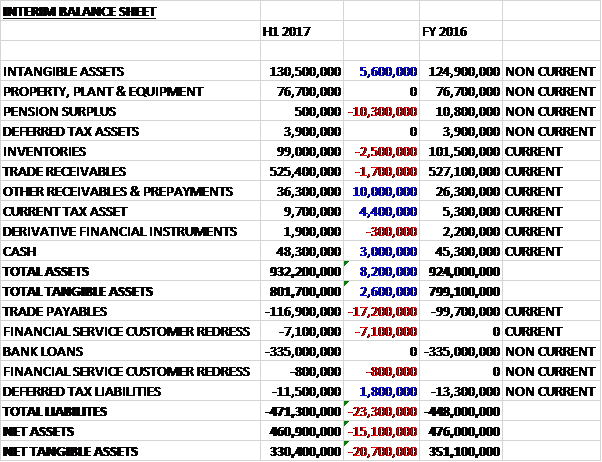
When compared to the end point of last year, total assets increased by £8.2M to £932.2M driven by a £10M growth in prepayments and other receivables, a £5.6M increase in intangible assets and a £4M growth in current tax assets, partially offset by a £10.3M decline in the pension surplus, a £2.5M fall in inventories and a £1.7M decrease in trade receivables. Total liabilities also increased during the period as a £17.2M growth in trade payables and a £7.9M financial service customer redress provision were partially offset by a £1.8M decline in deferred tax liabilities. The result was a net tangible asset level of £330.4M, a decline of £20.7M over the past six months.

bwngcash

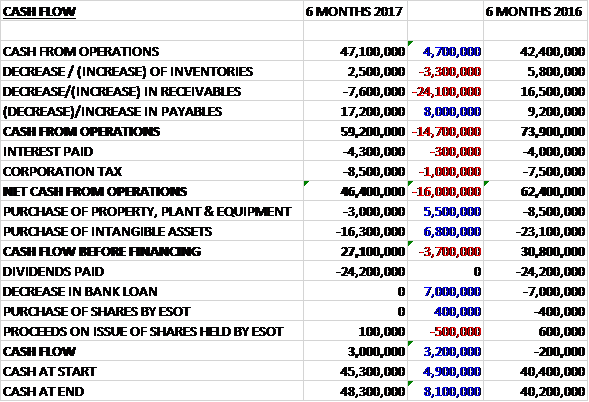
Before movements in working capital, cash profits increased by £4.7M to £47.1M. There was a cash inflow from working capital but this was much less than last year and after a £1M increase in tax payments and a £300K growth in interest payments, the net cash from operations came in at £46.4M, a decline of £16M year on year. The group spent £3M on property, plant and equipment mainly relating to warehousing along with £16.3M on intangible assets reflecting the spend on IT for the Fit for Future project which left £27.1M in free cash which covered the £24.2M paid out in dividends to give a cash flow for the period of £3M and a cash level at the end of the half of £48.3M.

The active customer file declined by 1.5% due to a weak sector backdrop and ongoing headwind from the Fifty Plus and Traditional Titles. Power Brand active customers excluding Fifty Plus grew by 14.7% reflecting the reduction in Fifty Plus customers as the group reduced marketing spend ahead of its migration into JD Williams.

Market share in Ladieswear was flat at 4.3% in a relatively weak season. Within this they gained share in younger ladieswear driven by Simply Be and lost it in the older segment. Menswear market share increased by 20bbp to 1.3%. The group continue to expand their offering of third-party brands with new introductions being Wold and Whistle, Vero Moda, Religion, Helene Berman, Not Your Daughters Jeans, Timberland, Ann Summers and Gossard.

Credit arrears were 9.8% during the first half, down 30bps driven by an improvement in the quality of the debt book. The credit provision rate was 12.7%, down 280bps against last year. This benefitted from a small quantum of high risk payment arrangement debt, which the group was able to sell for a slightly better rate than book value. Assuming no further debt sales, the group expect both the credit provision and arrears rate to remain broadly flat through the remainder of the year.

JD Williams product revenue was £75.8M, broadly flat year on year with the JD Williams brand itself up 11% and Fifty Plus down 18% as the group reduced marketing investment ahead of its migration into JD Williams. Trialling has commenced but given the size of the customer file the migration will take place over two seasons. The group expect the headwind to unwind as they go through this proves and the key priority will be optimising the customer experience to secure future growth potential. There is good momentum in the JD Williams brand itself with a 20% growth in active customers. Last month they introduced a collection of their best priced, current season clothes to further reinforce their value for money credentials and sales of these lines have exceeded expectations, with sales up 75%.

Simply Be product revenue was £53.3M, up 6.2%. In line with the wider sector, spend per customer in Spring Summer was down year on year but the business was helped by a single digit increase in active customers. The fast fashion sub-range continues to perform strongly with revenues near doubling during the period. The new share and sculpt denim range, launched in July, has seen sales exceed expectations. The group have also announced that they will be launching a Simple Be shopping app ahead of peak trading this year.

Jacamo product revenue was £31.4M, up 3.3%. Sportswear was particularly strong, driven in part by expanded ranges in this category. The collaboration with Jonnie Peacock last season was well received and they launched their Autumn campaign with rugby player Dan Biggar. Social engagement is increasingly important for this brand with FlintoffVsSavage in June a particular highlight in the period. As part of a wider opportunity to access new customers through selling their brands on partner website, they will be trialling a capsule collection of Jacamo on ASOS from January.

Secondary brand revenue was £75.2, up 0.4% year on year. The best performing brand in the first half was Fashion World, which has the highest credit usage across all brands. High and Mighty is transitioning from a predominantly stores to online model. Figleaves went live with a new Demandware web platform in September which will allow them to be more effective in driving future customer recruitment.

Revenue from the traditional segment was down by 4.2% to £65.2M in line with expectations and an improvement from the 5.5% decline last year. Amongst a number of improvements the new mailing materials feature more age appropriate models, copy text that resonates with the traditional audience and strong value messaging throughout the publication. All this is backed by bespoke email campaigns. The group have reinvested back into the product choice, particularly jersey and nightwear and have seen significant increases in sales as a result. The actions taken to improve performance are starting to have a positive impact as they enter the new Autumn Winter season.

The US continues to represent a significant growth opportunity. Revenue was £7.7M, up 24.5% and 14.7% on a constant currency basis. The operating loss was reduced to £500K compared to £900K last time. The majority of the US revenues are generated by the Simply Be brand but in March they launched the JD Williams brand in the country and performance to date has been encouraging. They have reduced their marketing programme during the post-launch period of the new website which will impact performance. Ireland revenues of £7.2M were up 12.4% or just 3.8% at constant currency, driven by improvements to the product offering.

Store performance in the period was disappointing with like for like revenue down 9%, although following corrective actions, performance is improving. During the period they reduced the High and Mighty store portfolio and overall thee was an operating loss of £900K compared to £200K last year.

An exceptional charge of £9M was recognised during the period reflecting costs incurred or expected to be incurred in respect of payments for historic financial services customer redress. There were also costs related to taxation matters which are legal and professional fees related to ongoing disputes with HMRC. It is important to note that the group is actually recording an asset of £28.7M relating to cash payments made under protective assessments raised by HMRC which based on legal opinion they believe they can recover in full. Clearly this is open to some uncertainty and risk.

With regards the Fit 4 the Future programme, to date they have landed Cybersource and Power Curve which are key parts of the Credit transformation; phase 1 of the new merchandise systems; the Simply Be Euro foundation site and the new US website. They re-platformed the US website to Hybris and this went live in late September. Through the process of implementation and testing they realised they required more time to deliver the customer experience required for the brands than originally expected.

The rollout timetable for the remaining Fit 4 the Future programme has been extended due to what has been learned from the US launch. The additional cost will be incorporated into 2018 capex of around £40M compared to previous guidance of between £30M and £40M. The new timetable will see the launch of the first UK site with an integrated credit proposition in Q1 2018; this was previously planned for launch prior to the 2017 peak trading period. The planned timing of the Simply Be release has moved from Q1 to Q3 2018 but as this will represent the point of the project when the majority of the online customer functionality has landed, they will then be able to significantly step down the programme. Sire rollout will then be moved into normal business activity which is planned to finish by summer 2018.

The Brexit vote and the subsequent weakening of Sterling represents a challenge for the entire retail sector. The group have now almost entirely hedged their dollar purchases for 2017, which has resulted in a smaller headwind than the previous guidance of £3M, with these savings reinvested into promotional activity. For 2018 they have hedged 50% of their dollar purchases at a rate of £1.30 per dollar. At a rate of £1.25 per dollar this would result in a £7M headwind and every five cent move from this rate results in a profit sensitivity of £1.5M although a number of mitigating activities are underway including fabric and production planning, markdown optimisation and ongoing work on supplier consolidation.

Since the period-end, the group have been granted full unconditional FCA authorisation for their financial services model. In addition the US website went live. Going forward the group have started the Autumn Winter season on plan and at this stage the board are comfortable with current market expectations for the full year.

At the current share price the shares are trading on a PE ratio of 9.8 which falls to 8.3 on the full year consensus forecast. After the interim dividend was left unchanged, the shares are now yielding a hefty 7.5% which is expected to remain the same for the full year. At the period-end net debt stood at £286.7M compared to £239.8M at the same point of last year.

Overall then this has been a rather difficult period for the group. Profit fell, as did net assets but although the operating cash flow declined, this was due to working capital movements and cash profits actually grew with a decent amount of free cash being generated. Operationally, Simply Be, Jacamo and the US business have performed well, although the latter remains loss making. JD Williams had a flat year, but its performance was dragged down by Fifty Plus which could be a temporary issue? The stores and the traditional segments are more concerning, both seeing revenues drop although the board say performance is turning around.

The fit for the Future scheme is still ongoing and has been delayed so this represents a real risk factor and now that performance seems to have turned a corner I think it is this uncertainty that is dragging down the share price. On the surface the forward PE of 8.3 and dividend yield of 7.5% look very cheap but it is a risk given the above with the added issue that the debt levels are close to being problematic. Could be worth a punt though?

On the 19th January the group released a trading update covering the Christmas period. Group revenue increased by 4.1% which included a 5.9% increase in product revenue and a 0.5% reduction in financial services revenue. Overall the group are on track to meet full year expectations.

Power brands revenue was up 10% and the active customer file increased by 13%. The group are in the process of migrating customers from the Fifty Plus title into the JD Williams brand. This process is on track and, although it still represents a headwind, this has materially lessened with Fifty Plus broadly flat year on year. Simply Be revenue grew double digit year on year, driven by continued improvements in the product range and a strong online marketing campaign. Jacamo grew mid-single-digit against a tough comparative last year.

The support brands and traditional segment both recorded low single digit revenue growth. Within the support brands the strongest performer was Fashion World. The traditional titles are now back into positive year on year growth, benefiting from the actions taken to improve product and presentation over the season.

At the category level, ladieswear recorded the strongest growth by some measure, up double-digit. Menswear and Homeware both recorded mid-single digit revenue growth and Footwear was flat. There was a further improvement in group returns rate year on year. Total online sales were up 12% and order frequency and units per basket both record good year on year growth, although average selling price was down slightly as the group “invested in price”.

They launched their new US website in September, slightly later than initially planned. This impacted performance through peak, as expected, with revenue down 3.5% and 19% on a constant currency basis. The site is performing well and the board remain confident in the market opportunity going forward.

During the period financial services revenue was marginally down year on year. This masks two moving parts, with interest received up and non-interest lines such as admin charges down as the quality of the debt book continued to improve. This resulted in higher overall gross profit from financial services, and they have therefore upgraded their gross margin guidance for the year. During the period they launched a trial of differing interest rates for new customers. Whilst it is too early to assess the trial fully, the initial view is encouraging.

The systems transformation project is on track. The first UK site, which will be High and Mighty, is still planned for Q1 2018. In Q3 they will now be launching Fashion World instead of Simply Be as previously announced which has a greater proportion of financial services usage. There is no change to the overall programme costs and benefits. The launch of the new Fashion World site represents the point in the project where the majority of the online customer functionality will have landed, and they will then be able to significantly step down the programme. Site rollout, including Simply Be, will then be moved into normal business activity and they continue to expect the rollout to finish by summer 2018.

The updates to full year guidance include gross margins narrowed to -100bps to -150bps (from -50bps to -150bps) due to more promotions; financial services gross margin improved to +75bps to +125bos (from +50bps to -50bps) due to continued improvement in the quality of the credit book; group operating costs range narrowed to +3% to +4% (from +2% to +4%) due to higher volumes an depreciation/amortisation slightly lower from £29M-£30M to £28M – £29M. All other guidance remains unchanged.

Overall then, this seems to be a solid update and the group is progressing well. There remains considerable headwinds including the national living wage and the systems upgrade but I am tempted to think the low share price adequately provides for this. I am considering a purchase here.

On the 11th April the group released a statement where they said the exceptional costs relating to financial service customer complaint redress was likely to increase from £9M to more than £22M! The expected amount has increased because the FCA deadline for complaints has been announced as August 2019, a year later than previously indicated; they have experienced a greater number of complaints than expected due to wider public awareness; and the age profile of complaints received is typically older than previously experienced.

AG Barr Share Blog – Interim Results Year Ending 2016

AG Barr has now released its interim results for the year ending 2017.

bagincome

Revenues declined when compared to the first half of last year with a £4.3M reduction in carbonates revenue and a £663K fall in still drinks revenue with other revenue up £301K. Cost of sales also declined to give a gross profit £2.3M below that of last time. Amortisation payments increased by £357K and there was a £235K growth in share based payments but acquisition costs were down £667K, there was a £1.4M positive swing from forex movements and other operating costs declined by £1M. We also see a net £5.6M gain from the pension closure but £400K costs due to an abortive acquisition, a £500K charge relating to the investigation of online sales capabilities and a £600K redundancy cost. All this meant that the operating profit grew by £4.2M and after tax charges grew, the profit for the period came in at £16.6M, a growth of £3.3M year on year.

bagassets

When compared to the end point of last year, total assets increased by £10.7M to £279.7M driven by a £6.4M growth in receivables, a £3M increase in inventories and a £2.1M hike in property, plant and equipment. Total liabilities also increased during the period as a £20.4M growth in payables and a £12.1M increase in pension obligations were only partially offset by a £4M reduction in bank borrowings, a £4.5M fall in contingent payments and a £2.3M decrease in deferred tax liabilities. The end result was a net tangible asset level of £62.8M, a decline of £9.8M over the period and I would like to understand the cause of the payables increase.

bagcash

Before movements in working capital, cash profits increased by £4.6M to £26.2M. There was a small cash inflow from working capital, a reversal of last year’s situation, but there was a £7.3M extra pension payment. Nevertheless, net cash from operations came in at £21.1M, a growth of £11.9M year on year. The group only spent £5.3M on capex so the free cash flow was a healthy-looking £15.8M which covered the £11.5M paid out in dividends along with some debt repayments so the cash flow for the period was £1.2M and the cash level at the end of the half year was £7.4M.

The gross profit in the Carbonates division was £47.9M, a decline of £2.3M year on year and the gross profit in the still drinks business was £7.5M, a reduction of £700K when compared to the first half of 2016.

The soft drinks market in the period was down 0.7% in value and 0.4% in volume reflecting a deflationary market with increased promotional activity. The stills market was flat in revenue terms but bolstered in volume terms by a 7% growth in water so overall volume was up 1.5%. Carbonates were down 2.4% in volume and nearly 1% in value. Deflation levelled out from its previous position and it is expected that the current period of food and drink deflation could reverse next year.

While maintaining overall market share, the group have seen the impact of changing consumer preferences. In line with general market trends, lower and no sugar products have performed better. Irn-Bru Xtra and Rubicon Spring, both of which contain no added sugar, are performing well at this early stage and the board expect these new introductions to the portfolio to make a material contribution to the business across the balance of the year.

The gross profit in the other business, including Funkin cocktail solutions, rental income from vending machines and the sale of ice cream, was £3.5M, a growth of £700K year on year. The Funkin business performed strongly with 28% revenue growth driven by distribution gains in the UK and US, a successful innovation pipeline and investment in new digital platforms.

The international business has delivered a credible performance with revenue up 16%. The board expect this momentum to continue, supported by a further territory extension agreement with Rockstar signed in September, covering Russia and a number of Central Eastern European countries. Margins in the period have been supported by ongoing cost control actions and the impact of longer term structural cost reduction and capital investment, all factors that are expected to have a positive impact on margin over the full year.

As can be seen there were a number of “non-underlying” costs during the period. There was £500K of advisory costs incurred as part of a strategic review of the market threats posed by new and emerging digital trading models (I feel that including this as non-underlying is frankly ridiculous). There were also £600K of redundancy costs arising from the reorganisation of direct sales routes that was completed in the period. Finally, the group’s defined benefit pension scheme closed to future accrual in May. This resulted in a £7M curtailment gain which was offset by a further £1.4M of costs incurred in relation to the closure of the scheme, including £1.3M of past service cost for one year’s additional service negotiated with the active members of the scheme.

The group has announced a proposed organisation restructure that is likely to impact around 10% of the total employee base. It is anticipated that the majority of changes from the process will have been implemented by the end of the year and the expected cost of this reorganisation has been estimated at around £4M with an ongoing annual benefit of about £3M.

The government’s proposed soft drinks sugar tax is now in the consultation phase. The board believe this tax is a punitive and unnecessary distortion to competition in the UK market which will be complex and expensive to implement. They believe their actions and sugar reduction progress, along with those of many competitors, make the implementation of a soft drinks only sugar tax an unnecessary measure.

Following the Brexit vote, the reduction in the value of Sterling, if sustained, will lead to higher input costs across a number of key commodities. This is currently forecasted to have an impact of around £3.5M in 2017 but the group are taking action to offset this costs were possible. Going forward, they are starting to see the benefits of their product development initiatives. Market conditions remain volatile and somewhat unpredictable but assuming a strong trading performance in the key Christmas period, they remain on track to deliver profit slightly ahead of last year.

At the current share price the shares are trading on a PE ratio of 16.9 which increases to 17.3 on the full year consensus forecast. After a 5% increase in the interim dividend, the shares are yielding 2.7% which increases to 2.8% on the full year forecast. The net debt position at the period-end was £6.6M compared to £11.3M at the end of last year.

Overall then this has been a difficult half year for the group. Although profits were up, when the pension changes are discounted, they fell year on year. Net assets also declined but there was a healthy increase in operating cash flow with a good level of free cash being generated. Aside from water, all markets daw declines in both volume and value terms, although deflation is expected to reverse slightly going forward. Both the stills and carbonates divisions saw profits decline but profits at Funkin grew during the period. The international business also looks healthy.

Going forward, the outlook statement looks OK but the sugar tax and decline in Sterling both offer potential headwinds and I feel that the forward PE ratio of 17.3 and dividend yield of 2.8% don’t quite offer good enough value to take this into account.

On the 1st February the group announced a trading update covering the whole year. The UK soft drinks market remained highly competitive with value up 1% and volume increasing by 1.5%. The group’s second half trading performance strengthened, supported by product innovation, specifically through the launch of Irn Bru Xtra and Rubicon Spring. Revenue is expected to be around £257M, a growth of 1.5% on a like for like basis.

They have maintained tight control of their costs and in Q4 implemented a re-organisation that has reduced their overhead base. The operating margin for the year remains in line with board expectations. They have announced plans to invest £10M in PET capability at their Milton Keynes facility, further improving efficiency and flexibility. Overall, the board believe that the combination of strong trading, innovation and tight cost control will enable them to meet their profit expectations for the year.

Looking ahead the uncertain economic environment indicates that 2017 will be another challenging year but the board believe they are well placed to deliver long-term value to shareholders. Not a bad update, but nothing really has changed here.