Air Partner Share Blog – Interim Results Year Ending 2018

Air Partner has now released their interim results for the year ending 2018.

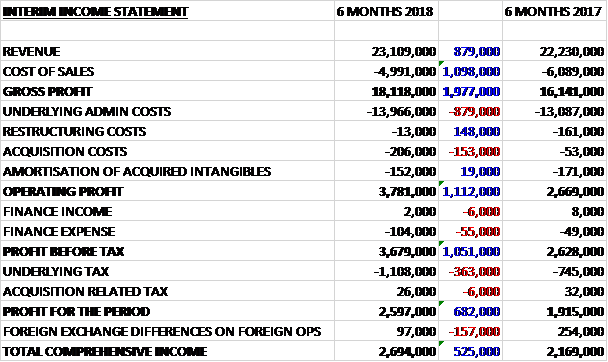
Revenues increased by £879K when compared to the first half of last year and after cost of sales decreased by £1.1M the gross profit grew by £2M. Underlying admin expenses were up £879K and acquisition costs increased by £153K but restructuring costs were down £148K and the operating profit was £1.1M higher. Finance expenses grew by £55K and the tax charges increased by £369K, all of which meant that the profit for the period was £2.6M, a growth of £682K year on year.

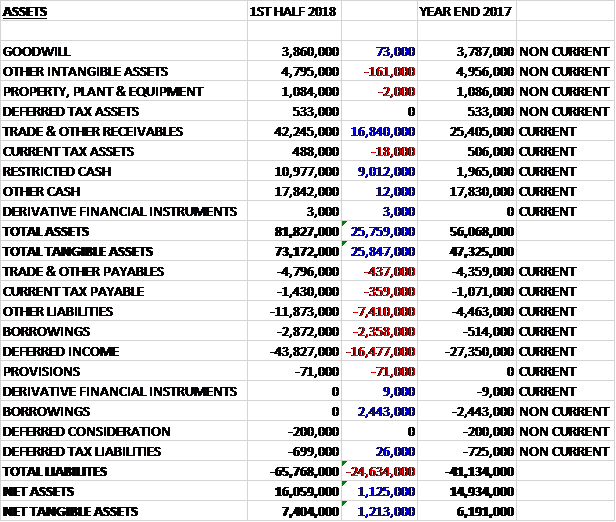
When compared to the end point of last year, total assets increased by £25.8M, driven by a £16.8M growth in receivables and a £9M increase in restricted cash. Total liabilities also increased during the period due to a £16.5M increase in deferred income and a £7.4M growth in “other” liabilities. The end result was a net tangible asset level of £7.4M, a growth of £1.2M over the past six months.

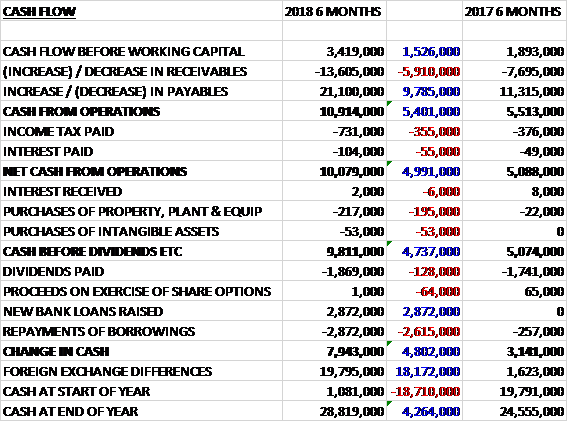
Before movements in working capital, cash profits increased by £1.5M to £3.4M. There was a large cash inflow from working capital due to an increase in payables relating to the larger tour operations programme and the timing of flights, and after tax payments were up £355K and interest charges increased by £55K the net cash from operations was £10.1M, a growth of £5M year on year. The group spent £217K on tangible fixed assets and £53K on intangible assets to give a free cash flow of £9.8M. This easily paid the £1.9M of dividends, and also would have done even without the working capital contribution. The cash flow for the period was £7.9M and the cash level at the period-end was £28.8M.

The underlying operating profit in the Commercial Jet Broking business was £2.7M, a growth of £840K year on year. This growth was driven by pleasing performances from all territories with good business from both new and existing customers. Across Europe they have benefitted from the European Tour Operating programmes and their expertise in serving sports teams with flights to the US, China, Singapore, South America and Europe arranged for football clubs during the pre-season tours. In the UK they have won a new contract with a premier league club, bringing the total number of football teams they work with to 35. They have also renewed their contract with a major German automotive company for a further three years. Finally, the UK and US teams have worked together to deliver a programme for a large global insurance company.

The underlying operating profit in the Private Jet Broking business was £1.4M, a decline of £88K when compared to the first half of last year, reflecting a lower spend over the period from some key clients and the continued investment in the sales teams. In the US, where they expanded the New York office last year and brought in new management to bring greater focus to the region, they have seen a sharp increase in corporate and high net worth individual business, with overall client numbers increasing by nearly 70% over the period. European private jets business remains small with slow growth.

The remarketing business has had a good start to the year having been rebranded under the Air Partner umbrella. Over the period, it sold and delivered two B737 aircraft and a GE engine for Kenya Airways; two 747s on behalf of China Airlines and won an exclusive contract with Saudia to market 15 B777 aircraft.

The underlying operating profit in the Freight Broking business was £577K, an increase of £271K when compared to a soft comparison in the first half of 2017. While the automotive sector remained strong, this growth arose from the international offices which benefited from contracts to the Middle East.

The underlying operating profit in the Consulting & Training business was £408K, broadly flat year on year. Over the first half, Baines Simmons has won new safety and training contracts with tier 1 national carriers and with the RAF of Oman. The pipeline for the second half remains encouraging. The business has won a four year contract with the European Defence Agency to provide consulting and training services to all EU member states and is also working with various airlines. They have also seen a strong performance in Academy Training.

At the end of last year, the group acquired fatigue management consultancy Clockwork Research. Trading has been challenging but with a good pipeline of projects and the board are confident in the longer term prospects for the business.

After the period-end, in September, the group acquired Safe Skys for a total consideration of £3M. The business is an environmental and air traffic control services provider to UK and international airports with a particular focus on wildlife hazard management and bird control.

Going forward, current trading is in line with expectations and the group enter the second half of the year with confidence that their expectations for the full year will be met.

At the current share price the shares are trading on a PE ratio of 26.3 which falls to 13.8 on the full year consensus forecast. After a 6% increase in the interim dividend, the shares are yielding 3.8% which increases to 3.9% on the full year forecast. Excluding the Jetcard cash, the group had a net cash position of £10.6m at the period-end compared to £1M at the year-end.

Overall then this has been a robust period of trading for the group. Profits increased, net assets grew and the operating cash flow improved with a decent amount of free cash being generated. The good performance seems to have been driven by the commercial jet broking business, buoyed by a busy European tour operating season and increased work for sports teams. Clockwork Research seems to be struggling so the jury is still out on the acquisition strategy but the underlying business is doing well and a forward PE of 13.8 and yield of 3.9% looks decent value to me. I continue to hold.

On the 3rd April the group announced that it had identified an issue relating to its accounting for receivables and deferred income. The issue principally relates to the collection of receivables from customers and accounting for uncollected amounts since 2011. Certain uncollected receivables were inappropriately offset against deferred income rather than being expensed.

The board believe the total cumulative impact arising between 2011 and 2018 will be around £4M. Aside from this issue, the group is trading within expectations. This is clearly disappointing but the underlying trading does not seem to have been affected so I am minded to hold on for now.

The Property Franchise Group – Interim Results Year Ending 2017

The Property Franchise Group has now released their interim results for the year ending 2017.
Revenues increased when compared to the first half of last year due to a £616K growth in management service fees, a £66K increase in franchise sales and a £362K increase in other revenue. Cost of sales also increased to give a gross profit £665K higher. Depreciation and amortisation was up £174K and other admin expenses increased by £548K due to costs in EweMove but there was no reduction in contingent consideration, which was £1.2M last time, and there was a £500K impairment of goodwill this time which meant that the operating profit grew by £591K. There was a small increase in finance costs but this was offset by a £75K decline in tax charges. The profit for the period came in at £1.9M, a growth of £639K year on year but the contingent consideration reduction goodwill impairment, the profit for the period was £1.2M, broadly flat year on year.

When compared to the end point of last year, total assets declined by £812K driven by a £206K fall in the master franchise agreement, a £500K decrease in goodwill, a £153K decline in loans to franchisees and a £131K fall in trade receivables, partially offset by a £211K increase in cash. Total liabilities also declined during the period as a £120K growth in current tax payables was more than offset by a £450K decrease in the bank loan and a £1.2M decline in contingent consideration. The end result was a net asset level (excluding goodwill) of £6.2M, a growth of £1.3M year on year.

Before movements in working capital, cash profits increased by £117K to £1.8M. There was a modest cash inflow from working capital and after tax payments declined by £112K, the net cash from operations was £1.8M, a growth of £530K year on year. The group spent just £100K on capex so there was a free cash flow of £1.7M. Of this, £450K was used to pay back borrowings and £1.2M was spent on dividends to give a cash flow of £211K and a cash level of £2.3M at the period-end.

Growth across the traditional high street brands has been decent with revenue growing 4% and with tight cost controls, the profits in the division increased by 22% to £2M. Lettings MSF increased by 5%, and sales MSF was unchanged which is considered a decent result given last year’s spike before the stamp duty increase. The franchisees have completed on seven local acquisitions, adding 1,482 to the group’s portfolio of tenanted managed properties. An additional four offices have been added to the franchise network as a result of re-branding these acquired businesses. Other income increased by 15% due to a growth in support services provided to franchisees.

Ewemove contributed £550K in revenue, which was a 35% increase but franchise sales income was unchanged from 18 new franchisees recruited. So far, Ewemove has yet to make a profit and the early departure of the co-founders meant that the business’ trading position is behind management expectations. The business recorded a loss of £300K against a target loss of £100K. Despite this the board remains committed to its strategy of rapidly scaling the business which is expected to contribute meaningfully to earnings in the medium term.
The appointment of a new MD means the brand now has focused and dedicate leadership.

During the period there was a net exceptional income of £679K, all relating to EweMove. It consists of the reduction in deferred consideration payable of £1.2M and an impairment charge of £500K against goodwill following a revaluation due to evidence suggesting that the business’s value may have been impaired.

For the EweMove acquisition, a further amount of up to £7M of deferred consideration was due to the vendors upon approval of the financial results for the year ending 2018, subject to various targets. Due to their decision to depart the business, however, a renegotiation has taken place and the deferred consideration will now be £1M, with £500K payable in July 2017 and £500K payable in December
In June a considerable number of options (1.5M) were granted to two executive directors at an exercise price of 1p per share which has considerably diluted EPS.

Going forward, the lettings market faces a changing commercial environment with government initiatives increasing the tax burden on private buy to let landlords taking effect in April 2018 and an intended total ban on tenant fees in England and Wales. The group have already navigated the business through the Scottish total tenant fee ban in 2012, however, and they are engaged in several initiatives to ensure that revenues continue to grow both organically, from improved digital marketing, and through local acquisitions by assisting franchisees operationally and financially. With regard to their past experience, they feel confident that the group will be able to ameliorate the changing conditions to ensure minimal long term impact within the group.

At the current share price the shares are trading on a PE ratio of 11.1 which grows to 11.8 on the full year consensus forecast. After a 5% increase in the interim dividend, the shares are yielding 5.1% which is expected to remain broadly the same for the full year.

Overall then this has been a mixed period for the group. The underlying profits were broadly flat, although net assets increased and the operating cash flow improved with plenty of free cash being generated. The main business seems to be performing well but the EweMove acquisition looks rather shaky. It has been hit by the departure of the founders (was nothing put in place to stop this happening) and it made a loss of £300k in the period. Going forward, times are rather uncertain and the tenant fee ban could by an issue for the group. With a forward PE of 11.8 and yield of 5.1%, this could be priced in but I feel the outlook is just a little too shaky to be investing in this type of company. This is one to keep an eye on though.

Safestyle Share Blog – Interim Results Year Ending 2017

Safestyle has now released their interim results for the year ending 2017.

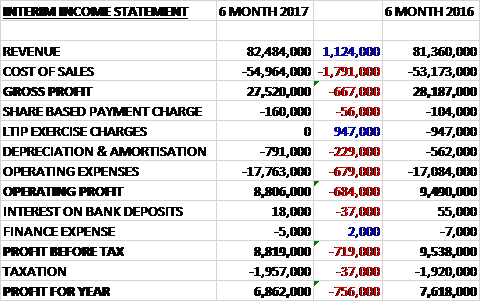
Revenue increased by £1.1M when compared to the first half of last year but cost of sales grew by £1.8M so the gross profit fell by £667K. There was no LTIP exercise charge, which was £947K last time but share based payments were up £56K, depreciation and amortisation grew by £229K and other operating expenses were £679K higher so the operating profit declined by £684K. Interest income fell by £37K and tax charges grew by £37K which gave a profit for the period of £6.9M, a decline of £756K year on year.

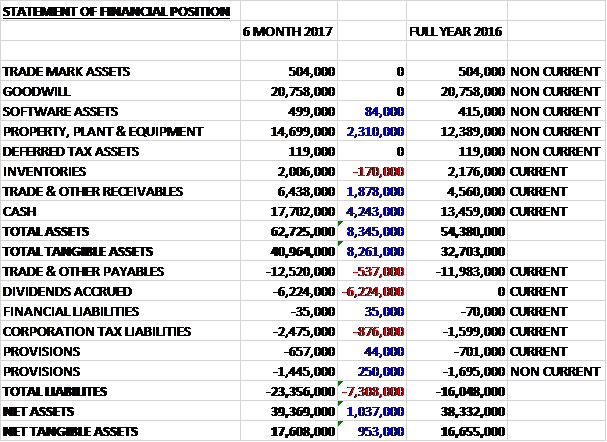
When compared to the end point of last year, total assets increased by £8.3M driven by a £2.3M growth in property, plant and equipment, a £4.2M increase in cash and a £1.9M growth in receivables. Total liabilities also increased during the year, mainly due to the £6.2M of accrued dividends. The end result was a net tangible asset level of £17.6M, a growth of £953K over the past six months.

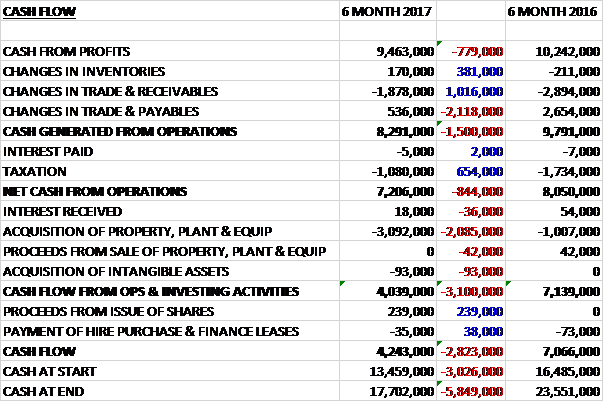
Before movements in working capital, cash profits declined by £779K to £9.5M. There was also a cash outflow from working capital but tax payments reduced by £654K to give a net cash from operations of £7.2M, a decline of £844K year on year. The group spent £3.1M on property, plant and equipment, of which £2.4M related to the new factory, along with just £93K on intangible assets to give a free cash flow of £4M. No dividends were paid but this doesn’t cover the £6.2M accrued. Due to the fact that the dividend payment wasn’t made in the period there was a cash flow of £4.2M and a cash level of £17.7M at the period-end.

Overall the volume of frames installed fell by 6.8% to 139,612 but the average unit sales price was up 6% to £599. The price list increase implemented at the start of the year to counterbalance the additional raw material costs resulting from the reduction in the value of Sterling has been secured and unit prices were further boosted by growth in higher value items including conservatory upgrades, composite doors and coloured frames.

The price list increase more than offset the inflation in raw material prices but other direct costs have also seen increases which has led to a reduction of the gross margin. In particular, online marketing costs have seen a significant increase with the cost of lead acquisition increasing by 19%, reflecting increased competition for leads in a tough market. In addition, manufacturing costs were higher as a result of the planned disruption during the transfer of equipment to the new factory, which won’t be repeated in the second half.

FENSA statistics show the rate of market decline in the period accelerated from a Q1 reduction of 2.4% to 17.2% in Q2 and the board believe that this steeper rate of decline has continued into the first two months of Q3. The response has been to protect revenues and gain market share which was up from 10.2% at the end of 2016 to 11.2%. This was achieved due to an increase in the cost of lead generation, reflected in the fall in profits, and order intake was up 1.8%.

The group have completed their factory extension at Wombwell on time and budget. It is now fully operational and they expect to deliver manufacturing productivity gains throughout the remainder of the year. With the investment in the factory now complete, they are announcing that they will start to buy back shares at a cost of up to £2.5M.
So far in H2 they have maintained their order intake in line with the previous year and have already started a number of initiatives to reduce their cost base. The expectation is that the market will continue to be weak for the rest of the year and consumer confidence has declined. They expect to continue to gain market share in H2 but sales will continue to be expensive to win and they expect operating margins to be challenging.

At the current share price the shares are trading on a PE ratio of 10.6 which rise to 12.7 on the full year consensus forecast. After the interim dividend was kept the same, the shares are yielding 5.6% which is expected to remain the same this year.

Overall then this has been a difficult period for the group. Profits are on the slide due to a poor market which means that leads are harder to come by. Net assets did improve but the operating cash flow fell with the free cash not covering the dividends. Volumes have declined but not as much as the market as a whole as the group is paying more in marketing to improve market share. The manufacturing costs should improve but otherwise the second half is looking just as bad as Q2, which was worse than Q1 meaning there is no immediate light at the end of the tunnel. With a forward PE of 12.7 and yield of 5.6% these offer decent value but the market really could go either way and I am not brave enough to jump back in until I see some signs of stabilisation.

On the 13th December the group released a trading update covering Q4. Since the last update, demand has weakened further and in the quarter sales have been 0.3% lower by value and 6.8% lower by volume than in the same period last year. For the first eleven months of the year, sales are 0.8% down.

With sales in December not helped by severe weather disruption to the planned installation programme, it is clear that Q4 sales will now be below expectations. At the same time, those sales have come at an increased cost of acquisition due to higher lead generation expense in a competitive landscape and a higher proportion being made on extended finance terms, negatively affecting margins. As a consequence, the full year outturn is now expected to be below current market expectations at around £15M.

The group continues to be cash generative and expects to have a cash balance of around £12M at the year-end. They also remain committed to the dividend policy. They are reviewing all costs and seeking operational efficiencies where they can and have already implemented savings across the business including a restructure of the sales and canvass function.

Looking ahead, the board expect market conditions to continue to be very challenging in 2018 so they have lowered their expectations for performance next year. The benefits of the cost saving programme will fall mainly in 2018 and should help mitigate the impact on profitability of any further fall in market demand so they expect modest earnings growth over this year.

It is clear that the market here is very difficult but as some point these shares might look cheap if one expects a pick up at some point and the current yield of 6.8% may act as a floor in the price. Tricky. I am staying clear until the dust settles at least.

On the 18th December the group announced that CEO Steve Birmingham sold 1,400,000 shares at a value of £2.2M. Apparently this is for personal financial reasons and he still owns 2,799,846 shares but the timing does not show a good vote of confidence.

On the 3rd January the group announced that CFO Mike Robinson sold 105,000 shares at a value of £175K. He now owns 211,499 shares – this does not look good!

On the 28th February the group released a trading update. The activities of an aggressive new market entrant have added to an already competitive landscape and impacted the group in certain areas of its operations. As a result the order intake in 2018 to date has been below expectations. The group has reviewed and reduced its cost base and carried out the planned restructure of its sales and canvass functions.

Guidance for 2017 remains unchanged but the board now expects group profit for 2018 to be materially below 2017 levels and below current market expectations. They continue to be cash generative and the board expect the benefits of their cost savings programme to take effect in the second half of 2018.

Ricardo Share Blog – Final Results Year Ended 2017

Ricardo has now released its final results for the year ended 2017.

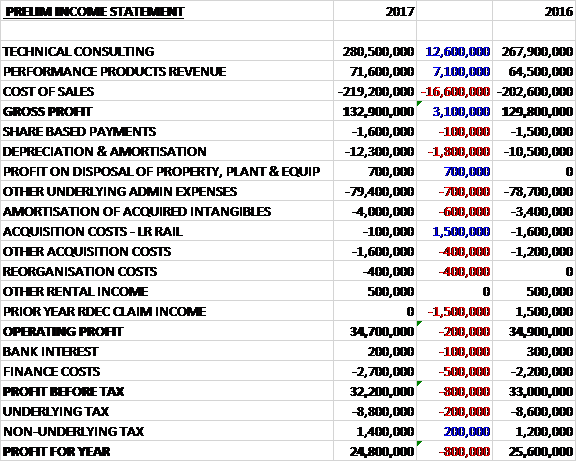
Revenues increased when compared to last year with a £12.6M growth in technical consulting and a £7.1M increase in performance products. Cost of sales also grew to give a gross profit £3.1M above that of last year. Depreciation and amortisation increased by £1.8M but the £700K profit on disposal of fixed assets offset the growth in other underlying admin expenses. There was a £400K increase in other acquisition costs, a £600K growth in the amortisation of acquired intangibles and £400K of reorganisation costs. There was a £1.5M reduction in LR Rail acquisition costs, however, which was counteracted by the non-repeat of last year’s £1.5M RDEC claim income. All of this gives an operating profit £200K below last time. Finance costs increased by £500K but tax levels were flat to give a profit for the year of £24.8M, a decline of £800K year on year.

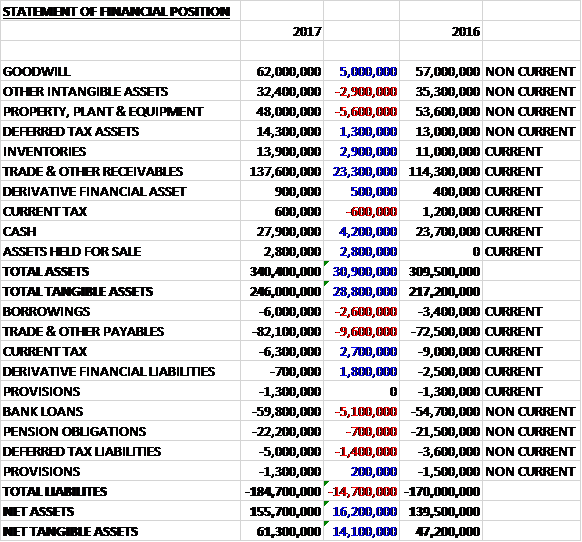
When compared to the end point of last year, total assets increased by £30.9M driven by a £5M growth in goodwill, a £23.3M increase in receivables, a £4.2M growth in cash, a £2.9M increase in inventories and a £2.8M increase in assets held for sale, partially offset by a £5.6M reduction in property, plant and equipment and a £2.9M fall in other intangible assets. Total liabilities also grew during the year due to a £7.7M growth in borrowings and a £9.6M increase in payables. The end result was a net tangible asset level of £61.3M, a growth of £14.1M year on year.

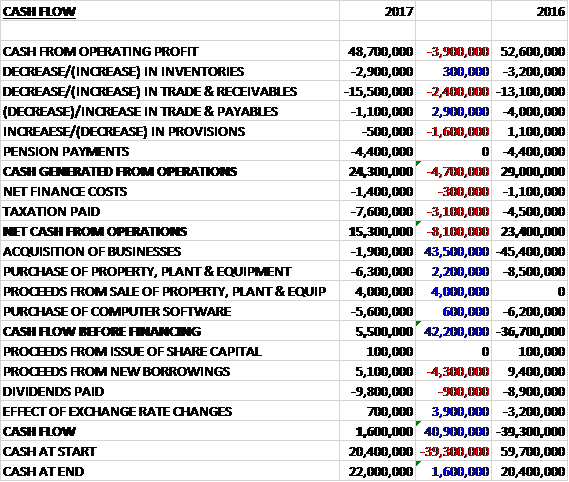
Before movements in working capital, cash profits declined by £3.9M to £48.7M. There was also a cash outflow from working capital and after tax payments grew by £3.1M there was a net cash from operations of £15.3M, a decline of £8.1M year on year. The group spent £5.6M on computer software, £6.3M on property, plant and equipment and £1.9M on acquisitions but also received £4M from the sale of assets to give a free cash flow of £5.5M. Sadly this didn’t cover the dividends so the group took out £5.1M in new loans to give a cash flow of £1.6M and a cash level of £22M at the year-end.

The operating profit in the Technical Consulting division was £27.8M, a decline of £300K year on year. The businesses in the automotive and commercial vehicles sectors in Europe experienced a disrupted flow of orders in the year as customers evaluated their product plans in light of the unsettled political climate and change in the industry. This was particularly evident in the first half of the year. In the second half they saw order flow return to normal patterns with orders at the end of the year being slightly ahead of the prior year. This led to a less efficient business operation during the year, impacting margins but with a good order book the business is in a good position to grow.

Elsewhere in the automotive and commercial vehicles sectors, the business in Asia has become a more profitable operation than last year and continues to make good progress. The market in Detroit remains challenging, however, where solid levels of activity in the commercial vehicles business, driven by new legislation requiring in-use compliance testing, did not compensate for the reduced levels of work elsewhere, and the US business ended the year with a loss. This was due to the Detroit automakers consolidating to fewer powertrain platforms whilst at the same time increasing in-house testing and resources. Order intake has been below historical levels and the board are taking steps to reposition the business and enhance their electrification and autonomous service offering.

China remains a key market for the business and this year they secured a number of contracts in the automotive sector, some of which are being delivered locally through the testing centres in Beijing and Shanghai. These contracts have included a mixture of work for hybrid vehicles, engines and transmissions.

In the off-highway and commercial vehicles division, they have seen growth and secured a number of large engine and transmission projects across the medium and heavy duty sectors. They continue to see interest across Asia, in particular for the group’s capabilities in the commercial vehicles business. The order pipeline is based around a broad mix of largely engine and transmission opportunities. In the US, greenhouse gas and low NOx standards are driving interest in powertrain and trailer efficiency, emissions control and the use of alternative fuels. Commercial vehicle platooning is also a fast growing area of opportunity.

Strong engagement in this sector has driven increased engine test activity, especially in North America, where new regulations requiring in-use compliance are now creating significant demand for powertrain testing and analysis. They have also seen growing interest in their fuel cell capabilities at their technical centre in California. They have focused on developing their product offering in the areas of ultra-low emissions, fuel economy improvement, system optimisation, platooning and hybridisation.

In the off-highway business, activity remains at a relatively low level in Europe following the recent implementation of Stage IV emissions standards, while in Asia the industry is showing renewed growth, especially in the transmission and driveline area. The group is securing an increasing number of projects, including large multi-year programmes.

The rail business is now completely integrated with the rest of the group and has performed well with strong order intake in the year from a wide geographical spread of customers. The profit reported in the year also benefited from favourable forex movements.

The energy and environment business also had a good year, with good levels of growth across its practice areas. The business has extended its order book heading into the new financial year by winning a number of multi-year orders for UK Government programmes, whilst also continuing to broaden its customer base in the private sector. The air quality team delivered projects such as the implementation of new technology to monitor driving emissions at the roadside, both in the UK and internationally, and they have expanded the offer of their services to a number of infrastructure businesses outside the water and energy practice areas.

In the defence sector the business won a number of new contracts on land defence, including further contracts to develop safety of the US Army’s HMMWV. In the US the business has won a number of new contracts, mainly in the land domain, and is focused on growth into new areas of the US defence market. In the UK they have grown their marine defence business, both surface and submarine. In Europe and Asia, they have secured contracts to deliver new engine and transmission designs for land vehicles and are pursuing other large opportunities.

The operating profit in the Performance Products division was £8M, a growth of £700K when compared to last year. This performance was driven principally by increased volumes of engines in respect of the contract for McLaren, together with increased transmissions for both Bugatti and Porsche. This has been partially offset by lower application engineering work within the software business. Order intake in the year stood at £78M, which was £25M lower than last year, however, when they secured a multi-year transmission supply contract.

The new expanded engine assembly facility is now fully operational, doubling capacity and generating the capability to deal with an increased number of engine variants. Production of engines for the McLaren 540C, 570S, 675LT and P1 GTR continued during the year in line with expectations, and full production engines for the new 720S has been added. They also secured the transmission supply contract for the Aston Martin Red Bull Valkyrie whilst continuing to support Bugatti with supply of the complete driveline system for the Chiron.

The group is now supporting a key manufacturer in the Formula E Championship with a collaboratively designed and tested product. They also continue to manufacture for Formula 1, and they supply products such as the transmissions for BMW and Ford GT3 programmes, the M-Sport World Rally Championship Ford Fiesta, the Hyundai R5 Rally programme, the Japanese Super Formula Championship, Indy Lights and the World Series Formula V8 3.5.
The group continues to supply spare parts to the UK MOD to support the Cougar and WMIK vehicle fleets. The group are working with Lightweight Innovations for Tomorrow, to identify a new reliable solution to documented braking and stability problems in the current HMMWV configuration.

As is usual these days there are a number of non-underlying items. The £100K expense on the LR Rail acquisition represents expenditure incurred of £500K offset by £400K of fair value provisions recognised on acquisition which have been released within specific adjusting items where those risks will not crystallise as originally anticipated.

Other acquisition related expenditure of £1.6M primarily comprises costs incurred for the services rendered to and consumed by the group regarding the Exnovo and Control Point Corp acquisitions. It also comprises costs associated with the integration of Exnovo and Cascade since acquisition. In addition, costs of the associated earnout agreements of prior acquisitions have also been included. Reorganisation coasts of £400K relate to expenditure incurred in the formation of the new Global Automotive structure from the operations of the automotive technical centres. They comprised the initial planning activities to implement a reorganisation of Europe Technical Consulting into Automotive EMEA to align with the new global automotive structure.

In July 2016 the group acquired Motorcycle Engineering Italia for a cash consideration of £1.9M. The business had negative net assets and the acquisition generated goodwill of £3.2M. The business is now reported in the Technical Consulting segment and it broke even in the period on revenues of £3M.

After the year-end, in September, the group acquired Control Point Corp for an initial cash consideration of £5.3M, rising to a total of £7.8M subject to the achievement of certain performance targets. The business is a US-based engineering firm which operates in the defence sector and has expertise in distributed software-based systems, fleet management technology and vehicle engineering capabilities. The acquisition generates goodwill of £2M.

Going forward the year ended with another record closing order book of £248M, which is a 7% increase on the prior year. This closing order book, together with a good pipeline of further opportunities continues to represent a diversified spread of orders across market sectors, customers and geographies.

At the current share price the shares are trading on a PE ratio of 15 which falls to 13 on next year’s consensus forecast. After a 7% increase in the dividend the shares are yielding 2.5% which grows to 2.6% on next year’s forecast. At the year-end the group had a net debt position of £37.9M compared to £34.4M at the end of last year.
Overall then this has been a bit of a mixed year for the group. Profits were down with a reduction in the RDEC claim income offsetting a decline in acquisition costs. Net assets increased but the operating cash flow fell and although some free cash was generated, this did not cover the dividends. The Technical consulting division saw profits decline as the order flow was disrupted from European auto producers, which has now mostly reversed. The other main driver of the fall was a reduction in orders from US auto companies as they brought more production in-house, which is a little more concerning.

The product division saw profits rise due to increased deliveries to McLaren, Bugatti and Porsche but it should be noted that the order book declined. With a forward PE ratio of 13 and yield of 2.6%, the shares are not bad value but the company does seem to have lost some momentum. I think I will wait on the sidelines for now.

On the 3rd October the group announced that MD of the Strategic Consulting division sold 13,447 shares at a value of £110K to leave him with no shares in the company.

On the 8th November the group released a trading update on order intake in Q1 which was £33M higher than last year at £106M including £6M in respect of the Control Point acquisition. Significant orders include two large multi-year Chinese customer programmes in respect of the engineering of an electric vehicle and the transmission for a hybrid vehicle. In addition, EMEA Automotive has secured an order for road trials for a commercial vehicle platooning project in the UK.

This all sounds positive to me – tempted to make a purchase.

On the 17th January the group released an update covering the first half of the year. Order intake was strong, more than £50M higher than last year and representing an organic growth of over 25%. The orders have been generated from a broad range of sectors including the development of electric vehicle battery systems for a customer in China, passenger car new engine design work from Japan, a European car battery testing programme, a large multi-year order for the independent verification and validation of a Taiwanese rail line and further air quality work for the UK government. The order intake relating to electric or hybrid vehicles has been particularly encouraging and is in the region of 24% of total order intake compared to 17% last year.

Cash performance in the period has been strong with net debt reducing from £38M to £32M despite paying a £6M consideration for Control Point.

Redrow Share blog – Final Results Year Ended 2017

Redrow has now released their final results for the year ended 2017.

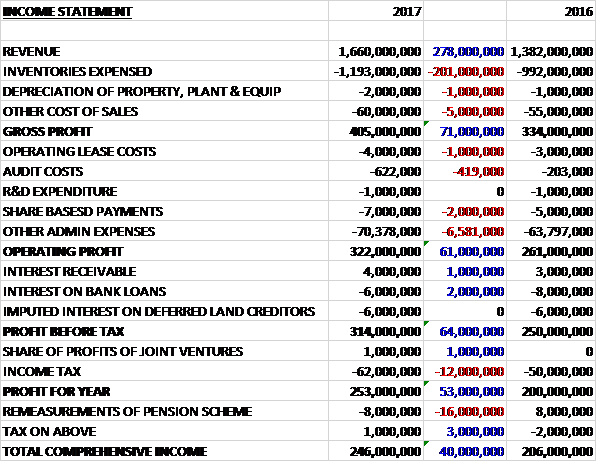
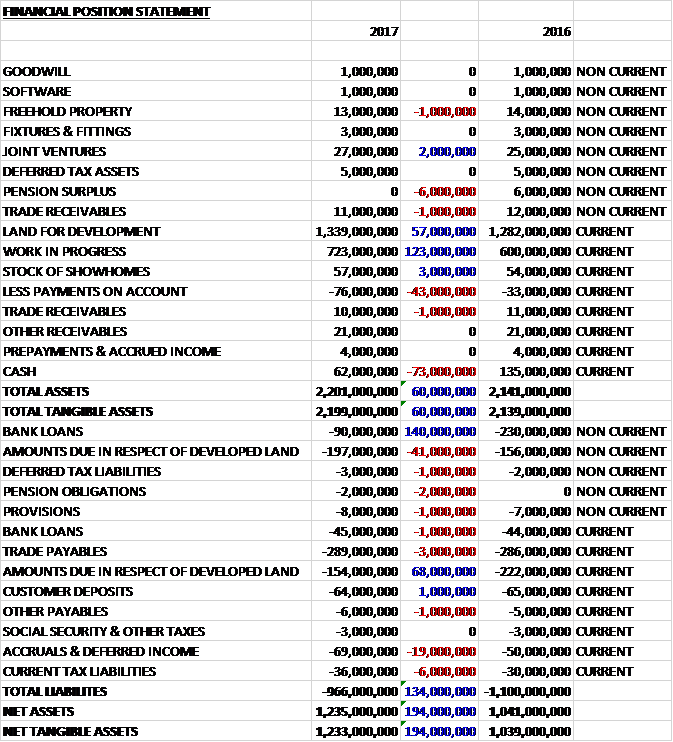
Revenue increased by £278K and inventory costs grew by £201M with a £1M increase in depreciation and a £5M growth in other cost of sales which meant that the gross profit was £71M higher. Operating lease costs grew by £1M, share based payments were up £2M and other admin expenses increased by £6.6M to give an operating profit £61M higher. Interest receipts increased by £1M and interest payments fell by £2M but tax charges grew by £12M which meant that the profit for the year was £253M, a growth of £53M year on year.

When compared to the end point of last year, total assets increased by £60M driven by a £137M increase in inventories, partially offset by a £73M decrease in cash. Total liabilities declined during the year as a £19M growth in accruals and deferred income was more than offset by a £42M decline in bank loans and a £27M fall in amounts due in respect of developed land. This all meant that net tangible assets came in at £1.233BN, a growth of £194M year on year.

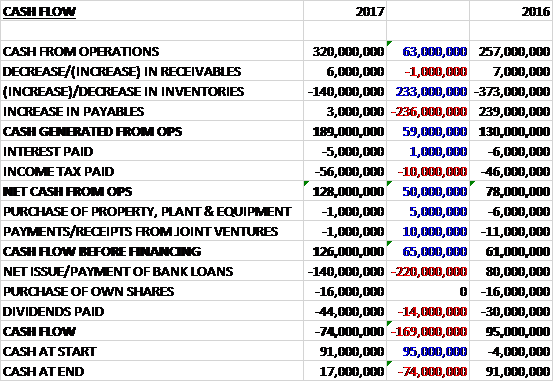
Before movements in working capital, cash profits increased by £63M to £320M. There was a cash outflow from working capital and after tax payments increased by £10M there was a net cash from operations of £128M, a growth of £50M year on year. The group spent just £2M on capex to give a free cash flow of £126M. This was used to pay back £44M of dividends, buy £16M of their own shares and to pay back £140M in loans to give a cash outflow of £74M and a cash level of £17M at the year-end.

Group turnover rose by 20% due to a combination of an increase in legal completions to 5,416 and a 7% rise in the average selling price to £310K. This was mainly due to the continued growth of the Southern business. Gross margin improved by 20 basis points to 24.4% and is now at close to normal levels as they have completed construction on almost all the sites purchased before the downturn.

Overall housing transactions in the UK have reduced as a consequence of the political uncertainty and increased cost of moving home such as stamp duty. Demand in the new homes market remains robust, however and the group has not seen any impact from recent political events. Mortgage availability is good and interest rates on mortgages have again improved. The Help to Buy scheme continues to support the new homes industry and this year 1,882 of the group’s private reservations used the scheme.

They have now substantially completed their high-end Central London developments. Significant volumes of completions are now coming from their outer London sites and these are set to increase materially as Colindale completions begin to come on stream later in the year. Overall he rate of growth is expected to moderate, however, as divisions reach optimal scale and scope for divisional expansion reduces.

In the year the group added 5,419 plots with planning and marginally increased their owned and contracted land bank to 26,100 plots. In the first half of the year, immediately following the Brexit vote, there were fewer opportunities in the land market and they also adopted a more cautious approach. In the second half, momentum returned to their land buying and they added 3,703 plots. Overall they increased the forward land bank to 26,400.

They saw planning improve following the introduction of the National Planning Policy framework in 2012. There are now signs this improvement has stalled, however, as local authorities fail to get Adopted Local Plans in place. This is adding to delays that continue to frustrate the detailed planning and technical approval process. They have also seen timescales for appeals extend which reduces the pressure on local authorities to make timely decisions.

The group’s caution in the land market in the first half combined with planning delays will inevitably impact on the timing of new outlets coming on stream. As a consequence outlets are only expected to marginally increase over the coming year but with their strong land bank and output per outlet continuing to increase, they remain on track to meet their growth plans.

In February the group acquired Radleigh Homes, a Derby-based regional housebuilder. This acquisition has allowed them to accelerate the opening of a new East Midlands division and has given a good pipeline of sites from which to expand. It has now been fully integrated into the group and has made a positive contribution in the second half.

The chairman, Steve Morgan, has announced that he is moving away from a full time role and will become a non-executive chairman.

Going forward, the group has started the new financial year with a record order book, up 14%. Sales in the first nine weeks are encouraging, up 8% on a strong comparator last year. They are therefore upping their medium term guidance with turnover in 2020 of £2.2BN and pre-tax profit of £430M. they expect the dividend in 2020 to rise to 32p per share which would equate to a yield of around 5.8% at today’s share price. Of course this is assuming market conditions don’t change..

At the current share price the shares are trading on a PE ratio of 7.9 which falls to 7 on next year’s consensus forecast. After a 70% increase in the total dividend the shares are yielding 3.1% which increases to 4% on next year’s forecast. At the year-end the group had a net debt position of £73M compared to £139M at the end of last year.

On the 12th September the group announced that Chairman Steve Morgan was selling 25.9M shares at a value of £152.8M. This represents around 7% if the total group share capital! He will still hold 33% of shares, however, and it should be noted that this coincides with him moving from executive to non-executive chairman so I’m not overly worried by this. It could be that he has seen the peak of the market or it could be just that he wants to take on new ventures. Time will tell.

Overall then this has been another year of good progress for the group. Profits were up, net assets increased and the operating cash flow grew with a decent amount of free cash being generated. The good performance has come both from an increase in average selling price, due to product mix, and an increase in the number of completions. Growth is likely to slow somewhat, and the macro environment is rather tricky but despite the hefty director sale, I think a forward PE of 7 and yield of 4% seems OK and I continue to hold.

On the 25th September the group announced that director Vanda Murray purchased 3,500 shares at a value of just under £20K.

On the 9th November the group released a trading update covering the first eighteen weeks of the year where trading was in line with expectations. The sales market was buoyant in Q1 but ongoing political and economic uncertainty has resulted in a slight slow down in sales in recent weeks in comparison with a strong sales market last year. Despite recent slower market conditions, net private reservations were 2% above last year but the sales rate per outlet was marginally down. The average selling price increased from £352K to £371K. The total order book remains strong and is currently 3% higher than last year at £1.2BN.

Net debt is currently £25M and despite a number of major land purchases is expected to be below £100M by the end of the year.

Molins Share Blog – Interim Results Year Ending 2017

Molins has now released its interim results for the year ending 2017.

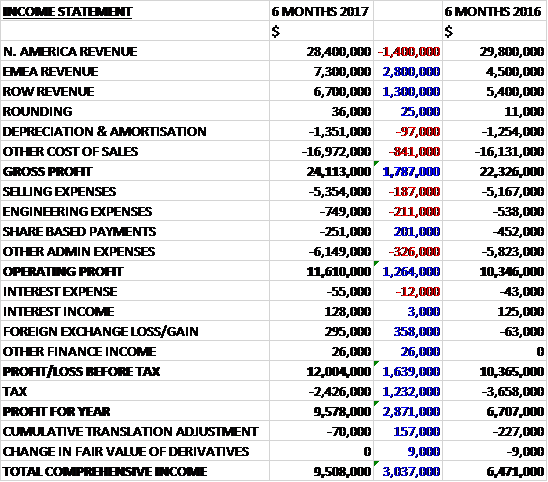
Revenues increased when compared to the first half of last year as a £100K decline in Americas revenue was more than offset by a £3.8M growth in Asia Pacific revenue and a £3.5M increase in EMEA revenue. Cost of sales grew by £4.9M which meant that the gross profit was £2.3M higher. Distribution costs increased by £400K and admin expenses were up £700K to give an operating break even, £1.2M better than last time. The £100K pension scheme expense was offset by a £200K increase in the tax receipt so the profit from continuing operations was £300K, an improvement of £1.3M year on year, although when the discontinued trading from last year is added, this represents a £500K improvement.

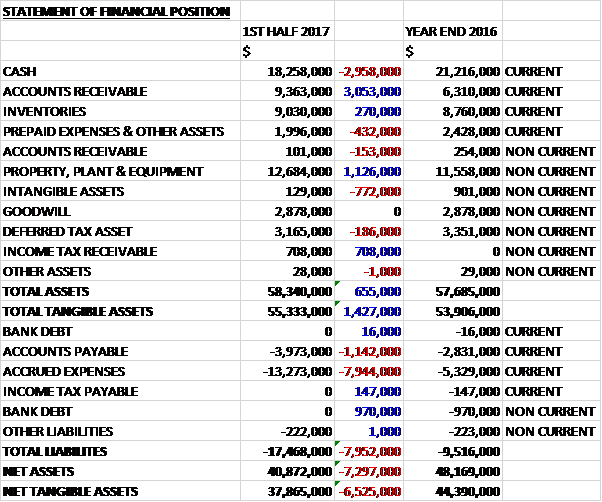
When compared to the end point of last year, total assets increased by £4.4M driven by a £40.1M growth in assets held for sale and a £6.5M increase in deferred tax assets, partially offset by a £14.2M reduction in intangible assets, a £10.3M fall in inventories, a £10K decline in receivables, a £5.3M fall in property, plant and equipment and a £3M decline in cash. Total liabilities decreased during the year as an £11.8M increase in liabilities held for sale and a £2.4M growth in deferred tax liabilities were more than offset by a £12.4M fall in payables, a £1M decrease in provisions and a £1M decline in long term borrowings. The end result was a net tangible asset level of £39.7M, a growth of £19.5M year on year.

Before movements in working capital, cash profits declined by £4.8M to just £1M. There was a cash outflow from working capital but this was lower than last time and even after a £1.4M increase in cash generated from discontinued operations, there was a net cash outflow of £1.4M, a deterioration of £1.3M year on year, not helped by the £500K of reorganisation costs. The group spent just £200K on capex and the cash outflow before financing was £1.8M. they then paid back £1M of loans to give a cash outflow in the half year of £2.9M and a cash level of £5.8M at the period-end.

The profit in the Americas division was £3M, a decline of £400K year on year with sales down £100K. Order intake was ahead of sales and reflects a strong level of activity in most markets. Order prospects remain strong and activity levels in the region are high so the anticipated sales in the second half are well supported by the current order book.

The profit in the EMEA division was £3.1M, an increase of £2.2M when compared to the first half of last year with sales up £3.5M. Order intake was at a similar level to sales but below expectations at the beginning of the year with a number of potential projects being discussed with customers but with an elongated period to convert these prospects to orders. Order prospects are strong and although the activity levels in the second half of the year are not as high, the region is well positioned moving into next year.

The profit in the Asia Pacific division was £1M, a growth of £500K when compared to the first half of 2016 with sales more than doubling. The region experienced a low level of sales in the first half of last year but sales increased considerably in the first half of this year. Order intake has been a little lower than sales but ahead of expectations at the start of the year and the region is well placed to continue to develop.

The group completed the disposal of their Instrumentation and Tobacco Machinery division after the period-end, in August, to Coesia. The business made an operating profit of £1.9M during the period so it is a profitable part of the group. The net cash consideration is approximately £27.3M, £2.7M of which was used to make a one-off pension fund contribution and the rest has been used to pay off the bank debt and retained for future growth. As part of this transaction the group has also sold the right to use the Molins name and will therefore change their name before the end of January 2018.

In June the group entered into an agreement to sell their manufacturing facility in Ontario. Completion of the transaction is expected to take place by the end of November so the asset has been presented as held for sale in these accounts. The group will receive £6.7M in consideration for the property, paid on completion with the net proceeds expected to be around £5.9M. The book value of the property is £1.5M so a profit of £5.2M has been made on the sale. The group has entered into a ten year contract to lease a new facility, around eight miles from the current location. At an annual cost of around £350K and are expecting to spend around £1M to adapt the building to its needs. The new facility will include a customer showroom that will enable the business to serve its customers more effectively and will be a platform for growth to assist in the development of the Americas region.

The pension deficit remains a major issue at the group, and even more so now that it has reduced in size but not reduced the pension. They continue to pay £1.8M per annum to the fund which increased by 2.1% per annum. They will pay a one-off amount of 10% of the net proceeds of the sale of the division which is expected to be around £2.7M. The UK scheme is actually in a small net asset position but the present value of obligations is £392.7M. The US scheme is still in a liability situation but obligations are only £23.3M.

Going forward, trading in the continuing group has been encouraging, with order intake and sales both strongly ahead of the same period of last year.

At the current share price the shares are not trading on a PE ratio as they made a loss last year. This year the consensus forecast is for a PE ratio of 39.7 reducing to 14.4 on next year’s forecast. No interim dividend was announced but the consensus forecast for the full year is a yield of 1.3%. At the period-end the group had a net debt position of £1.1M compared to a net cash position of £800K at the end of last year, although after the period-end the group received £23.1M of cash proceeds from the sale of I&TM.

Overall than this has been a period of some progress for the group. Profits were up but they only made a profit in the continuing operations due to tax receipts and there were pre-tax losses. Net assets increased but the operating cash flow was poor, with a cash outflow from operations. The Americas saw profits reduce but order intake increased. The other regions saw profits fall and although they are both apparently well positioned for H2, order intake seems a little subdued. The forward PE of 14.4 and yield of 1.3% is not exactly cheap but the group seems to be on the road to recovery and I remain invested for now.

On the 3rd January the group announced the proposal to change its name from Molins to MPac Group. It was apparently chosen as it is a name grounded in the business’ rich heritage and which “looks forward to their future as a world leading end to end packaging machinery provider”. Who am I to argue.

IQE Share Blog – Interim Results Year Ending 2017

IQE has now released its interim results for the year ending 2017.

Revenues increased when compared to the first half of last year which included a 10% forex tailwind as a £169K decline in CMOS++ revenue was more than offset by a £4M growth in wireless revenue, a £5.2M increase in photonic revenue and a £905K growth in IR revenue. License income declined by £2.6M and cost of sales were up £7.9M which meant that the gross profit decreased by £539K. There was no released of contingent consideration, which brought in £2.2Mlast time and share based payments were up £1M, although other general costs saw a modest decline which gave an operating profit £3.5M below last time. Finance costs increased by £223K but there was a £1M positive swing to a tax income due to the recognition of more tax losses, which meant that the profit for the period was £7.3M, a decline of £2.6M year on year.

When compared to the end point of last year, total assets increased by £2.1M driven by a £1.9M growth in intangible assets, a £1.9M increase in inventories and an £815K growth in receivables, partially offset by a £3M decrease in property, plant and equipment. Total liabilities declined during the period was a £2.8M increase in bank loans was more than offset by a £2.9M decline in payables and a £589K decrease in the onerous lease provision. Net tangible assets came in at £91.3M, a growth of £801K over the past six months.

Before movements in working capital, cash profits increased by £2.6M to £15.6M. There was a cash outflow from working capital, however, due to the mass market VCSEL ramp, and after interest payments increased by £320K and tax payments grew by £262K, the net cash from operations came in at £9.2M, a decline of £1.8M year on year. The group spent £5.8M on property, plant and equipment along with £9.6M on intangible assets to give a cash outflow of £6.2M before financing. The group took out a net £5.8M of new loans so the cash flow for the period was £672K and the cash level at the period-end was £5.5M.

The adjusted operating profit in the wireless division was £7.3M, a growth of £557K year on year. The group has an estimated 55% of the market share but the market has been more subdued over the past few years reflecting a lull in mobile phone handset innovation, and technology trends resulting in smaller die size has resulted in the materials market remaining relatively flat over the period. The advent of 5G could provide a route to the return of double digit growth, however.

At present growth in the division is being driven by high voltage applications such as radars and base stations. Although this has historically only represented a modest part of wireless sales, it is a high growth area delivering double digit increases. In these applications, compound semiconductor technology is replacing incumbent silicon technology which is unable to meet the rising performance required for high speed communications systems. The group has developed GaN-on-Si technology which delivers the high performance of compound semiconductors but at a lower cost of manufacture so offers the potential to disrupt this market and deliver strong growth in the near term.

A further dimension to the wireless business is the market for wireless filters. This is a very large market which is already more than double the size of the existing wireless PA market and growing rapidly. Currently a range of filters are made using poly-crystal aluminium nitride material but the group has developed a single-crystal aluminium nitride material which offers superior performance characteristics. Further development is required before this technology can be commercialised but initial results reflect substantial promise and the potential to commercialise over a two to three year time frame.

The adjusted operating profit in the photonics division was £6.5M, an increase of £1.9M when compared to the first half of last year. After several years of devilment, the advances in this technology and the improvement in manufacturing processes means that this technology is now hitting the performance and cost points necessary for mass market adoption. Specific uses include 3D sensing, LIDAR, gesture recognition, laser autofocus, proximity sensing, fibre optics for data centres, industrial heating, machine control and biometrics.

Over the past few years the group has enjoyed strong double digit growth in its VCSEL business, much of which has been customer funder development spanning a broad range of customers and applications. They have recently announced the start of a ramp in a mass market consumer application using VCSELs. This application, which relates to a sensing technology, helped deliver record sales in June and offers the potential for a dramatic acceleration in VCSEL sales growth over the next few years.

In overview, the board believe that their photonics business is at the start of a long term high growth curve. Their growth ambitions are underpinned by a pipeline of programmes with blue chip customers for high volume applications, and IP which provides them with competitive advantages.

The adjusted operating profit in the IR division was £1.4M, an increase of £326K when compared to the first half of 2016. The group enjoys a market share of around 80% in this still-niche area. Sales are currently concentrated in defence related applications but through their engagement in programmes in consumer, medical and industrial imaging, they expect this segment to increasingly transition into new high volume markets over the coming years. The adjusted operating loss in the CMOS++ division was £977K, an improvement of £391K year on year.

The group is developing materials solutions to address some of the key technological challenges faced in the power markets. The size of these markets are many times larger than the group’s existing markets so they represent potential transformational opportunities. At present power switching chips are made using silicon but the industry is investing in a step change in technology to overcome this inefficiency and deliver a higher performing lower cost solution. That step change is the adoption of a hybrid compound semiconductor on silicon technology called GaN on Si and the group is apparently at the forefront of the materials development.

The adoption of advanced solar technology in terrestrial markets in the short term is limited by the low oil price and over-supply within the silicon panel market, but this remains a market opportunity as these issues unwind. The primary focus for the advanced solar division is on penetrating the space market where this technology is already embedded and the group have a strategy to penetrate the market and win market share.

The profit from license sales to joint ventures was £950K, a decline of £2.6M when compared to the first half of last year with no upfront licence income during the period.

There was a big increase in capex during the period and a further capacity expansion plan was initiated to meet higher levels of demand which are expected in the second half of 2018. Five new tools are on order and a lease has been signed on new premises in South Wales with a view to add up to 100 new tools, doubling the current tool count.
Going forward, the board believe that the outlook has never looked better. The broad range of customer engagements across multiple technologies and end markets provides a clear path to increase revenue diversity and accelerate growth over the coming months and years. In light of the benefit of a strong pipeline and increasing revenue diversification the board remains confident that the group is on track to deliver full year earnings in line with the recently upgraded expectations.

At the current share price the shares are trading on a PE ratio of 60.6 which falls to 44.2 on the full year consensus forecast. Clearly a huge amount of future growth is being priced in here. At the period-end the group had a net debt position of £41.9M compared to £39.5M at the end of last year. No dividends have been recommended.
Overall then this has been a bit of a mixed period but the underlying performance seems to be decent. Profits declined but this was due to the lack of any up-front license revenue which was flagged up previously. Net assets increased and although the operating cash flow declined, this was due to working capital movements and the cash profits increased. There was no free cash flow, however. All divisions seem to be improving but the best performer seems to be photonics. This growth is leading to an increase in capex so I am not sure where the cash is going to come from for that. With a forward PE of 44.2 and a decent amount of net debt, these shares are really expensive. It is just a case of whether the expected growth is going to come through. I am grudgingly holding on here but not sure if that is the intelligent thing to do!

On the 20th October the group announced that they had recently engaged the services of an international tax firm to assist with a routine US tax filing for 2016. This exercise has identified taxes due in the US relating to the profits of an overseas subsidiary for 2013 to 2016, which follow the acquisition of Kopin in 2013. The tax due is estimated at £4.2M. As a result of a group re-organisation started in September 2016, it is believed that no similar tax liabilities arose in 2017.

The group are pursuing full recompense from the previous advisors. The tax paid was previously unaccrued and will result in a prior year adjustment to the figures in the next report but there is not impact on the expected trading results for 2017. Whilst there are no indications of any further potential omissions, the board has approved the use of an international tax firm to undertake a complete group review.

They have had a strong Q3 with continuing growth driven largely by the ongoing strong VCSEL ramp in support of a significant mass market consumer application, and the new Foundry applications remains on course to open in the first half of 2018. As a result the board are confident that the group is on track to deliver on full year expectations.

On the 8th November the group announced a placing of up to 67,941,581 new shares at a price of 140p per share, representing around 10% of the current share capital. The placing will allow them to expand their capex programme in their new foundry with the purchase of 40-60 new MOCVD machines over the next three to five years. This additional capacity should enable them to address multiple mass market opportunities including the production of VCSEL wafers for use in 3D sensing consumer electronics applications. The placing should also enable them to accelerate the development of new products and technology and to enhance their financial strength and ability to supply global Tier 1 OEMs.

The board is confident that at current trading levels, the group is on track to achieve market expectations. Should the VCSEL ramp continue along its current growth curve, however, then there is potential for 2017 earnings to exceed current expectations.

On the 20th December the group released a trading update covering the year. They expect full year revenues to be ahead of market expectations and to be not less than £150M. Wafer sales are on track to deliver strong double-digit growth and to continue to diversify.

The photonics business has enjoyed strong double digit growth over the past few years largely driven by new product development and pilot production for a wide range of applications. This growth continued to accelerate sharply in the second half of 2017 as a VCSEL product development programme moved to mass market production in June. As a result, the division is on track to double in 2017 and there are several multi-year supply contracts over the next few years.

The IR business is on track to deliver growth of 10% this year and is now engaged with major OEM and device companies in product development programmes targeting mass market consumer applications. Wireless sales are expected to be broadly flat year on year with a forex tailwind mitigated by a reduction of inventories downstream. These inventory levels will normalise in 2018 as the group replenish normal Supplier Managed Inventory levels.
The license income from joint ventures will reduce this year as last year included some up front amounts. License income is expected to be around £2M.

The increase in wafer sales will continue to drive an expansion of wafer margins this year. As a result, pre-tax profit is expected to be ahead of current market expectations. Progress on the new foundry is on track, with the first five new tools ordered and scheduled for installation in early 2018, generating revenues by mid-year. In addition the group has agreed terms for a further ten production tools and is in the process of agreeing the specification for the first five of these additional tools.

As reported in October, a prior year tax liability of £4.2M was settled in full. The group’s tax advisors have now completed their review and while there were no indications of any further potential omissions, the board commissioned an independent tax firm to complete a comprehensive review of the group’s tax compliance in the UK, US and Asia. This is ongoing but has not identified any further unrecorded liabilities with the review scheduled for completion in Q1 2018.

Additionally, the US Government’s plan to reduce the corporation tax rate from 35% to 21% would have a positive long term impact for the group but this change, if enacted, will give rise to an upfront non-cash deferred tax charge relating to a reduction in the associated deferred tax asset. Overall this seems pretty good, but this good news is arguably already in the price.

Om the 5th February the group responded to the report published by Shadow Fall. They stated that the allegations contained within are without merit and provide a misleading analysis of the group’s financial position.