AG Barr have now released their interim results for the year ending 2019.
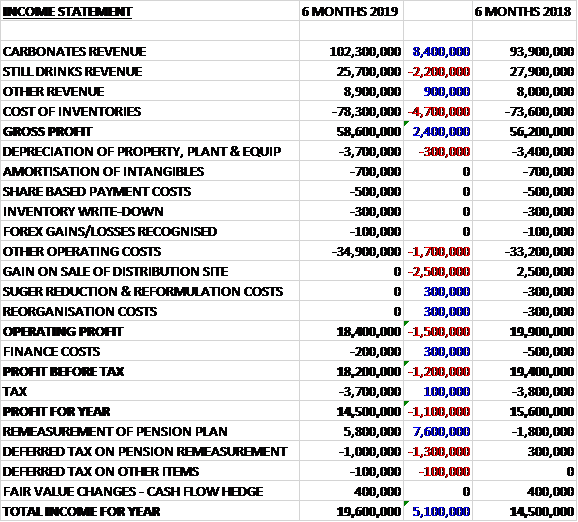
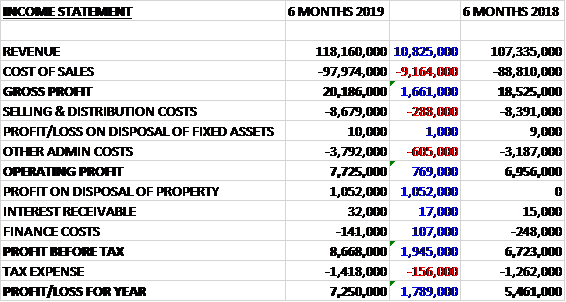
Revenues increased when compared to the first half of last year as a £2.2M decline in still drinks revenue was more than offset by an £8.4M increase in carbonates revenue and a £900K growth in other revenue. Cost of sales also increased to give a gross profit £2.4M higher. Operating costs increased by £2M and there was no sale of buildings, which brought in £2.5M last time. There was also no reformulation costs or reorganisation costs, which were both £300K last time which meant the operating profit declined by £1.5M. Finance costs were down £300K and tax charges fell by £100K to give a profit for the period of £14.5M, a decline of £1.1M year on year.
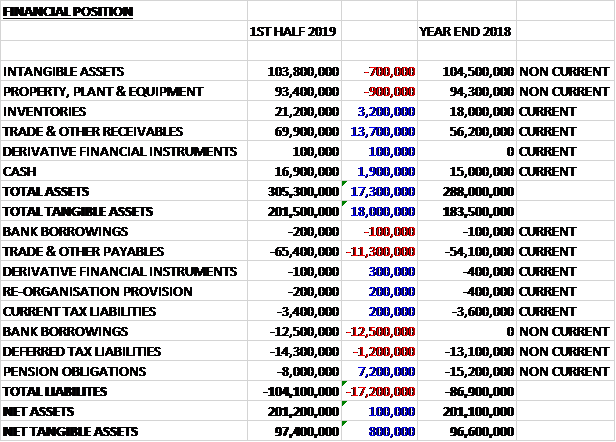
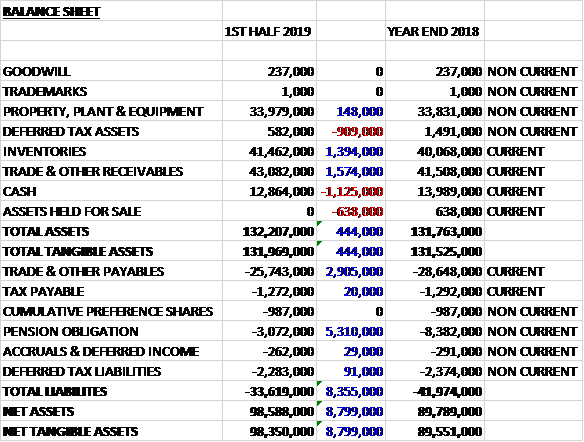
When compared to the end point of last year, total assets increased by £17.3M driven by a £13.7M growth in receivables, a £3.2M increase in inventories and a £1.9M growth in cash. Total liabilities also increased during the period as a £7.2M decline in pension obligations was more than offset by a £12.6M increase in bank borrowings and an £11.3M increase in payables. The end result was a net tangible asset level of £97.4M, a growth of £800K over the past six months.
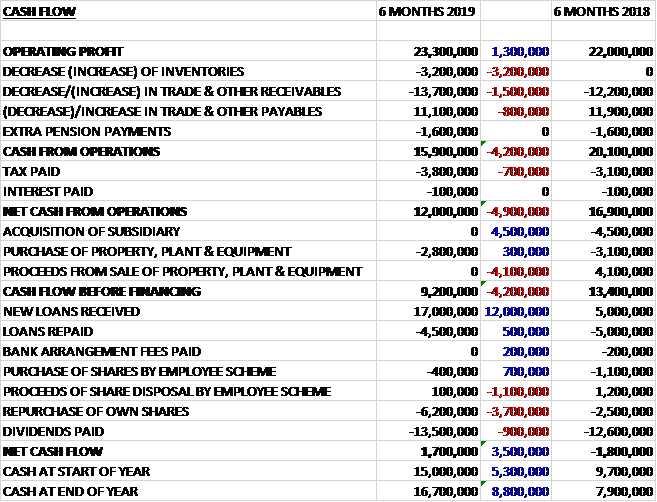
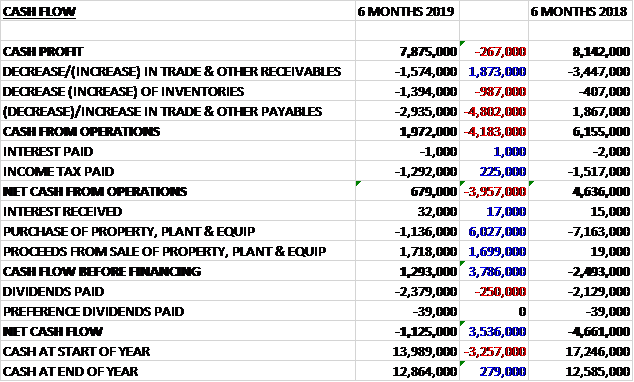
Before movements in working capital, cash profits increased
by £1.3M to £23.3M. There was a cash
outflow from working capital and tax payments increased by £700K to give a net
cash from operations of £12M, a decline of £4.9M year on year. The group spent £2.8M on capex to give a free
cash flow of £9.2M. This did not cover
the £13.5M paid out in dividends or the £6.2M spent on share repurchases so the
group took out a net £12.5M. This gave a
cash flow of £1.7 for the period and a cash level of £16.7M at the period-end.
The gross profit in the carbonates business was £47M, a
growth of £2.7M year on year. The gross
profit in the still drinks business was £7.4M, a decline of £800K when compared
to the first half of last year.
The gross profit in the other business was £4.2M, a growth
of £500K year on year. The Funkin
business continues to grow in its traditional areas and now also in new formats
and new market segments. They have seen
the take-home packs, initially launched last year, begin to gain sales traction
in the grocery channel while the development of the Funkin draft cocktail
proposition is rolling out into the on-trade and has already enjoyed success at
outdoor events during the festival season.
Retail pricing increased across the market following the
implementation of the Soft Drinks Levy in April. The total market grew by 7.7% in value terms
and 3.8% in volume. The soft drinks
market experienced the effect of weather extremes, from the significant snowfall
in Q1 to the hot summer weather. The
unusual demand pattern which arose was further compounded by the shortage of
CO2 in the early summer which affected soft drinks supply for a number of
weeks.
The group delivered strong volume market share gains, up 15%
with a pleasing performance from IRN-BRU, particularly in England and
Wales. Following the execution of the
reformulation programme they have continued to invest in their core bands with particular
emphasis on IRN-BRU, Rubicon and Strathmore.
The period also saw the group initiate their trading partnerships with
Bundaberg and San Benedetto, both of which have made a positive start and are
already adding value.
The current trading strategy is delivering volume benefits
which they aim to maintain for the rest of the year as they navigate their way
through the changing market. As
expected, the operating margin was 13.4% reflecting the volume focus and investments
made.
There will shortly be a new accounting standard covering operating
leases. Had it been implemented during
the period, the effect would be to increase the net book value of property, plant
and equipment by £6.9M with a corresponding finance lease liability of
£8.2M. The net impact on retained
earnings would be a charge of £1M. To
date, £9.7M of operating lease rentals have been recognised in respect of the
assessed leases. Based on management’s
ongoing exercise on leases identified to date, under these standards, £8.6M of
depreciation would have been charged plus a further £2.1M of interest charges.
Going forward the group plan to invest further across the
second half of the year which they expect will have a moderate impact on
margins but they remain on target to meet their profit expectations for the
full year.
At the current share price the shares are trading on a PE
ratio of 25.1 which falls to 23.4 on the full year consensus forecast. After a 5% increase in the interim dividend
the shares are yielding 2.1% which is forecast to remain the same for the full
year. At the period-end the group had a
net cash position of £4.2M compared to £7.9M at the same point of last
year.
On the 25th January the group released a trading update
covering the year. Revenue is expected
to be 5% up on last year at £277M. They
gained further market share in the UK which saw volumes up 3% and value up
8%. The impact of the soft drinks levy
has been evident across the market with value growth significantly outstripping
volume and having taken the opportunity to drive volume growth during the
period the group are now expecting to return to a more value led trading
strategy.
They have invested across brands, assets and people which
has supported growth but had a moderate impact on margins. They remain confident overall of delivering
profit in line with board expectations, however. Going forward, further regulatory
intervention is on the horizon but the board are confident of profitable growth
next year.
Overall then this has been a fairly steady period for the
group. Profits declined due to no
freehold sales during the period, underlying profits were up; net assets
increased but the operating cash flow deteriorated with free cash not covering
dividends. This was not helped by
adverse working capital movements, however, and cash profits increased. The Carbonates and Funkin businesses did well
but the still drinks business saw profits decline, it is not clear why this
was. This is a good company but the
recent performance has been a bit lacklustre in my opinion and the shares are
looking a bit expensive with a forward PE of 23.4 and yield of 2.1%. I’m tempted to take profits.
IQE has now released their interim results for the year ending 2018.
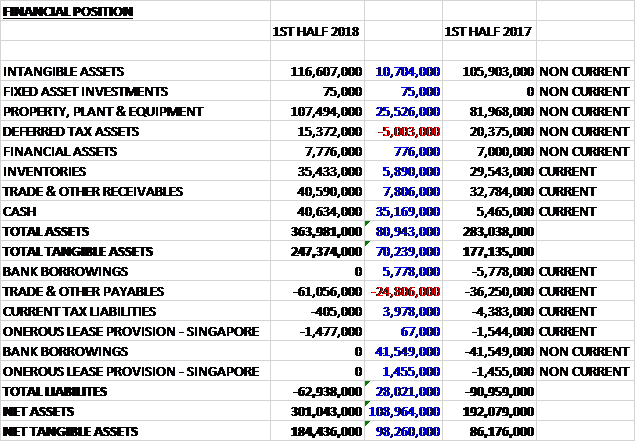
Revenues increased when compared to the first half of last year as a £236K reduction in wireless revenue was more than offset by a £3.7M growth in photonic revenue, a £179K increase in IR revenue and a £132K growth in CMOS++ revenue. License income from sales to joint ventures fell by £950K, however. Amortisation costs were up £714K and other cost of sales increased by £1.9M to give a gross profit £226K higher. The group received £1.6M in insurance income, share based payments fell by £1.9M and amortisation of admin expenses declined by £484K. Offsetting this was a £908K legal fee and a £3.3M increase in other general costs which meant that the operating profit was £95K higher. There was a £960K swing to a finance income but tax charges increased by £5.3M which gave a profit for the period of £4M, a decline of £4.3M year on year.
When compared to the end point of last year, total assets increased by £80.9M driven by a £25.5M growth in property, plant and equipment, a £35.2M increase in cash, a £10.7M growth in intangible assets, a £7.8M increase in receivables and a £5.9M growth in inventories, partially offset by a £5M decrease in deferred tax assets. Total liabilities declined during the period as a £24.8M growth in payables was more than offset by a £47.3M decline in bank borrowings and a £4M decrease in current tax liabilities. The end result was a net tangible asset level of £184.4M, a growth of £98.3M over the past six months.
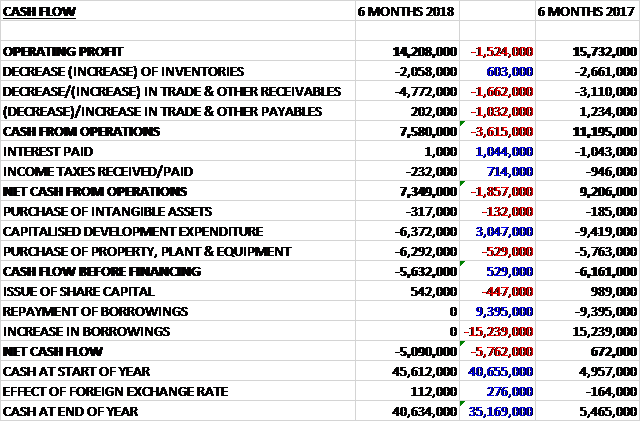
Before movements in working capital, cash profits declined
by £1.5M to £14.2M. There was a cash
outflow from working capital but interest payments fell by £1M and tax payments
were down £714K to give a net cash from operations of £7.3M, a decline of £1.9M
year on year. The group spent £6.4M on
development expenditure, £6.3M on property, plant and equipment and £317K on
other intangible assets to give a cash outflow of £5.6M before financing. The group brought in £542K from the issue of
share capital to give a cash outflow of £5.1M and a cash level of £40.6M at the
period-end.
Currency headwinds, accelerated customer qualification
programmes and Newport foundry pre-production costs resulted in a drag on
profits of around £3.5M.
The operating profit in the wireless business was £6.6M, a
decline of £876K year on year. Inventory
channels, depleted as a consequence of the rapid ramp of VCSELs in H2 2017 were
partially replenished during the period and photonics capacity was directed to
satisfy more than twenty VCSEL chip manufacturer engagements. Operating margins reduced as a consequence of
reactor conversion costs related to switching reactors from photonics to
wireless production.
Despite slower growth in smartphone sales in recent years
the increase in data traffic continues to drive the need for more sophisticated
wireless chip solutions in handsets. The
group sees the roll out of 5G infrastructure as a significant upside potential. Current infrastructure applications such as
base stations, radar and CATB are a small but fast growing part of the
business. The fastest growing segment of
the wireless chip market over the past few years has been for high performance
Bulk Acoustic Wave filters.
The wireless segment continues to be a significant and
stable business for the group and is expected to grow at a rate of up to 5% in
the near term. The division has a number
of developments which provide routes for a return to double digit growth such
as innovation in smartphone hardware, adoption of GaN on silicon technology for
base stations and the transition to 5G communications. The group have also announced that they had
renegotiated a long term supply contract with a tier 1 wireless customer through
to September, securing an extended range of products and increased share of
their epiwafer requirements.
The operating profit in the photonics business was £4.9M, a
decrease of £1.5M when compared to the first half of last year. Revenue from the largest photonics customer
was flat as inventory from the first mass market ramp of VCSEL epiwafters in H2
2017 was consumed in the supply chain.
Other photonics customers were up 40%.
Gross profits were adversely impacted by the Newport foundry
pre-production costs of £900K and low margin customer funded product
development reducing margins by a further £600K. Margins should improve again in the second
half as the production efficiencies of the ramp in output are realised.
Sensing technologies such as 3D sensing and gesture
recognition will represent a growth area in the near term. The group is engaged in a number of
programmes for tier 1 OEMs who are targeting mass market ramps in 3D sensing
applications over the next year and a half.
Alongside the growth in the VCSEL business, the InP business continues
to perform well. This market is being
driven by the need for higher speed, higher capacity fibre optic systems to
address continuing growth in data traffic.
The group are engaged in qualifications with several customers for this
technology and received their first milestone production order for DFB lasers
made using their NIL process.
The operating profit in the IR business was £1.4M, flat year
on year. Beyond defence, the IR division
has been successful in broadening its customer engagements into product
development for mass market consumer applications. They are now engaged with major OEM and
device companies in developing IR products for consumer applications including
sensing.
In the solar business, the terrestrial market remains an
opportunity but as a result of the shifting macroeconomics, focus has shifted
to the space market where these advanced materials are used to power satellites
and UAVs where the higher efficiency has a dramatic cost benefit on
payload. Product qualifications are
underway with leading UAV/satellite manufacturers, paving the way for
commercial revenues.
The operating loss in the CMOS++ business was £791K, an
improvement of £186K compared to the first half of 2017. The group is involved in multiple programmes
across the globe which are developing the core technologies from which they
expect significant revenue streams to emerge over the next three to five years.
The Newport foundry construction and fit out it proceeding
well. Five reactors had been installed
by the end of the period and a further two have been delivered in August with
three more scheduled in H2 to bring the total to ten reactors during the second
half. Commissioning and qualifications
are ongoing and initial production is expected to start in the latter part of
H2 2018
There have been a number of one-off costs during the
period. There was insurance income of
£1.7M relating to the accrued insurance income receivable following the death
of the CFO in April. There were
exceptional legal costs of £900K incurred in respect of a patent dispute
defence.
During the period the group received no revenue and made
purchases of £1.8M from its joint venture in Singapore; and made purchases of
£3.8M and recharges other costs of £1.6M with its joint venture in the UK
Compound Semiconductor Centre.
There are a total of nine Compound Semiconductor Centre
projects underway with a value of £5.4M.
The projects have resulted in formal product development partnerships
with five multinationals, four mid-sized companies, four SMEs and three additional
academic partners. Routes to commercial
income streams are now maturing and the first commercial orders were delivered
in the period. The percentage of non-IQE
revenue received by the centre is increasing steadily and is expected to be in
the range of 15-20% for the full year.
A second phase of capital expansion focused on the
installation of a new cleanroom and a GaN MOCVD reactor designed for Cardiff
Uni research activity was completed in April.
The business looks forward to progressing several key areas in the
second half of the year including delivery of further exploitable outcomes of
the CRD programme, diversification of the research roadmap and wider industry engagement
to develop the commercial revenue pipeline.
The Compound Semiconductor Development Centre in Singapore
is engaged in a number of early stage qualifications for new customers in
China. Twelve new customer engagements
were initiated for fifteen separate product qualifications including five for wireless
pHEMTs and seven for photonics products.
Following the growing tensions in the US and China’s trade and economic
relations, China is reported to have sought to accelerate its efforts to gain
semiconductor self-sufficiency by increasing funding.
The VCSEL wafer ramp for existing 3D consumer applications
started as expected at the end of the period and since the period-end, the
first production for new 3D sensing customers has also started. At this time the group has customer forecast
demand to meet consensus revenue with a 40:60 revenue split for H1/H2 2018.
The group will invest around £6M in expanding GaN capacity in
the US which will start in H2 and be completed in H1 2019. This will enable the closure of the NJ plant
as the transfer of business to Taunton is completed. This consolidation is expected to save around
£1.5M in 2019 and around £3M per annum thereafter.
They will also invest £15M in additional wireless capacity
in Taiwan. This project will start in
September and will complete in the first half of 2019, increasing capacity
there by 40%. With this investment they
will be able to avoid the cost of converting and reconverting reactors from
wireless and photonics and back again which have totalled around £3M over the
last year and a half and provide additional capacity for the wireless
business.
The board remain confident of achieving current market
expectations as long as there are no major forex movements. Next year wireless revenue growth is expected
to be 0-5%, photonics 40-60% and IR 5-15%.
The adjusted operating margins for wireless is expected to remain the
same at 15% with photonics increasing 5% to 40% and IR up 1% to 28%. Capex on intangibles is expected to be
£10-£15M with capex on fixed assets being £20-£30M. Sales phasing is expected to be 42:58.
At the current share price the shares are trading on PE
ratio of 39 which increases to 42 on the full year consensus forecast. At the period-end the group had a net cash
position of £40.6M compared to a net debt position of £41.9M at the same period
of last year as a result of the placing to raise £90M to repay debt and fund
capacity expansion.
On the 13th November the group announced that a
major chip company had received notice from one of their largest customers for
3D sensing laser diodes that they would materially reduce shipments for the
current quarter. As a consequence of the
change in market conditions the group now expected to deliver revenues of £160M
for 2018.
Photonics demand was facing a later but steeper ramp for
VCSELs for consumer products moving into Q4 and with the impact of this recent
announcement coming at this critical time, Photonics wafer revenue growth for
2018 is now expected to be 11% compared to previous guidance of 35% to 50%, and
based on initial indications, it is currently expected to return to 40% to 60%
revenue growth in 2019.
Wireless wafer revenue growth is expected to be 8%, above
the 0% to 5% guidance. Wireless demand,
especially for GaN products, has been strong and capacity was retained through
Q3 to continue to address demand following the replenishment of inventory
channels depleted in H2 2017. IR
revenues are expected to grow at or exceeding the top end of the current
guidance of 5% to 15% this year and to remain at in this range for 2019.
As a result EBITDA for 2018 is now expected to be around
£31M compared to £37.1M in 2017.
On the 25th January the group released a trading
update covering the year as a whole.
They expect to deliver revenues of at least £156M and EBITDA of £27.5M
compared to £154.4M and £37M last year.
Net cash at the year-end was £20.8M compared to £45.6M at the end of
2017.
They closed their facility in New Jersey in order to
consolidate US-based GaN manufacturing capacity in the Massachusetts
facility. The cost of the closure is
estimated to be £3.4M, of which £1.2M will comprise the cash costs of severance
and reactor decommissioning with £2.2M of non-cash impairments. These costs will be an exceptional charge on
the 2018 accounts and the group expects to achieve annual operating cost
savings of around £3M per annum.
They also expect to incur an additional exceptional charge
of £4.5M relating to onerous lease accounting provision for the period through
to the end of the lease Q2 2022 for the unused and unlet space in the Singapore
facility. They reiterate their 2019 guidance.
By the end of the first half of 2019 they will have
completed a significant two year investment programme across their global
operations, commissioning their new mega-foundry in Newport which is dedicated
to photonics, installing additional wireless capacity in Taiwan, expanding
their GaN capacity in the US and IR capacity in Milton Keynes. They will bring additional capacity into
production in Phase 1 in the Newport foundry during H1 with 12 companies
already actively qualifying the new facility.
Overall then this has been a rather difficult period for the
group. Profits were down due to an
increased tax charge – the operating profit was broadly flat. Net assets increased but the operating cash
flow declined with no free cash generated.
The photonics business suffered due to the excess inventory in the
supply chain and the pre-production costs at the Newport foundry and the
wireless business also saw profits decline, seemingly due to having to switch
reactors from the photonics business.
The shares are expensive with a forward PE of 42 but there is promise of
future exciting growth. The trouble is
this has always been the case here.
Success has always been just around the corner and I’m growing a bit
weary of it. I don’t think these offer
good value at this price.
Games Workshop have now released their interim results for the year ending 2019.
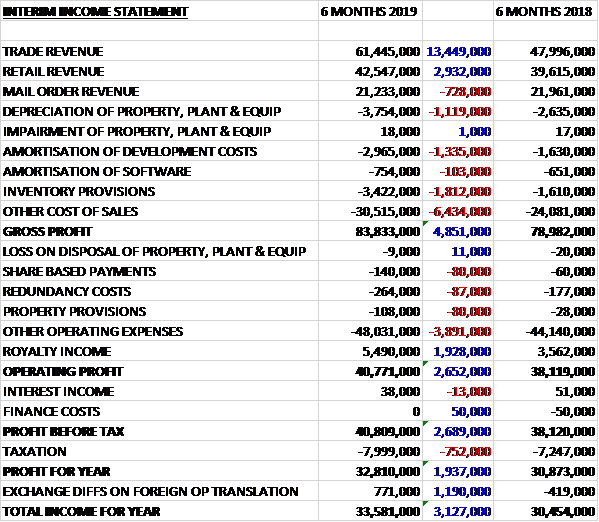
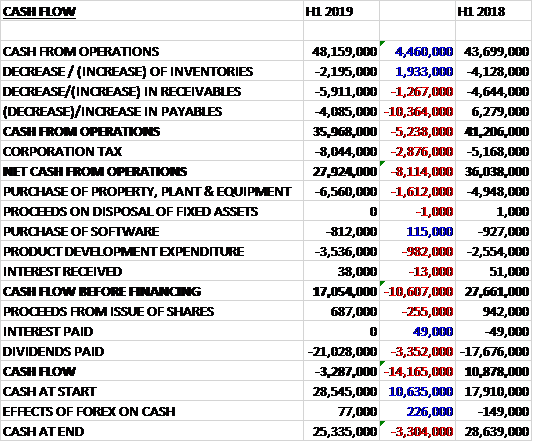
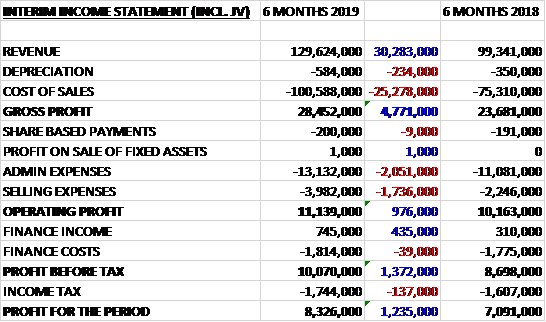
Revenues increased when compared to the first half of last year as a £728K decrease in mail order revenue was more than offset by a £13.4M growth in trade revenue and a £2.9M increase in retail revenue. Depreciation was up £1.1M, amortisation increased by £1.4M, inventory provisions rose by £1.8M and other cost of sales were £6.4M higher to give a gross profit £4.9M above that of last time. Operating expenses increased by £3.9M but the royalty income grew by £1.9M which meant that the operating profit was £2.7M higher. Finance costs were broadly similar but tax charges were up £752K to give a profit for the period of £32.8M, a growth of £1.9M year on year.
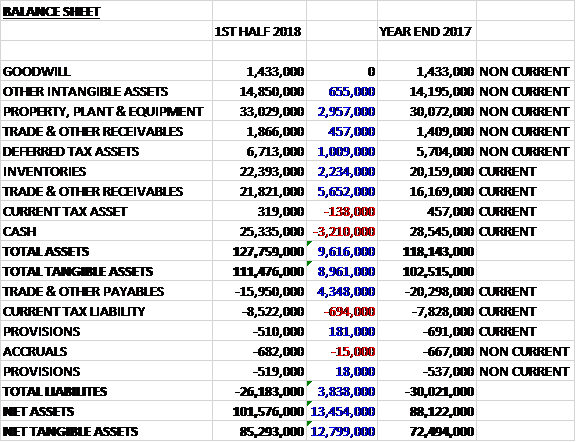
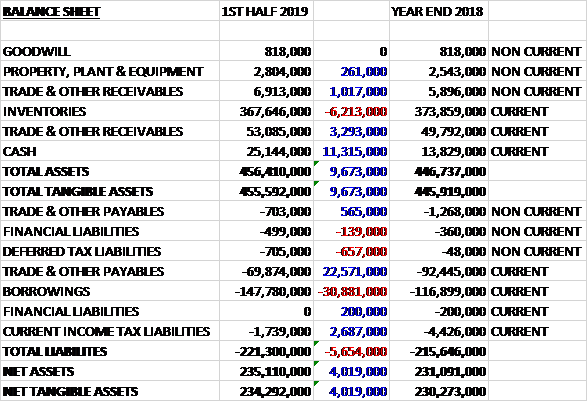
When compared to the end point of last year, total assets increased by £9.6M driven by a £6.1M growth in receivables, a £3M increase in property, plant and equipment, a £2.2M growth in inventories and a £1M increase in deferred tax assets, partially offset by a £3.2M decline in cash. Total liabilities declined during the period, mainly due to a £4.3M fall in payables. The end result was a net tangible asset level of £85.3M, a growth of £12.8M over the past six months.
Before movements in working capital, cash profits increased
by £4.5M to £48.2M. There was a cash
outflow from working capital and after tax charges increased by £2.9M the net
cash from operations was £27.9M, a decline of £8.1M year on year. The group spent £6.6M on property, plant and
equipment, £3.5M on development expenditure and £812K on software to give a
free cash flow of £17.1M. This didn’t
quite cover the £21M paid out in dividends so there was a cash outflow of £3.3M
and a cash level of £25.3M at the period-end.
The operating profit in the Trade business was £22.5M, a growth
of £5.3M year on year with growth in all territories. The net number of trade outlets increased by
300 accounts which helped drive forward sales.
A large number of independent retailers now also sell the group’s
products online.
The operating profit in the Retail business was £4.8M, an
increase of £1.9M when compared to the first half of last year. There was growth in all territories except
Australia and New Zealand. They opened
23 stores and closed 5 with recruiting new store managers an area of
focus.
The operating profit in the Online business was £13.1M, a
decline of £566K when compared to the first half of last year. Sales in the Citadel online shop were flat
and the Forge World and Black Library stores declined slightly. Sales of digital titles remain comparable to
last year and the group continue to increase the functionality of their online
stores.
The operating profit in the Product and Supply business was
£9.6M, a decrease of £3.5M year on year.
The operating profit from Royalties was £5M, a growth of £1.8M when
compared to the first half of last year reflecting the change in accounting
mentioned below.
As the group moves to complete a series of major investment
projects, the gross margin and stock levels are now currently where they’d like
them to be. The completion of the new
Nottingham factory and ERP projects will allow them to fully optimise their
Nottingham site. From there, they will
begin to upgrade their warehousing capacity in both Memphis and Nottingham. These further investments will help them maintain
their current volumes, increase efficiencies and give good scope for sales
growth in the future.
The community website continues to increase its readership
with visitor numbers up 30% with almost a million visits to the site per week. Elsewhere on social media they have over
250,000 people signed up to the Warhammer.tv site.
There have been a number of accounting changes that have had
the effect of reducing EPS by 0.7p.
Amounts receivable from customers in respect of delivery charges are now
recognised as revenue when previously the income was offset against delivery
charges in cost of sales. Also the minimum
royalty guarantee will be recognised in full at inception of the contract when
previously it was deferred and recognised in accruals and deferred income and
released with licensee sales.
Going forward, December trading continued in line with the
performance in the first half.
At the current share price the shares are trading on a PE
ratio of 16.2 which increases to 17 on the full year forecast. After an increase in the dividends the shares
are yielding 4.4% which falls to 4.1% on the full year forecast. At the period-end the group had a net cash
position of £25.3M compared to £28.6M at the same point last year.
Overall then the group had a pretty decent period overall. Profits were up, net assets increased but the operating cash flow deteriorated somewhat with the dividends not quite being covered by free cash. This was due to adverse working capital movements related to the recent investments being made, however, and free cash saw an improvement. The trade and retail sectors are performing well but there was a bit of a blip in online. The reason for this wasn’t really given so this is a bit concerning. The shares are also no longer that cheap with a forward PE of 17 and yield of 4.1%. I do feel this is a great company but not sure the value is quite right at the moment.
On the 12th April the group announced that trading has continued well. Compared to last year, sales and profits are ahead. Royalties receivable are also ahead of the prior year following the signing of new license agreements. The board’s current expectation is that pre-tax profit for the year will be around £80M.
On the 7th June the group released a trading
update covering the year. They expect
sales to be £254M and the group’s pre-tax profit to be at least £80M. Royalties receivable from licensing are
around £11M.
Telford Homes have now released their interim results for the year ending 2019.
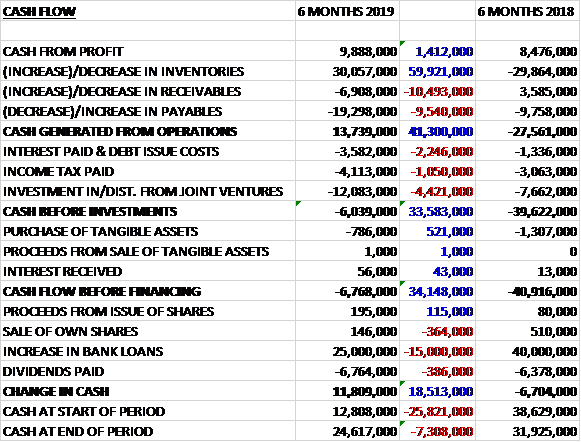
Revenues increased by £30.3M when compared to the first half of last year and after cost of sales also increased the gross profit was £4.8M higher. Admin expenses grew by £2.1M and selling expenses rose £1.7M which meant the operating profit increased by £976K. Finance income grew by £435K but tax charges rose £137K which mean that the profit for the period was £8.3M, a growth of £1.2M year on year.
When compared to the end point of last year, total assets increased by £9.7M driven by an £11.3M growth in cash and a £4.3M increase in receivables, partially offset by a £6.2M decline in inventories. Total liabilities also increased during the period as a £23M decline in payables and a £2.7M decrease in current tax liabilities was more than offset by a £30.9M increase in borrowings. The end result was a net tangible asset level of £234.3M, a growth of £4M over the past six months.
Before movements in working capital, cash profits increased
by £1.4M to £9.9M. There was a cash
inflow from working capital but interest payments increased by £2.2M, tax
payments were up £1.1M and there was a £4.4M increase in the investment into
joint ventures which meant that the cash outflow before investments was £6M, an
improvement of £33.6M year on year. The
spent £786K on intangible assets which meant that before financing there was a
cash outflow of £6.8M.
The group are progressing well with their existing build to
rent projects and in August they handed over The Pavilions, their first build
to rent development which was purchased by L&Q in 2016. They are getting closer to build completion
of the two schemes they are working on with M&G in Carmen Street and
Redclyffe Road and the same applies to the build to rent block at New Garden
Quarter which was sold to Folio. They
are now moving towards entering a full build contract with Greystar for 894
build to rent homes at Parkside in Nine Elms and they expect to start on site
early in 2019. In addition, they have
announced that they started contractual negotiations with a major build to rent
investor for the sale of 257 homes in Walthamstow and that process is nearly
complete.
In October they announced that they have been chosen to
partner a major land owner to obtain planning consent for around 700 homes on a
site in East London, with a view to developing a combination of subsidised
affordable housing, build to rent homes for the landowner and individual sale
homes. This partnership with an
established property owner is a key milestone in the build to rent strategy.
Also, with the help of Savills they are making progress
towards identifying at least one institutional investor with whom they can
forge a long-term partnership for future build to rent activity. The aim is to create a significant long-term
build to rent pipeline to the benefit of both parties. They anticipate being in a position to select
a partner by the end of 2018 with a view to entering into a contractual
arrangement in early 2019.
Despite lower liquidity in the market as a consequence of
uncertainty around Brexit the group have continued to secure individual sales,
particularly for homes prices below £600K on developments that are complete or
close to completion. Homes priced above
£600K are currently more difficult to sell, especially if customers already own
a home and are delaying a new purchase.
This price point represents a relatively small proportion of the overall
portfolio, however.
The group held their second off-plan sale at New Garden
Quarter. The combined UK and overseas
launch of Gallions Point resulted in 15 sales with performance supressed by
Brexit worries and the potential risk of increased stamp duty for overseas
investors. The majority of these homes
are priced under £600K with completions due in 2020 so the board are confident
they will be attractive to owner-occupiers at the appropriate time. Sales to individual investors, whether in the
UK or overseas, no longer represent a significant part of the future pipeline with
build to rent transactions and individual owner-occupier sales now drawing
focus.
The open market sale remains an important part of the
business model with the recent purchase from Greystar of part of their site in
Greenford. The group will deliver 194
homes for individual open market sale at an average selling price of £500K, and
84 affordable homes for shared ownership.
They intend to begin work on site in mid-2019 with completion expected
in 2022. The group are engaged in
discussions on two land acquisition sites.
The current development pipeline stands at just over 5,000, including
Parkside in Nine Elms, and has a gross development value of £1.65BN.
The group expect a much greater number of open market
completions in H2 together with a number of new construction contracts and
therefore the results for the year will be weighted towards the second
half. There have been a few isolated
cases of modest build cost pressures in later trades as projects complete but
general construction activity in London, particularly residential development,
does appear to have reduced a little in recent months which tends to take some
of the pressure off trades that are otherwise in high demand.
Going forward the group still have work to do in order to
achieve their original target of exceeding £50M of total profit before tax for
2019 and Brexit brings a certain amount of unpredictability.
At the current share price the shares are trading on a PE
ratio of 6.9 which is forecast to remain the same for the full year
forecast. After a 6.3% increase in the
interim dividend the shares are yielding 5.1% which increases to 5.2% on the
full year forecast. At the period-end
the group had a net debt position of £122.6M compared to £103.1M at the
year-end.
Overall then the performance during the first half has been an improvement on last year. Profits are up, net assets improved and although the group wasn’t cash generative at the operating level, the cash flow did improve. The build to rent focus should cushion the group somewhat but there is no doubt that conditions in the housing market are being affected by a number of issues, not least Brexit. The forward PE of 6.9 and yield of 5.2% suggest the shares are good value but I feel there is a real possibility that the group might not make its target sales if conditions continue to deteriorate.
On the 11th February the group announced that it
had exchange contracts for the purchase of a site in Stratford for a total cash
consideration of £20M. The land has been
acquired from the Department for Transport.
The 1.14 acre site is expected to deliver 380 homes with subsidised
affordable housing expected to make up 50% of the development. The gross development value is expected to be
at least £160M.
On the 19th February the group announced that it
had exchanged contracts for the sale of its Equipment Works build to rent
development site in Walthamstow to a joint venture between Henderson Park and
Greystar. The transaction comprises the
sale of the freehold interest in the land and the construction of 257 build to
rent homes for a net consideration of £105.5M.
The sale will consist of an initial land payment followed by regular
payments throughout the construction period and a final profit payment.
The 3.16 acre site was purchased in December 2017 and has
full planning consent for 337 new homes including 80 affordable homes and
18,830 square feet of flexible commercial space. The development is under construction and is
expected to be completed in late 2021.
On the 5th March the group announced that it has
chosen Invesco and M&G as their long term strategic partners for future
build to rent transactions. M&G will
be their priority partner for schemes including up to 200 build to rent homes
and Invesco will have priority for the larger schemes.
On the 28th February the group released a trading
update. Despite the positive outlook on
build to rent the London sales market remains subdued. Whilst sales are still being secured they are
being achieved at a slower rate than under normal market conditions and
customer expectations of increased incentives and discounts are putting some
pressure on sale margins.
In addition, two build contracts that were expected to
exchange in 2019 are now likely to happen in Q1 2020, due primarily to planning
issues, and this moves around £5M of profit between the two years. New individual sales secured since November
effectively offset these contracts such that they still expect pre-tax profit
for 2019 will be around £40M.
At this time they do not expect a significant improvement in
the individual sale market in the short term and as a result expect a continued
impact on sales rates and margins in 2020.
They have also experienced some frustrating challenges in achieving
planning consents on some developments including most notably the LEB Building
in Bethnal Green. Planning delays can
increase costs, push back the timing of profit recognition and impact on their
ability to invest in new opportunities.
Finally they have experienced a disappointing delay to the construction
programme in Finsbury Park of around six months due to matters dealing with
transport bodies and the need to coincide with works undertaken by third
parties. Given that completions were
largely due in the second half of 2020 this will have a significant impact in
terms of moving profit of around £15M into 2021.
These factors, combined with the impact of lower margin
build to rent transactions, are changing their profit expectations for the next
few years and they now expect pre-tax profit in 2020 to be significantly lower
than 2019. After 2020 profits in each
year will grow again, albeit at lower margins due to the increased focus on
build to rent.
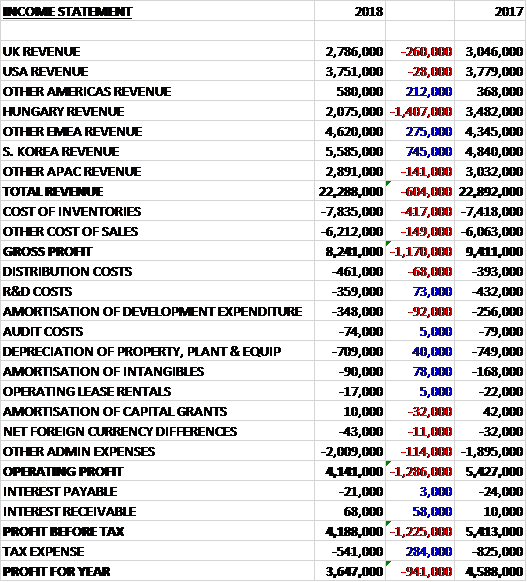
Zytronic has now released their final results for the year ended 2018.
Total revenues declined by £604K when compared to last year as a £745K growth in Korean revenue was more than offset by a £1.4M decline in Hungarian revenue. Cost of inventories were up £417K and other cost of sales grew by £149K to give a gross profit £1.2M higher. Admin expenses also saw a modest rise but there was a £58K growth in interest receivable and a £284K decrease in tax expenses to give a profit for the year of £3.6M, a decline of £941K year on year.
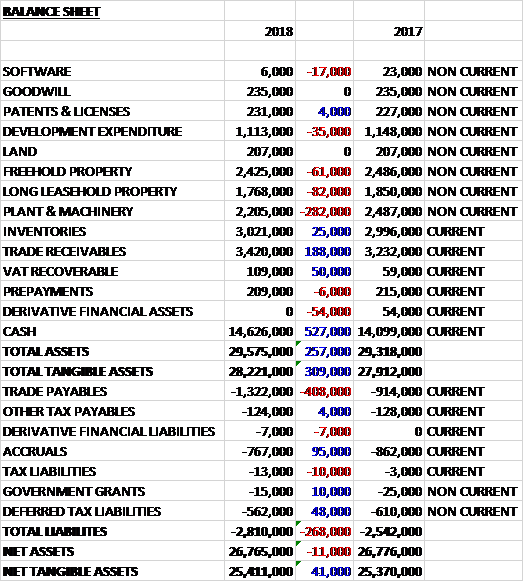
When compared to the end point of last year, total assets increased by £257K driven by a £527K growth in cash and a £188K increase in trade receivables, partially offset by a £282K decrease in plant and machinery. Total liabilities also increased during the year Due to a £408K growth in trade payables. The end result was a net tangible asset level of £25.4M, a growth of just £41K year on year.
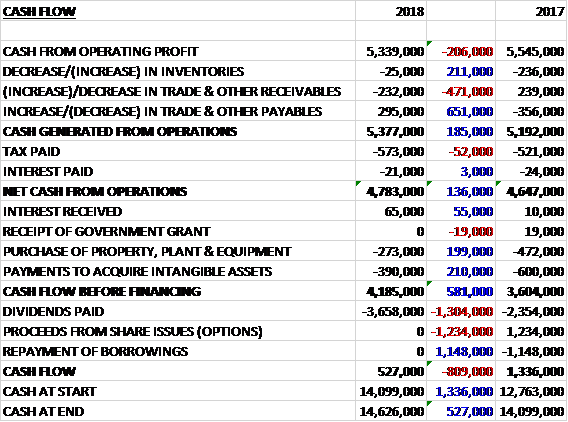
Before movements in working capital, cash profits declined
by £206K to £5.3M. There was a slight
cash inflow from working capital compared to a cash outflow last time and after
tax payments increased by £52K the net cash from operations was £4.8M, a growth
of £136K year on year. The group spent £273K on property, plant and equipment
along with £390K on intangible assets which meant that the free cash flow was
£4.2M. Of this, £3.7M was spent on
dividends which meant that the cash flow for the year was £527K and the cash
level at the year-end was £14.6M.
This year they continued to experience encouraging growth in
sales of their touchscreens to the gaming sector which somewhat offset the
decline in sales to financial markets.
The benefit of this growth was partly offset by lower margins, however,
principally from labour and material inefficiencies as new and different
products and methods associated with gaming replaced more familiar touchscreens
for the ATM sector.
The first half revenues were affected by the performance of
the financial market (ATMs) which at £2.8M was £1.1M lower than the prior
year. The second half performance was
also impacted by the financial market but to a lesser degree as the improvement
in the level of sales did not materialise as quickly as hoped. As a result, the total impact was £1.3M of
reduced financial sales for the full year composed of £900K of touch and £400K
of non-touch.
Within touch sales, gaming, which was dominated by
casino-based upright cabinet designs, has continued to be the top revenue
generating application market with growth of £500K. This growth reflects the maturation of
existing projects and new predominantly Asian PCT and MPCT projects which moved
into production.
Financial touch sales saw a decline on the back of total
unit volumes falling by 6,000 to 44,000 units.
The board believe that the decline has been down to several factors
which have generally been felt by the larger ATM OEMs in the market. These were an imposed change in the
procurement practices in China for the Chinese market, a slower than
anticipated change to the outsourcing of ATM assembly to third parties, and the
move by financial institutions to a Windows 10 operating system and consequent
delays caused in them placing new unit orders.
There is also little doubt that consumer digital money management may be
influencing future ATM deployment levels.
Vending continued to be their second highest market in terms
of units produced at 28,000 but this was 7,000 units lower than last year due
in the main to two factors, the finalised supply of the Freestyle Coca Cola
drinks machine and a reduced supply into German-based customers in the field of
parking management and fare collection.
In terms of revenue, it remained the third largest market but declined
by £500K.
The industrial market saw an 8,000 unit increase in sensors
sold to 24,000 units and an increase in revenues generated of £200K. The signage market increased by £400K on the
back of a 1,000 unit increase in large sensors sold to 2,000 units as the
number of smart city type street furniture deployments increased, particularly
for cities in the US which offer on the street internet, wayfinding and WIFI
hotspot capabilities.
The other markets which are predominantly in the small size
ranges and are open to much greater competition from alternative suppliers are
home automation, healthcare and telematics and sales declined by £200K. This reflects the units supplied to home
automation almost halving to 5,000 units, as the Bosch cooktop moves towards
end of design life and those supplied to health reduced by nearly two thirds to
just 1,000 units.
The group ended the year with twelve regional agreements
covering the Americas as they terminated the agreement with one underperforming
agent. Looking forward they are likely
to terminate a further three agencies but have already agreed terms with two
replacements Although previously stating
their intention to increase the US-based business, direct sale teams from two
to three, a decision was made to delay the recruitment. At the end of the period they had twelve agreements
covering the Asia Pacific region. During
the year they employed a further indirect employee in Japan and have been
working closely with a new VAR for Thailand which they should shortly expect to
sign an agreement with.
As of the year-end there was a pipeline of opportunities of
£8M compared to £8.2M at the end of last year.
Over the course of the year ZDL has been in dispute with a
former licensor, over the process used to write micro-fine wire to a
substrate. The licensor alleged that ZDL
owed it duties of confidentiality in relation to information alleged to have
been imparted to ZDL in 1999 and asserted that ZDL had breached that duty in
the content of its MPCT patent applications filed in 2012 and ZDL’s processes
infringed that a patent filed by the licensor in 2014 in response to the
alleged breach of duty.
A claim was made against ZDL through the patents court. While the group did not accept it was liable,
they took a commercial approach to dealing with the claim, mindful of the time
and cost associated with high court litigation they made an offer by which they
agreed to pay £72K in settlement of the claim, which was accepted with costs of
£25K.
Going forward revenues and trading are currently at similar
levels as last year and the focus will be to improve margins from production
efficiencies and to secure new projects from the launch of the new electronic
ASIC controllers.
At the current share price the shares are trading on a PE
ratio of 16.4 which falls to 14.7 on next year’s consensus forecast. After the final dividend remained the same
the shares are yielding 6.1% which grows to 6.7% on next year’s forecast.
Overall then, this has been a bit of a difficult year for
the group. Profits were down, net assets
were broadly flat and although the operating cash flow improved, this was due
to working capital movements and cash profits declined. There was still a decent amount of free cash
generated, however. The gaming market
seems to be going well, but the real problem has been the financial market
which has been beset by a number of one-off issues. There remains the fact, however, that ATM
usage is probably in structural decline.
This year has started off on similar levels to last year and although
the yield here at 6.7% is impressive, the shares are not overly cheap on a PE
level – 14.7. This is a quality, cash
generative business but there doesn’t seem to be any evidence of growth here at
the moment. Another tricky one, not sure
it is worth the gamble at the moment though.
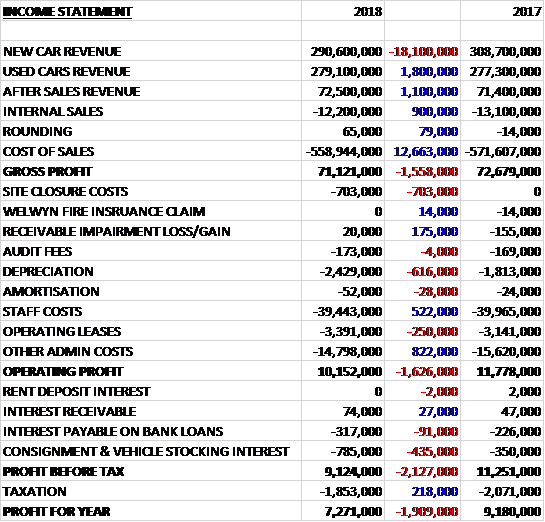
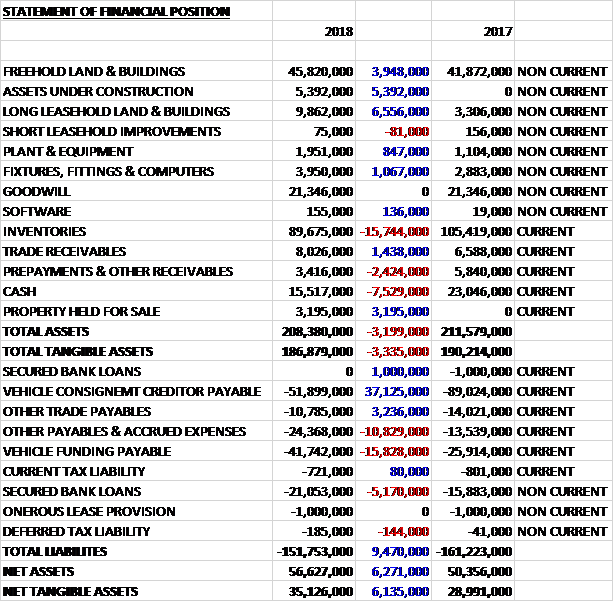
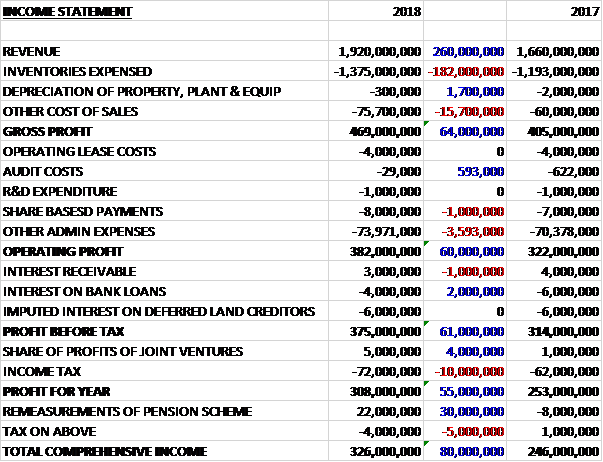
Cambria have now released their final results for the year ended 2018.
Revenues declined when compared to last year as a growth in after sales and used car revenue was more than offset by an £18.1M decline in new car revenue. Cost of sales declined by £12.7M to give a gross profit £1.6M lower. The group incurred site closure costs of £703K, operating lease payments were up £250K and depreciation increased by £616K, although staff costs declined by £522K and other admin costs were down £890K which meant that the operating profit was £1.6M lower. Consignment and vehicle stocking interest grew by £435K to give a profit of £7.3M, a decline of £1.9M year on year.
When compared to the end point of last year, total assets declined by £3.2M driven by a £15.7M decrease in inventories, a £7.5M fall in cash and a £2.4M decline in prepayments and other receivables, partially offset by a £6.6M growth in long leasehold land and buildings, a £5.4M growth in assets under construction, a £3.9M increase in freehold land and buildings and a £3.2M property held for sale. Total liabilities declined during the year as a £15.8M increase in vehicle funding payable, a £10.8M growth in other payables and accrued expenses and a £4.2M fall in secure bank loans were more than offset by a £37.1M decline in the vehicle consignment creditor payable and a £3.2M decrease in other trade payables. The end result was a net tangible asset level of £35.1M, a growth of £6.1M year on year.
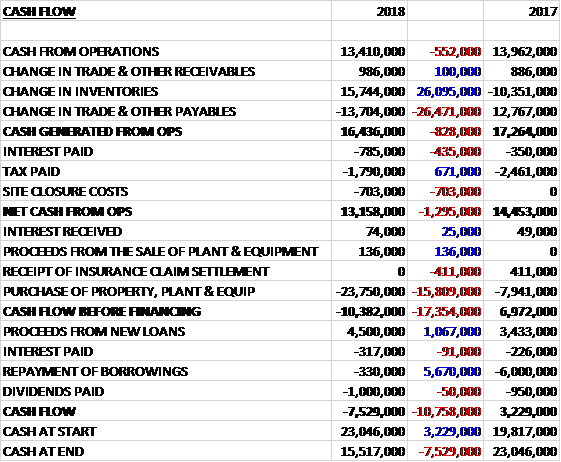
Before movements in working capital, cash profits declined
by £552K to £13.4M. There was a cash
inflow from working capital but this was slightly less than last time and after
interest payments increased by £435K, and the site closure costs of £703K were
slightly offset by a £671K reduction in tax payments, the net cash from
operations was £13.2M, a decline of £1.3M year on year. The group spent £23.8M on capex to give a
cash outflow of £10.4M before financing.
They took in £4.5M of new loans and spent £1M on dividends which meant
that there was a cash outflow of £7.5M in the year and a cash level of £15.5M
at the year-end.
Total funds invested in capex were £23.8M. The Swindon development incurred £6.6M to
complete the project, the Hatfield development £5.7M for the land purchase and
£5.4M on the development. The Chelmsford
and Tunbridge Wells property developments amounted to £1.9M. Including the fitout cost of Swindon and the
Tunbridge Wells and Chelmsford developments, there were fixtures, fittings,
plant and machinery additions of £3.7M and computer expenditure of £200K.
Over the coming two years the group intends to complete the
following major freehold investments:
Swindon land freehold purchase at £2.3M, Hatfield JLR, Aston Martin and
McLaren completion at £6M, and Solihull Aston Martin at £5M.
This year has seen a difficult new car market that has been
impacted by weakening consumer demand in the face of the uncertainty around the
Brexit negotiations, inconsistent messaging around the future of diesel engines
and the impact on car supply from the change in emissions testing regulations
in September. They have also had to cope
with the Government driven central cost increases including the Apprenticeship
Levy, pension contributions, increases in debit and credit charges and
increased property rating costs.
During the year, however, the group has delivered a
financial performance with profit slightly ahead of market expectations.
The gross profit in the new car business was £18M, a decline
of £3.3M year on year. Revenues
decreased by nearly 6% and sales volumes were down 17%. The reduced volumes were partly offset by an
improvement in the gross profit per unit sold which increased by 1.2%, a direct
reflection of strengthening mix from business additions.
The business has gone through a significant period of
disruption with the closure or development of eight of the group’s franchise
outlets which caused significant disruption in the day to day operations. The addition of two Lamborghini, two Bentley,
one McLaren and a Peugeot franchise will make a major contribution to growth
plans, however. The reduction in sales
volumes was attributable to reductions in unit sales from certain volume
manufacturer partners who have experienced significant reductions in national
registrations.
The group’s sales to private individuals was 17.3% lower,
new commercial vehicle sales improved by 2% and new fleet unit sales decreased
by 42%. The new vehicle registration
data showed total registrations were down 6.8% with the registration of cars to
private individuals down 4.7%. The sale
of diesel engine vehicles was hardest hit as a result of the negative media
coverage around diesel engine emissions and sales were down nearly 28%.
The gross profit in the used car business was £24.6M, an
increase of £1M when compared to last year.
Revenues increased by £1.8M but the number of units sold declined by
nearly 7%, partly driven by site closures.
The gross profit per unit sold increased by 11.6%. They have focused on increasing the
efficiency with which they source, prepare and market their used vehicles which
gave rise to a twelve month rolling return on used car investment of 125%,
slightly down from the 129% achieved last year.
The gross profit in the aftersales business was £28.5M, a
growth of £700K when compared to 2017.
Revenues increased by 1.5% with improved margins on the back of the
increase in labour hours sold. The 0-3
year car parc continues to be replenished as the increase in new car sales
experienced over the previous year’s produces cars ready for aftersales
operations, although this is obviously reducing.
To facilitate the development of the Chelmsford and
Tumbridge Wells Bentley and Lamborghini sites, the group closed two bodyshops
along with an Alfa Romeo and Jeep business in Chelmsford and a Honda and Mazda
business in Timbridge Wells. They took
the decision to close the loss making Blackburn site in July which comprised of
a leasehold showroom for Fiat and Alfa Romeo and the break clause has been
exercised. The Renault and Volvo
showrooms were owned freehold and are therefore held for sale currently.
The completion of the Swindon JLR facility in July on the
group’s long leasehold premises facilitated the relocation of Swindon Land
Rover from the property in Royal Wootton Bassett to the new facility. The Wootton Bassett site is now held for
sale. After the year-end the group has
secured the freehold title of the land in which the development sits from
Swindon Borough Council.
The major property development at Hatfield which is due to
complete in January 2019 will relocate the group’s JLR and Aston Martin
dealerships in Welwyn Garden City which currently operate in short leasehold
facilities into a purpose built freehold property with the addition of the
McLaren franchise which will operate on the same site.
During the year the Royal Wootton Bassett freehold property
was vacated following the transfer of the Land Rover business to the newly
developed site in Swindon so have been classified as held for sale. The same is the case for the freehold
property at Blackburn following the closure of that dealership.
The group have secured a new development site in Solihull
for a permanent facility in line with Aston Martin franchise standards. The group has exchanged contracts and
completion is subject to planning permission and the conclusion of extensive
highway works to define the site. It is
expected that the total freehold investment will be £5M. Due to delays in the highway works, it is now
expected that work to the dealership will begin in Q2 2019.
Going forward so far this year trading has been in line with
board expectations in September and October and that of last year, supported by
strong performances in their used car and aftersales operations. The new car market will see a further reduction
in 2018 with forecasts 11.5% lower.
There is little doubt that market sentiment has been impacted since the
Brexit vote. With the current weakness
in Sterling there is ongoing downward pressure on the number of cars registered
in the UK as the manufacturer landed cost of imported cars and components
increases. Diesel engine vehicles have
received the largest negative impact with a significant amount of negative
media coverage and clear political positioning in relation to diesel vehicle
emissions.
Whilst 2018 delivered a solid set of results, as a result of
the uncertainty in the economic outlook the board remains cautious about the
new car trading environment in 2019.
At the current share price the shares are trading on a PE
ratio 7.9 which falls to 7.4 on next year’s consensus forecast. After the dividend remained the same, the
shares are yielding 1.7% which increases to 1.8% next year. At the year-end the group had a net debt
position of £5.5M compared to a net cash position of £6.1M at the same point of
last year.
On the 4th January the group released a trading
update for the first quarter which was in line with board expectations and
ahead of the corresponding period last year.
As expected the new car market was significantly affected by the impact
of the changes in the emissions testing regime from September onwards and the
market was down 15.4%. Whilst this led
to a reduction in the group’s new vehicle sales, this was offset by improved
gross profit. New vehicle unit sales
were down 25% with the sale of new retail cars to private buyers down 19%. Some of the volume manufacturer franchises
experienced the largest reduction in sales.
The gross profit per unit improved significantly on a total
basis as a result the stronger mix from the new franchised outlets representing
Bentley, Lamborghini and McLaren. Group
profit per unit also improved on a like for like basis and the overall impact
of the improved profit per unit mitigated the reduction in unit sales.
Used vehicle sales continued to perform well. Whilst total
used unit sales were down 10.5% (like for like down 3%) this unit reduction was
offset by continued improvement in gross profit per unit. The significant changes in portfolio mix and
closure of the Blackburn site last year had a material impact on sales volumes
but as a result of the improved profit per unit, the like for like profit from
the division improved year on year. The
group’s aftersales operations delivered a good performance, with revenue
increasing by 1.9% and gross profit up 6.5%.
The group opened its second Lamborghini dealership in
November alongside the Bentley dealership in Tunbridge Wells. The major property development for JLR, Aston
Martin and McLaren at Hatfield is progressing well and the JLR facility was
completed for occupation in December as planned. It is now expected that the Aston Martin and
McLaren facility will be ready in February.
In December they completed the sale of the Wootton Bassett freehold
property for £2.8M.
The board remain cautious about the general uncertainty in
the economy and around the consumer environment, particularly the ongoing uncertainty
around Brexit. The new luxury franchises
and other redevelopments leaves the business well positioned for the year
ahead, however. All very non-committal!
Overall than this has been a difficult period for the
group. Profits were down, the operating
cash flow deteriorated with no free cash being generated, although next year
capex seems like it’s going to reduce. Net
assets did improve, however. There was a
lot of disruption from the investments being made but the real issue is a
declining market due to uncertainty over Brexit, weakening Sterling and the
issues surrounding diesel emissions.
Profits in used cars and aftersales offset the decline in new car
profits and the volume declines were offset by increases in unit profits due to
an improving mix.
One issue that I am concerned about is that the reduction in new car sales will at some point have a knock on effect on aftersales as less people have purchased cars and the debt levels are creeping up. Still, this is potentially priced in with a forward PE of 7.4 and yield of 1.8%. This is a tricky one, it could be an interesting value play but obviously not without risks as mentioned above.
On the 6th March the group released a trading
update covering the first five months of the year which was ahead of the same period
last year, both on a total and like for like basis.
During the period the new car market has been significantly
affected by a number of factors including the impact of the changes in the
emissions testing regime and the negative impact of the weak sterling position
on the imported price of the cars which has led to price increases for many
manufacturers. In the period, the total
new car market was down just over 10%.
The diesel segment of the market was worst hit, down 30%.
Supply side market influences have contributed to a
reduction in the group’s new vehicle sales, although this was partly offset by
improved gross profit per unit in the like for like businesses and fully offset
by the improved gross profit per unit across the total group as a result of the
stronger mix from the new Bentley, Lamborghini and McLaren outlets. New vehicle unit sales for the period were
down 23% (like for like 20%) although he prior year comparative included a low
margin commercial vehicle deal which has not been repeated. The sales of new retail cars to private
purchasers was down 16% (like for like 11%).
Used vehicle sales continued to perform well. Total used unit sales were down 11% (like for
like 4%) but this unit reduction was offset by an improvement in the gross
profit per unit. The significant changes
to the franchise portfolio mix and closure of the Blackburn site in the prior year
had a material impact on sales volumes but as a result of the improved profit
per unit, both the total and like for like profit from the business improved
year on year.
The group’s aftersales operations delivered a good
performance with revenue increasing by 7% (like for like 3%), gross profit up
4% (like for like 2%) and aftersales contribution up 10% (like for like 7%).
Going forward, whilst challenges remain given the ongoing
uncertainty around Brexit and the terms of the UK’s departure from the EU, the
group’s ongoing franchising development activities have enhanced their
dealership portfolio mix and the changed made in the prior year have further
benefited the group. These new
businesses are still in their infancy, but have exciting potential.
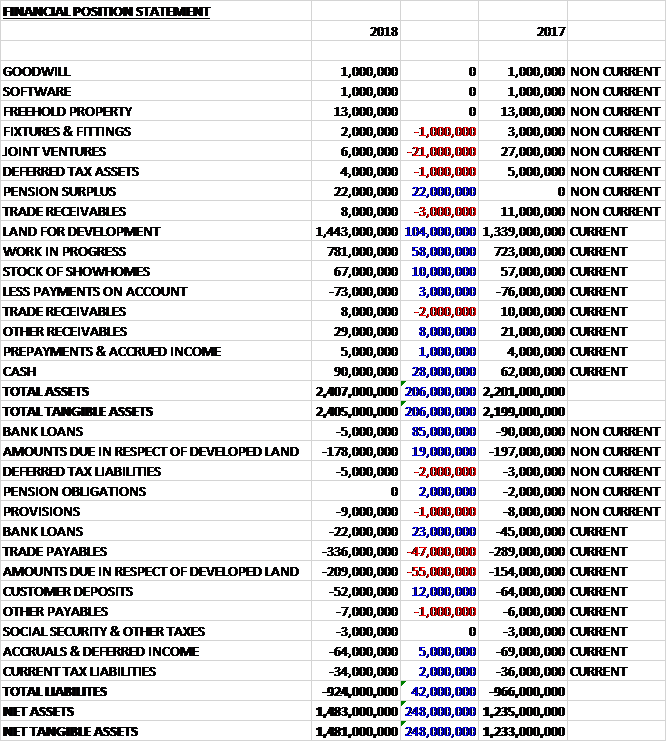
Redrow have now released their final results for the year ended 2018.
Revenues increased by £260M and after inventory expenses grew by £182M and other cost of sales were up £14M the gross profit was £64M higher. Share based payments increased by £1M and other admin expenses were up £3.6M to give an operating profit £60M higher. Interest costs fell by a net £1M, the profits from joint ventures increased by £4M but tax charges were up £10M which meant that the profit for the year was £308M, a growth of £55M year on year.
When compared to the end point of last year, total assets increased by £206M driven by a £104M growth in land for development, a £58M increase in work in progress, a £28M growth in cash, a £22M increase in the pension surplus and a £10M growth in the stock of show homes, partially offset by a £21M decline in the value of joint ventures. Total liabilities declined during the year as a £36M growth in the amounts due in respect of developed land and a £47M increase in trade payables were more than offset by a £107M decline in bank loans and a £12M decrease in customer deposits. The end result was a net tangible asset level of £1.481BN, a growth of £248M year on year.
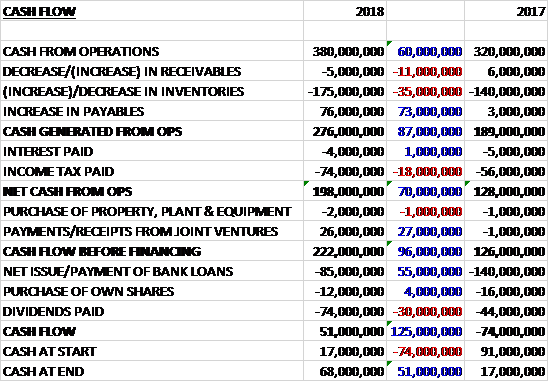
Before movements in working capital, cash profits increased
by £60M to £380M. There was a cash
outflow from working capital but this was lower than last time and after tax
payments increased by £18M the net cash from operations was £198M, a growth of
£70M year on year. The group spent £2M
on capex but received £26M in payments from joint ventures to give a free cash
flow of £222M. Of this, £85M was used to pay back bank loans, £74M on dividends
and £12M on share buy-backs. The end
result was a cash flow of £51M and a cash level of £68M at the year-end.
Group turnover rose by 16% as a result of the increase in
legal completions to 5,913 along with a 7% rise in the average selling price to
£332K. The increased selling price was
mainly due to the faster growth of the Southern business. With firm control to operating costs, operating
expenses as a percentage of turnover reduced from 5% to 4.5%.
Despite the uncertainty surrounding Brexit, demand for new
homes continued to be robust and overall house price inflation has moderated to
2%. With the exception of Central London
where they only have a handful of properties to sell, they continue to see
encouraging levels of demand for their homes.
The group entered the year coming year with an order book of £1.14BN, an
increase of £110M. Help to Buy continues
to support home buyers and the housing industry and in the last year, 1,794 of
private reservations were secured through the scheme (a similar amount to last
year).
During the year the group added 7,455 plots to their current
land holdings. Of these, 2,727 were
converted from their strategic land. As
a result, net of completions and re-plans, their current land holdings
increased by 1,530 plots to 27,630.
Their strategic land holdings also increased by a net 4,300 plots to
30,700. Growing the number of outlets in
line with the increased land holdings remains a challenge as the journey from
outline planning permission to implementable planning permission remains
bureaucratic. The gross development
value of their total land holdings now stands at £20M.
The new East Midlands division made its first full year
trading contribution and the Southern divisions continue to grow strongly as
they target increased market share.
Colindale Gardens in North London also made a significant contribution,
delivering its first completions. They
have announced the launch of a new division in Thames Valley and reorganised
their London operations into East and West to focus on growth in this
area. They have also restructured Harrow
Estates to help manage and support their forward land activities.
The land market remained attractive throughout the year,
they acquired 7,455 plots and increased to 27,630 plots in total, representing
4.8 years of supply. Pull through from
Forward Land accounted for 2,727 of the plot acquired. The average size of sites acquired was around
180 plots and the larger sites were generally acquired on more favourable
terms. The owned plot cost increased by
£1,000 per plot to £71K, reducing slightly to 19% of the average selling price
of legal completions.
The £24M improvement in the pension scheme is mainly due to
the increase in corporate bond yields along with a decrease in the market’s
long term expectations for inflation.
Going forward, demand for the group’s homes remains
strong. Despite Brexit and the
exceptional summer weather, sales revenue in the first nine weeks of the year
is in line with last year. They expect
to grow their land holdings and increase the number of average outlets by 5% to
130.
At the current share price the shares are trading on a PE
ratio of 6.7 which falls to 6.4 on next year’s consensus forecast. After a 65% increase in the full year dividend
the shares are yielding 5.1% which increases to 5.4% on next year’s
forecast. At the year-end, the group had
a net cash position of £63M compared to a net debt position of £73M at the end
of last year.
On the 7th November the group released a trading
update. For the first 18 weeks of the
year they have traded in line with expectations. They continue to see good demand in their
regional businesses with most sites sold well in advance. The London sales market has remained subdued,
however, affected by high stamp duty and Brexit uncertainty.
The value of net private reservations was in line with last
year at £588M. The average selling price
was up 4.6% to £388K but the sales rate per outlet reduced slightly entirely
due to the London market. The total
order book increased by 11% to £1.2BN.
The operational cash flow was strong with net cash currently standing at
£132M compared to a net debt position of £25M last year.
Overall then this has been a good year for the group. Profits increased, net assets grew and the
operating cash flow improved with plenty of free cash being generated. Both the number of completions and average
selling price improved, the land market remained good and outside London demand
remained strong. The issues in London
are a concern and of course Brexit looms large but with a forward PE of 6.4 and
yield of 5.4% these risks seem to be at least partly factored in and I think
the shares are looking decent value.
QinetiQ has now released their interim results for the year ending 2019.
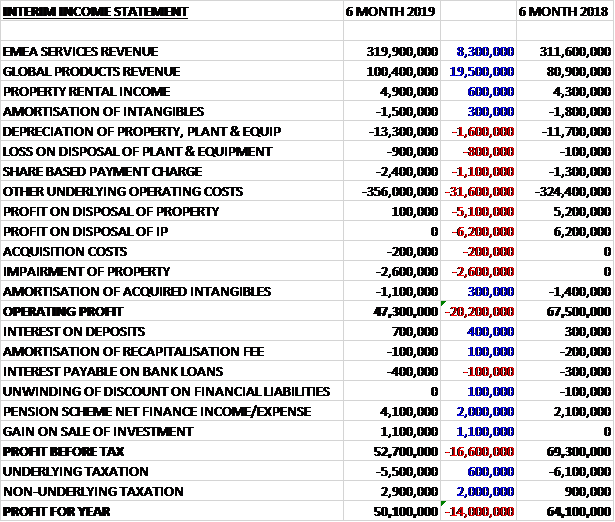
Revenues increased when compared to the first half of last year due to a £19.5M growth in global products revenue, an £8.3M increase in EMEA Services revenue and a £600K growth in property rental income. Depreciation was up £1.6M, share based payments increased by £1.1M and other underlying operating costs grew by £31.6M. We also see a £5.1M reduction in the profit on property disposals, a £6.2M fall in the profit of IP sales and a £2.6M property impairment which meant that the operating profit declined by £20.2M. Pension scheme income increased by £2M, there was a £1.1M gain on the sale of an investment and tax charges reduced by £2.6M due to a £2M increase in tax income related to share based payments, to give a profit for the period of £50.1M, a decline of £14M year on year.
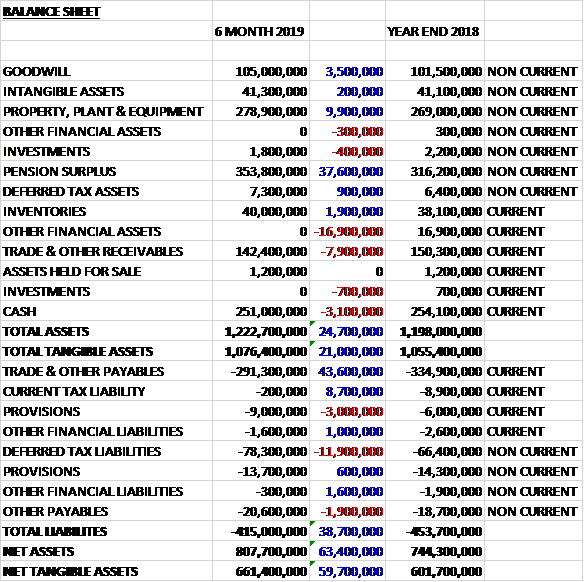
When compared to the end point of last year, total assets increased by £24.7M driven by a £37.6M increase in the pension surplus, a £9.9M growth in property, plant and equipment, a £3.5M increase in goodwill and a £1.9M growth in inventories, partially offset by a £16.9M reduction in other financial assets, a £7.9M fall in receivables and a £3.1M decrease in cash. Total liabilities declined during the period as an £11.9M increase in deferred tax liabilities and a £2.4M growth in provisions was more than offset by a £43.6M decline in payables and an £8.7M decrease in current tax liabilities. The end result was a net tangible asset level of £661.4M, a growth of £59.7M over the past six months.
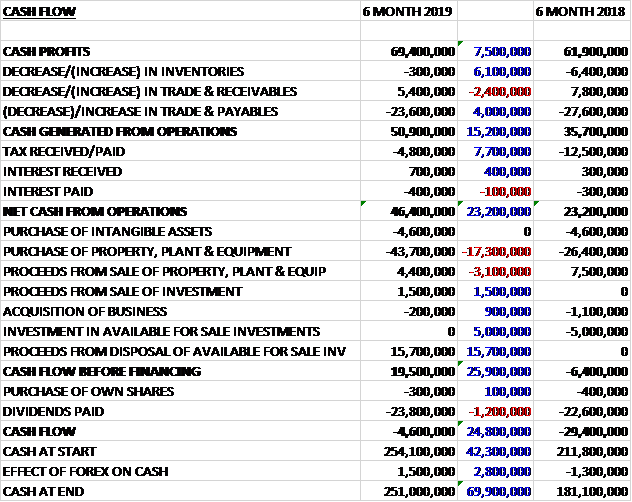
Before movements in working capital, cash profits increased
by £7.5M to £69.4M. There was a cash
outflow from working capital but this was less than last time and after tax
payments declined by £7.7M the net cash from operations was £46.4M. The group spent £43.7M on property, plant and
equipment along with £4.6M on intangible assets but they recouped £15.7M from
the sale of an available for sale investment, £4.4M from the sale of fixed
assets and £1.5M from the sale of an investment to give a free cash flow of
£19.5M. This didn’t cover the £23.8M
paid out in dividends so there was a cash outflow of £4.6M and a cash level of
£251M at the period-end.
After adjusting for non-recurring items, the group reported
stable underlying operating profit in line with expectations. They have been able to offset margin pressure
in EMEA Services through efficiency savings and revenue growth.
The operating profit in the EMEA Services division was
£40.9M, a decline of £6.4M year on year due to a £6.5M benefit from
non-recurring items last year. Excluding
this, profits were broadly flat as the SSRO margin pressure was offset by
efficiency improvements and revenue increases.
There was a £42.2M increase in orders, primarily due to greater volumes
of small value orders in maritime, land and weapons, and cyber, information and
training following greater UK MOD commitments during the period.
Within the air and space business a key success has been
winning the Engineering Delivery Partner framework contract with the MOD. This was signed in early October and covers
the provision of all engineering services to DE&S, the MOD’s procurement
body. The team consists of QinetiQ,
Atkins and BMT and will lead the provision of engineering services with the aim
of providing improved performance at reduced cost.
The group continue to add services to their Strategic
Enterprise contract. During the period
they added work for Chinook and Typhoon mission systems assurance. The deployment of their test aircrew training
is progressing well. Their new fleet of
aircraft are all being delivered to schedule and they are complementing their
new fleet with a modernised syllabus.
The Solar Electric Propulsion System will provide the engine power
behind the BepiColombo mission to Mercury with the spacecraft due to start its
transit in December 2018 with the group continuing to provide ground based
testing to support the mission.
Within the maritime, land and weapons business the group’s
investment in the MOD Aberporth air range will enable the first live weapon
firing in the UK from the RAF’s new F35 Lightning II aircraft later this year
which creates a potential opportunity for the group as the UK and other
European nations assure new fleets of this aircraft. Improvements to the MOD Hebrides range will
enable them to host Formidable Shield 2019 and deliver scenarios that combine
traditional weapons with complex electronic warfare trials.
In addition to missile firings for a new Polish customer and
further work from the German armed forces, the group have also hosted
commanders from the UK Carrier Strike Group and the US Marine Corps as they
prepare to deploy the new Queen Elizabeth class aircraft carriers. Shortly after the period-end they were
awarded a £9M extension to the Naval Combat System Integrated Support Services
contract to cover mission systems on the new UK QE class aircraft carriers.
In the cyber, information and training business the group
were awarded a three year contract with options to extend for a further two
years, worth up to £95M to support the UK MOD in delivering next generation
battlefield tactical communications and information systems. They were also awarded a £7M contract to
assure the Falkland Islands Ground Based Air Defence systems. As part of this they will build and maintain
a synthetic environment for testing the Sky Sabre 3D radar surveillance systems
used by GBAD and provide the support for live fire testing.
The business in Australia continues to perform well,
delivering organic revenue and order growth supported by a number of contract
extensions within the professional services business. The group are in a consortium, led by Nova
Systems, that has been selected as one of only four major service providers
through which the Australian government procured defence capabilities. They expect their involvement in this to
drive further growth in the business. Building
on their UK work on the new QE aircraft carrier, they were selected by Oman to
deliver ship helicopter operating limit trials ahead of a Royal Navy and Omani
Navy exercise. This is the first time
they have delivered such trials for an international customer.
The operating profit in the Global Products division was
£10.2M, flat year on year. Orders fell
by £20.4M against a strong comparator which included a number of significant
multi-year contracts, notably the €24.2M spacecraft docking mechanism order
with the ESA. Revenues were up 24%
driven by an £8.9M increase in QinetiQ North America due to robotic,
survivability and maritime product programmes and £6.5M QTS Banshee target
sales to India. At the start of the
second half the division had 86% of its full year revenue under contract
compared to 80% the year before. The
reduction in margins was the result of timing and mix of product sales during
this period, in particular lower license income couple with lower profitability
in OptaSense. Full year margins are
expected to be in line with previous years.
The North American business was awarded the Route Clearance
and Interrogation System robotics programme of record. This contract with a potential value of up to
$44M is for larger vehicles. They also
secured a contract to convert large army vehicles into ones capable of remote
operation. The broader robotics
portfolio continues to perform well including continued demand to upgrade,
repair and service the Talon product range. They have been selected as one of
two suppliers for the Engineering and Manufacturing development phase of the
Common Robotic System programme of record.
The EMD will last around ten months, during which time the US DoD will
test and evaluate robots from the two suppliers. The total budget for the programme is $429M
in the form of an indefinite delivery and quantity contract over seven years.
They also secured a strategic milestone with an order for
their Dolphin underwater acoustic networking product. This technology allows for full duplex
underwater acoustic networking with many potential applications. Demand for light weight and cost effective
survivability products such as Q-Nets and Last Armor was also strong.
In the OptaSense business the group were awarded the
contract to protect a new pipeline for the Permian Basin in Western Texas. They will provide monitoring of the pipeline,
including leak detection. They have
continued to develop the technology, increasing the effective range of each
sensor by around five times whilst also enhancing the sensitivity. This further supports their offering for long
distance linear assets such as roads, railways and national borders. They have delivered Phase O of the 1,841km
Trans Anatolian Natural Gas Pipeline project, the largest single system award
for the business.
In the Space Products business, the group won a two year
contract with Effective Space Solutions to test and deliver docking mechanisms
for two satellite servicing space drone spacecraft. The mechanism will provide a non-intrusive,
safe and secure attachment between the spacecraft and existing satellites in
ordbit.
In the EMEA Products business QinetiQ Target Systems
continued to deliver good growth and agreed a framework contract with the US
Target Management Office. In addition
they completed the first deliveries of targets to the Indian Army and
Navy. They have launched their secure
satellite communication product Bracer and have seen positive early interest. The product allows for secure but cost
effective global comms on a push to talk and group basis using the Iridium Low
Earth Orbiting satellite network. They
have also won a £2M order to develop Software Defined Multi-Function LIDAR for
the UK MOD for incorporation into Airbus’ Zephyr programme. This product allows multiple functions such
as communications, target acquisition and 3D mapping from a single small
sensor.
Generally the UK trading environment remains mixed. The MOD is looking to achieve significant
cost savings with further clarity expected in the MDP review which is currently
underway. In the US expenditure is
expected to remain robust and the Australian government intends to steadily
increase defence spending up to 2021.
Outside these regions, the group have identified Germany, France,
Sweden, Canada and the Middle East as priority markets. The business in the Middle East is making
encouraging progress, although it is still early days.
The group seem to be making good progress in their
international business where revenues grew by £28.4M. In the US they won their first robotics
programme of record for Route Clearance Interrogation System Type 1, worth up
to $44M. They were also down-selected as
one of two companies for the Engineering, Manufacturing and Development phase
on the Common Robotics System, an opportunity worth up to $429M in total.
Capital commitments at the period-end include £29.5M that
will be wholly funded by a third party customer under a long term contract
arrangement.
The group expect the changes in the baseline profit rate to
create a £6M headwind to profitability in 2019 but the headwind is expected to
moderate in 2020 and beyond.
Negotiations are progressing well for the remaining scope of the LTPA
not covered under the December 2016 amendment.
As part of these negotiations they will commit to delivering
efficiencies and change to an output-based contract. They will be responsible for the investment
to renew capabilities and modernise the LTPA, improving T&E capabilities
for UK customers, as well as attracting international and industrial
users. Their objective is to secure the
pricing to 2028 with a similar level of investment and recovery mechanism to
the 2016 amendment.
The modernisation of the air ranges agrees as part of the
2016 amendment is making progress and has included the installation of new
safety critical systems on St Kilda and the delivery of new tracking radar for
the Hebrides which remains on schedule.
After the period-end the group completed the acquisition of
EIS for €70M. The business is a provider
of airborne training services in Germany, delivering threat representation and
operational readiness for military customers.
Also in October the group acquired 85% of the shares of Inzpire with an
arrangement to acquire the remaining 15% after two years, for a total
consideration of £23.5M. The business is
a provider of training services to the RAF and British Army and made an EBITDA
of £2M last year.
The good first half means that the group are well placed to
meet their expectations for the full year performance. The EMEA Services division delivered 3%
organic revenue growth in the first half and has 91% of 2019 revenue under
contract. The division is expected to
deliver modest revenue growth this year, although the lower baseline profit
rate for single source contracts represents a continued headwind for
margins. The Global products division
delivered a 25% organic revenue growth in the first half with 86% of full year
revenue under contract. It is on track
to meet expectations for further organic revenue growth this year and the full
year operating margin is expected to be in line with last year.
The group expect full year capex to be at the upper end of
previous guidance of £80M to £100M. They
are now positioned for sustainable and profitable growth and continue to take
steps to mitigate the effects of changes in the UK single source profit rate
and expect this headwind to moderate in 2020, enabling growing revenues to
deliver increased profitability. Overall expectations for 2019 as a whole are
unchanged.
At the period-end the group had a net cash position of
£249.1M, a decrease of £17.7M over the past six months. At the current share price the shares are
trading on a PE ratio of 15.3 which increases to 16.8 on the full year
consensus forecast. After the interim
dividend remained the same the shares yielded 2.3% which increases to 2.4% on
the full year forecast.
Overall then this has been a solid period for the group. Profits did decrease but this was due to non-recurring items and underlying profits were flat. Net assets increased and the operating cash flow improved, although not much free cash was generated and this did not cover the dividends. The group have done quite well in combating the SSRO margin reduction headwind and after this year, hopefully that will dissipate. The global products division grew but profits remained stagnant due to a reduction in margins. With a forward PE of 16.8 and yield of 2.4% these shares are probably priced about right.
On the 31st January the group released a trading
update covering Q3. They continued to
perform well and the board are maintaining their expectations for group
performance in the current year. The EMEA services division continued to
deliver encouraging organic order and revenue growth compared to the prior
year. Revenue under contract and
operating profit were in line with expectations. Discussions with the UK MOD on the remaining
scope of the LTPA continue to make good progress. The group aims to secure pricing to 2028 and
agree a similar level of investment and recovery mechanism to the December 2016
amendment.
The Global Products division delivered positive organic
order and revenue growth compared to the prior year, with underlying operating
profit improving during Q3. Revenue
performance was particularly strong in North America.
MPAC have now released their interim results for the year ending 2018.
Revenues increased when compared to the first half of last year as a £100K decline in pharmaceutical revenue was more than offset by a £1.6M increase in healthcare revenue, a £200K growth in food and beverage revenue and a £1.1M rise in other revenue. Cost of sales increased by £4M, however, to give a gross profit £1.2M lower. Distribution costs were down £400K and underlying admin expenses fell by £400K, offset by a £300K growth in non-underlying admin expenses which meant that the operating loss deteriorated by £700K. Pension scheme costs reduced slightly but there was an £800K negative swing to a tax charge and no profits from discontinued operations, which were £600K last time. All of this meant that the loss for the period was £900K, a deterioration of £1.8M year on year.
When compared to the end point of last year, total assets increased by £13.6M driven by a £17.5M increase in the pension surplus, a £6.2M growth in contract assets and a £2.5M increase in inventories, partially offset by an £8.1M decline in receivables and a £4.5M decrease in cash. Total liabilities also increased during the period as a £6.7M decline in payables was more than offset by a £6M increase in deferred tax liabilities and a £5.5M growth in contract liabilities. The end result was a net tangible asset level of £51.2M, a growth of £9.3M when compared to the end point of last year.
Before movements in working capital, cash profits declined
by £267K to £7.9M. There was a cash
outflow from working capital and after tax payments reduced by £225K there was
a net cash from operations of £679K, a decline of £4M year on year. The group spent £1.1M on capex but recouped
£1.7M on the sale of assets to give a free cash flow of £1.3M. They then spent £2.4M on dividends which
meant that there was a cash outflow of £1.1M and a cash level of £12.9M at the
period-end.
Within Original Equipment, the group entered the year with a
strong order book and sales increased by 19%.
Sales in the EMEA region increased by 60% to £11.7M; sales in the Asia
Pacific region grew by 20% to £2.4M but sales to the Americas dropped by 11% to
£9.1M. The profit impact of the two
difficult projects mentioned below was in the region of £1M.
Services order intake was 21% lower. The shortfall was primarily in the Americas
which resulted in revenue in the first half year of £2.4M, a decline of
£800K. Service sales in both EMEA and
Asia Pacific were broadly in line with last year. A change in sales mix contributed to reduced
gross margins.
Despite a positive start to the year it has become apparent
that the business climate softened considerably as the year progressed,
attributable in part to general economic uncertainty, leading to customers
deferring machinery investment decisions.
The board believe that these prospects will be delivered in future years.
Order intake was 20% below the first half of last year but
current order books are broadly in line with the same time last year. Although the group has a robust level of
prospects, the conversion to orders is more difficult to predict in the current
environment as customers defer discretionary investments.
Engineering difficulties with two significant legacy
projects, in the UK and Canada, contributed to the reduced gross profit. The UK-based project is a FOAK machine
comprising a healthcare device production line of 22 modules. The complexity around the software and
control aspects was the main cause of the time and cost over-run. Once delivered, this line will provide the
customer with a clear differentiator with new product time to market. The project is now in the commissioning
phase and the board are confident that the main challenges are understood and
factored into costings and the delivery schedule, expected to be H2 2019.
The Canadian project encountered issues during the commissioning
phase. The consumer products, which were
previously hand-picked to retain the homely feel, are now fully automated. Product variability compared with test
samples caused low productivity and unforeseen issues with the packaging
line. They are working with the customer
to reduce this variability and upgrade the robustness of the packaging
line. The project is now performing to
an agreed productivity level on site and the second phase of work is currently
being agreed to further increase productivity and reduce non-conformity.
The group owns an investment property and land in Buckinghamshire
held at a net book value of £800K. They
are considering development opportunities and are seeking to have the site
designated for residential housing. They
are negotiating with the planning authorities and if re-designation is granted
they will seek outline planning permission to develop the site. It is not their current intention to redevelop
the site themselves.
The company will continue to pay a sum of £1.9M per annum to
fund the pension deficit recovery.
It has been a mixed start to the year with good progress in
some areas counteracted by delays in two legacy contracts. Since the end of June, a significant value
order was secured for delivery in 2019 which gives the board confidence that
the strategic objectives will deliver long term revenue growth.
At the period-end the group had a net cash position of
£24.9M compared to £29.4M at the period-end.
Having considered the trading results during the period with the opportunities
for investment in the growth of the company, the board have decided not to pay
an interim dividend.
On the 7th January the group released a trading
update covering the year. Sales growth
continued in H2 and the group secured a number of contracts for delivery in
2019. Sales and profit are expected to
be in line with expectations, supported by a strong closing order book which
will provide a platform for growth in 2019.
The UK legacy contract has been resolved and they have
agreed the commercial approach to resolve the Canadian project which is
expected to be finalised during 2019. It
is currently unknown as to what extent the court ruling around equalising
pensions between men and women will have on the group but given the size of the
pension here, I would have thought it will be significant.
Overall then this has been a rather difficult period for the
group. Losses worsened and the operating
cash flow declined, although there was a small amount of free cash
generated. The net assets did improve,
though, due to an increase in pension assets.
There were two main issues, a reduction in order intake due to a general
malaise in the industry, particularly in the Americas; and two difficult projects
that are causing a drag on results. The
latter seems to be mainly resolved but I am not sure about underlying demand. H2
has started in line but these seem a little risky at the moment.
James Latham has now released their interim results for the year ending 2019.
Revenues increased by £10.8M and cost of sales grew by £9.2M to give a gross profit £1.7M higher. Selling and distribution costs grew by £288K and other admin costs were up by £604K which meant that the operating profit increased by £769K. The group made a £1.1M profit on the disposal of a property and finance costs declined by £107K before tax expenses grew by £156K to give a profit for the period of £7.3M, a growth of £1.8M year on year.
When compared to the end point of last year, total assets increased by £444K driven by a £1.6M growth in receivables and a £1.4M increase in inventories, partially offset by a £1.1M decline in cash, a £909K decrease in deferred tax assets and a £638K decline in assets held for sale. Total liabilities decreased when compared to the end point of last year due to a £5.3M fall in pension obligations and a £2.9M decline in payables. The end result was a net tangible asset level of £98.4M, a growth of £8.8M over the past six months.
Before movements in working capital, cash profits declined
by £267K. There was a cash outflow from
working capital and despite tax payments reducing by £225K the net cash from
operations came in at £679K, a decline of £4M year on year. The group spent £1.1M in capex but recouped
£1.7M from the sale of a building to give a free cash flow of £1.3M. This did not cover the £2.4M paid out in
dividends so there was a cash outflow of £1.1M and a cash level of £12.9M at the
period-end.
Volumes increased by 1.5% and product prices were up 7.8%
with increased sales of lower volume, higher priced products. Warehouse costs were up nearly 5% due to the
increased cost of operating from the two new depots. Selling and distribution costs were 3.4%
higher and transport costs per tonne were up 3% due to increases in fuel
costs. Admin costs were higher due to an
increase in bad debts.
The effect of a judgement confirming that pension schemes
are required to equalise male and female guaranteed minimum pensions is still
being assessed but is likely to increase pension liabilities by around
£1M.
The second half of the year has started well with revenues
continuing to grow. Margins, however,
are slightly down with price rises being more difficult to absorb by the
market. Customers remain busy though and
are reporting good order books. The outlook is affected by the uncertainty
caused by Brexit negotiations and the group will obviously suffer from any
slowdown to the UK economy. They have
reviewed their key European suppliers and have put plans in place to hold more
stocks for a period of time in H1 2019 in order to mitigate any supply issues
over that period. They are continuing to
invest with extensive racking projects started at the Purfleet and Thurrock
depots and the planned redevelopment of their Gateshead site in order to make
the most efficient use of the space.
At the current share price the shares are trading on a PE
ratio of 11.1 which falls to 10.8 on the full year consensus forecast. After an increase in the dividend, the shares
are yielding 2.7% which remains the same for the full year forecast.
Overall then this has been a decent period for the group. Both profits and net assets increased but the operating cash flow deteriorated. This was exacerbated by working capital movements and the free cash flow did not cover the dividends. Volumes were up modestly but it is the pricing which has caused the profit to improve. So far in the second half, revenues continue to rise but margins are being squeezed as cost increases become harder to pass on. In addition, Brexit is looming large. The forward PE of 10.8 and yield of 2.7% look pretty good but there is real uncertainty here if the economy nosedives. Could be worth a punt at these levels.
On the 15th February the group announced that it
had acquired Abbey Wood, an Irish timber merchant and the official distributor
of Accoya Wood in the country. They paid
an initial €1.8M with a further payment of €300K to €400K due for the net
assets subject to completion accounts.
In addition, an earn out of up to €400K is payable to the vendors
subject to turnover targets being met.
EBITDA for the business was €379K last year and it operates from sites
in Dublin and Cork.
On the 21st March the group released a trading
update. Revenue and profit for the year
are expected to be in line with market expectations and the integration of
Abbey Woods is going well with encouraging results so far.